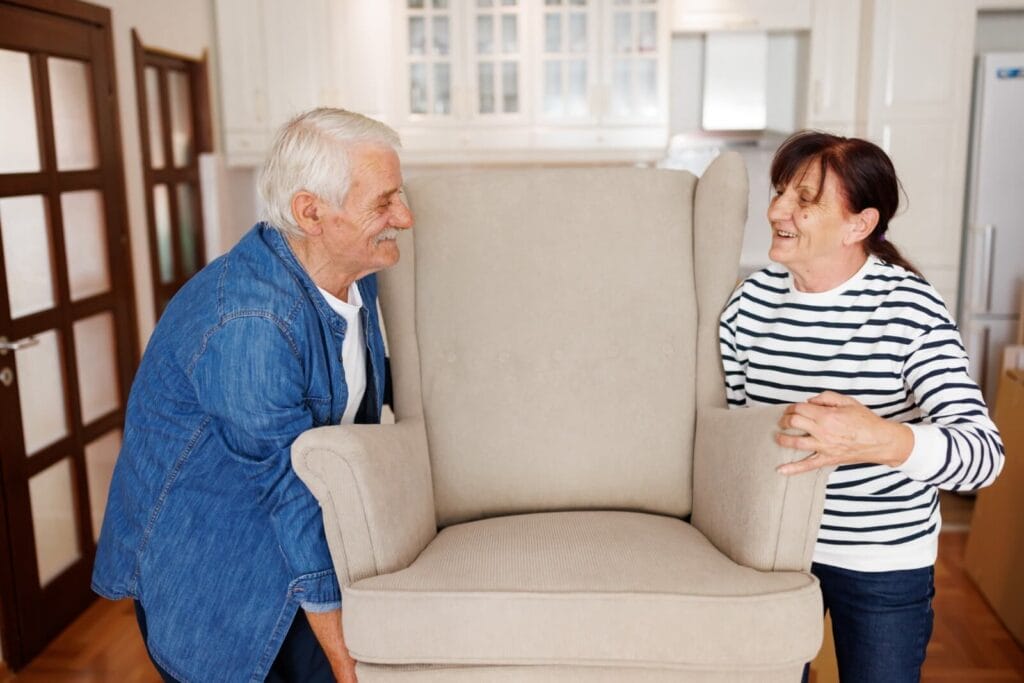
Moving to senior living can help you focus on what matters most in your golden years, including living in a safe, secure space while leaving traditional home maintenance and unpredictable living expenses behind. Before you can kick up your feet and enjoy everything senior living has to offer, you’ll likely have to downsize. Navigating what to do with furniture has a unique set of considerations because these items are larger, require planning and execution to get them to their next home, can be family heirlooms, might hold value to sell if in good shape, and more. Here are some tips that will help you figure out what to do with your furniture when you move into senior living.
Start with a decision-making plan
When deciding what to do with your furniture when moving to senior living, start with a simple decision-making framework. Sort your furniture into items to keep, give away, sell, donate, or throw out.
Furniture decisions are not only about the item itself. They are also about logistics. A small kitchen appliance can be boxed and dropped off. A couch, bed, or hutch usually requires transportation, extra labor, and scheduling, and it may not even fit in your new space.
Which category your furniture falls under will depend on a few factors, including:
- Whether the senior living community allows certain items.
- Size and fit in the new home.
- Daily usefulness and comfort.
- Safety and condition.
- Sentimental or family importance.
- Resale value.
- Time and effort required to move or rehome it.
Furniture to keep
Start by deciding which furniture will make your new home in senior living comfortable and functional. The best furniture to keep is usually what is used often, fits the new space, and supports your daily routine. A favorite recliner, sturdy dresser, or bedside table may matter more than larger pieces that no longer fit the layout or your lifestyle.
As you sort, focus on fit and safety. A piece may physically fit in the room but still make it harder to move around, especially if you use a walker or need more open space. Comfort matters, but so does ease of use.
Before finalizing the keep list, confirm what furniture the senior living community provides and ask about any move-in restrictions.
Give furniture to loved ones
Giving furniture to family or friends can be one of the most meaningful options, especially for pieces with sentimental value or family history. A dining table, rocking chair, or bedroom dresser may matter more as a gift than as a sale item.
This category can also include practical furniture that someone else needs or can use right away. If a family member or friend wants the item and has space for it, giving it away can be a simple solution.
What matters is that your beloved furniture goes to people who will appreciate and use it for many years to come.
Sell valuable furniture items
Selling your furniture is a great way to get rid of items you can’t take with you. It’s also a great way to make a little extra money that can help you pay for moving costs.
Selling furniture makes sense if a piece has resale value and you have time to manage the process. This is often true for solid wood furniture, antiques, vintage pieces, quality name-brand items, or furniture in excellent condition.
There are many ways you can sell your furniture. A few options include:
- A garage or an estate sale. If organizing a big sale feels intimidating, consider asking friends and family to help or hiring an estate sale professional.
- Consignment and antique shops. They can sell your furniture on your behalf, but they do take a percentage of the revenue.
- Facebook Marketplace or Craigslist. Although communicating with buyers can be frustrating, they are usually responsible for picking up and moving the furniture.
Donate usable furniture that is in good shape
Not all furniture is worth selling. If you have to move quickly and don’t have time to sell your furniture, or if you have usable items that aren’t worth much, you can donate them.
A few types of organizations that take furniture donations include:
- Habitat for Humanity ReStores.
- The Salvation Army.
- Goodwill Industries.
- DAV thrift stores.
- Local crisis or homeless shelters.
Contact organizations in your area that you would like to donate to. Ask them if they offer local pickups. If so, ask what type of furniture they will pick up and what you would have to drop off yourself. It’s also a good idea to ask them about what types of items are acceptable. For example, some donation centers may accept clean, gently used mattresses while others won’t.
When to discard furniture
Some furniture will not fit into the keep, give away, sell, or donate categories. Throwing furniture away is sometimes the safest and most practical decision.
Furniture should be discarded if it is broken, unstable, heavily stained, water-damaged, moldy, infested, unsafe, or beyond reasonable repair. Upholstered furniture is a common example. A couch or chair may look usable at first, but odors, structural damage, or pest issues can make it unsuitable to rehome.
Before putting furniture out for disposal, check local garbage and bulk pickup rules. Some areas require appointments, limit the number of items, or have special rules for mattresses and upholstered furniture. Some communities will schedule a pickup and add the cost of collection to your utility bill. You may also want to look into transfer stations, junk removal companies, or cleanout services.
Final tip for a smoother furniture downsizing process
As you sort through your furniture, try to focus on what will help you feel comfortable, safe, and at home in your new space. Some pieces will be easy decisions, and others may take more time.
Using a simple keep, give away, sell, donate, or throw out framework can help you make steady progress in downsizing without getting stuck on every item. If a decision changes later because a piece does not sell or someone cannot take it, you can move it to another category and keep going.
The goal is not to handle every piece of furniture perfectly. The goal is to make thoughtful choices that support a smoother move and a more comfortable start in senior living.