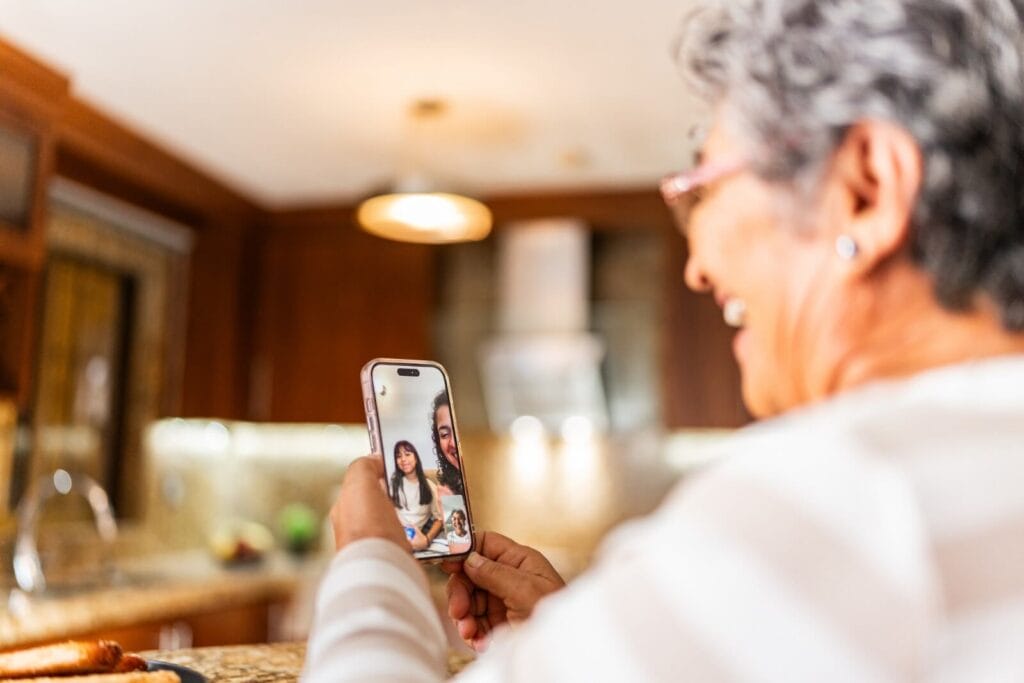
Caring for a loved one from a distance can be emotionally taxing and logistically complex. However, with the right organizational tips, you can stay connected and ensure your loved one’s safety. Here are a few ways that you can make managing your loved one’s daily life and household a bit easier. Adjust these long-distance caregiving tips to your current situation as needed, adapting them to fit your loved one’s needs and preferences.
Establish a local support system
One of the biggest challenges of long-distance caregiving is not being able to help with day-to-day needs or respond immediately in emergencies. It’s also hard to ensure that your loved one is spending time with others and not becoming isolated. Building a reliable support network close to your loved one is crucial.
This local team might include:
- Nearby family members, neighbors, and friends who can help with errands, transportation, and companionship and respond to emergencies.
- A hired home health aide to provide assistance with daily tasks and light housekeeping.
- A geriatric care manager, who can help create a care plan and find resources in the community.
- Local organizations like your loved one’s Area Agency on Aging, which can connect you with other community resources.
Use technology to stay connected and to keep your loved one safe
Different apps and technology can help keep you connected with your loved one and organized in your long-distance caregiving tasks. Here are a few ideas:
- Schedule regular phone or video check-ins with your loved one to ensure they are doing well and to maintain your connection.
- Caregiver apps can also be helpful in coordinating care from afar. For example, Meal Train allows people to sign up to deliver meals to your loved one. Caring Village is a one-stop shop for caregivers who are coordinating their loved one’s care with a team.
- Medical alert systems can allow your loved one to contact emergency operators if they fall or experience an emergency. Many devices offer caregiver services, where family caregivers are notified immediately if the senior uses their device in an emergency.
Get documents in order
Being a long-distance caregiver often means making decisions remotely. Get your loved one’s documents in order so that you have easy access to important information so you can complete forms, offer information to others, or more easily make health care decisions from afar.
Keep the following organized and accessible:
- Medicare, Medicaid, Social Security, and insurance cards. Keep one copy in a folder in your home, and scan another into a secure folder on your computer or phone.
- Medical records and contact information for your loved one’s medical team.
- An updated list of your loved one’s current medications and pharmacy contact information.
- Estate planning documents, including a living will, power of attorney designation, and do-not-resuscitate (DNR) order, if applicable.
Plan regular visits
Regular visits can have a big impact. Use visits to connect with your loved one, observe how they are doing, update care plans, and take care of tasks that can’t be handled remotely.
During your visit, consider:
- Attending medical appointments.
- Reviewing medications.
- Assessing the condition of their living environment.
- Looking for signs of physical or cognitive decline.
- Talking face-to-face with local caregivers or medical staff.
Also, make sure to take time to enjoy your visit together. These moments matter and can ease some of the emotional challenges that long-distance caregiving can create.
Before you leave, make sure your loved one feels supported and understands how to contact you or other caregivers if they need anything.
Be prepared for emergencies
Emergencies happen. The more you prepare for those emergencies, the more confident you will feel that your loved one is in good hands until you arrive.
Have an emergency plan in place:
- Keep a list of local emergency contacts, such as neighbors, caregivers, doctors, and local hospitals, who can respond quickly.
- Make sure emergency responders and caregivers have access to essential health information, like medications, allergies, and diagnoses. Consider getting a Vial of Life, which clearly lists important health information, and post it to their fridge for emergency responders to easily locate.
- Keep your contact information updated in your loved one’s medical files.
- Know which hospitals are closest to your loved one’s home to make it easier to find out which one they were taken to.
- Make a phone tree or contact list so you can communicate with other family members about what happened, how your loved one is doing, and what they may need.
Long-distance caregiving isn’t easy, but it is doable. With the right systems, tools, and plan in place, you can provide consistent and compassionate care from afar. The key is to stay proactive. Build a support team, use technology to your advantage, and keep essential information well-organized. Most importantly, don’t underestimate the value of simply staying connected. A phone call, a video chat, or a kind message can go a long way in making your loved one feel cared for, even if you’re miles away.