
Best Walk-In Tubs of 2026
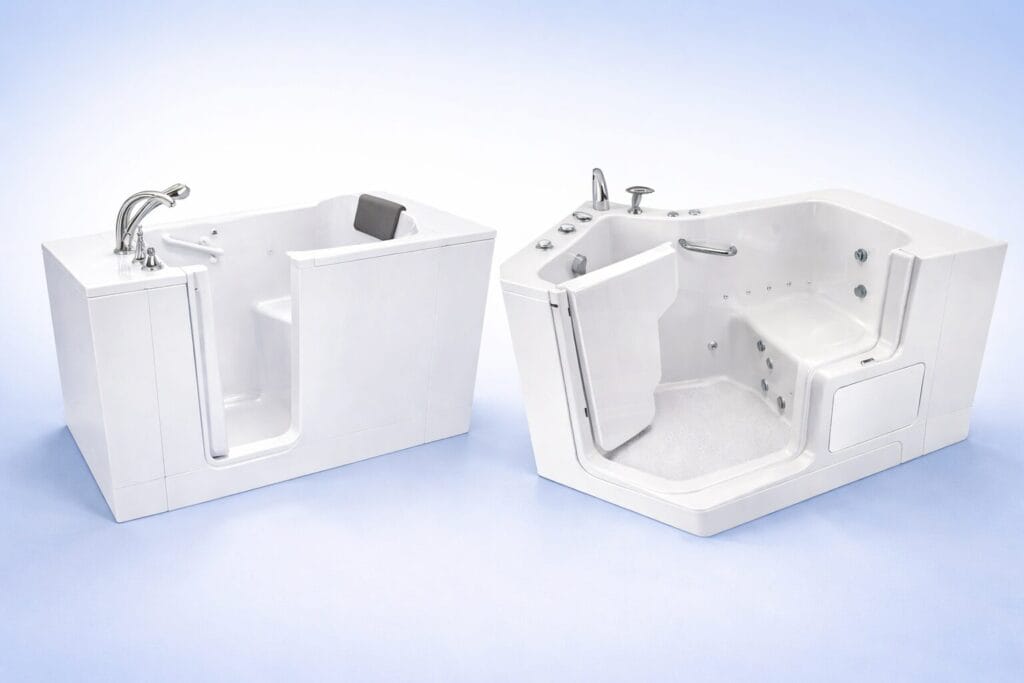
An in-depth guide to the year’s top walk-in bathtubs, from budget-friendly safety upgrades to premium, spa-like hydrotherapy setups.
A walk-in tub is, at its core, a bathtub designed to reduce fall risk and make bathing more accessible. Instead of stepping over a high tub wall, you enter through a low threshold door, sit down, and bathe with far less strain on hips, knees, and balance. For many seniors (and anyone aging in place), this is one of the highest-impact bathroom upgrades you can make—because slips in the bathroom are both common and high-consequence.
But “walk-in tub” can mean very different things depending on the brand and configuration. Some are straightforward soakers with a low step-in and strong safety basics; others add hydrotherapy or air jets, fast-drain systems, and comfort extras like aromatherapy. The right pick depends less on hype and more on your space constraints, mobility needs, and tolerance for install complexity.
For this roundup, we prioritized what matters in real homes: entry threshold, safety features, comfort/therapy options, draining speed, customization range, warranty terms, and how realistic the purchasing/installation process is. We also paid close attention to common buyer pitfalls—such as failing to measure, underestimating installation complexity, or forgetting that fill time and hot-water capacity can affect everyday usability.
You’ll see a mix of value-driven options, comfort-first models, and higher-end “bathroom transformation” brands. While we reference a comparison table and include a deep buying guide, you should still expect to get quotes—many walk-in tub purchases are consultative by nature.
Editor’s Note (January 2026): We refreshed our picks and expanded the buying advice to better cover sizing, door swing, materials, and install planning.
Our Team’s Walk-In Tub Picks
- Best Overall Walk-In Tub: Ella’s Bubbles (see Source Links)
- Best Budget Option: Safe Step (see Source Links)
- Best Lightweight / Compact: Safe Step (lowest step-in height; often the practical fit for tighter bathrooms—see Source Links)
- Best for Safety: Ella’s Bubbles (extra-low threshold, quick drain, slip-resistant floor + grab bars—see Source Links)
- Best for Comfort: American Standard (highest comfort score noted in testing; high jet count + comfort features—see Source Links)
Quick Comparison Table (2026)
| Model | Best for | Threshold | Jets / Therapy | Notable highlights | Notable trade-offs |
|---|---|---|---|---|---|
| Ella’s Bubbles | Most people; widest needs range | Extra-low | Up to 34 jets | Huge model variety, high water capacity, quick drain, safety basics | No installation service; fully assembled tubs can be hard to move through doors |
| American Standard | Comfort + therapy | (Low entry noted) | 44 jets | Aromatherapy + chromotherapy, air-purge cleanliness feature, ADA compliant | Limited color/options; higher pricing; sales often via home presentation |
| Safe Step | Value + straightforward safety | 2 inches | 26 jets | Most affordable (in this group), strong warranty terms, financing options, very low threshold | Lower water capacity; fewer jets; older recall history noted |
| Kohler | Premium design + full bathroom aesthetic | Low entry noted | Soaking or whirlpool | High-end design customization; fast-drain and “spa-like” feel noted | Expensive; limited accessibility specialties (e.g., no wheelchair/bariatric models noted) |
| Boca | Custom builds + durability | 2.25 inches | Therapeutic features | Marine-grade materials, made in U.S., lifetime guarantee, highly customizable | Pricing not transparent; customer must manage permits; custom lead time |
Our Team’s Pick: Top Pick
#1. Ella’s Bubbles (Call for quote)
Specs (high level):
- Type: Walk-in tub lineup (multiple model families)
- Key features: Extra-low threshold; quick drain; slip-resistant floor + grab bars; broad sizing/specialty options; high water capacity (in comparative testing)
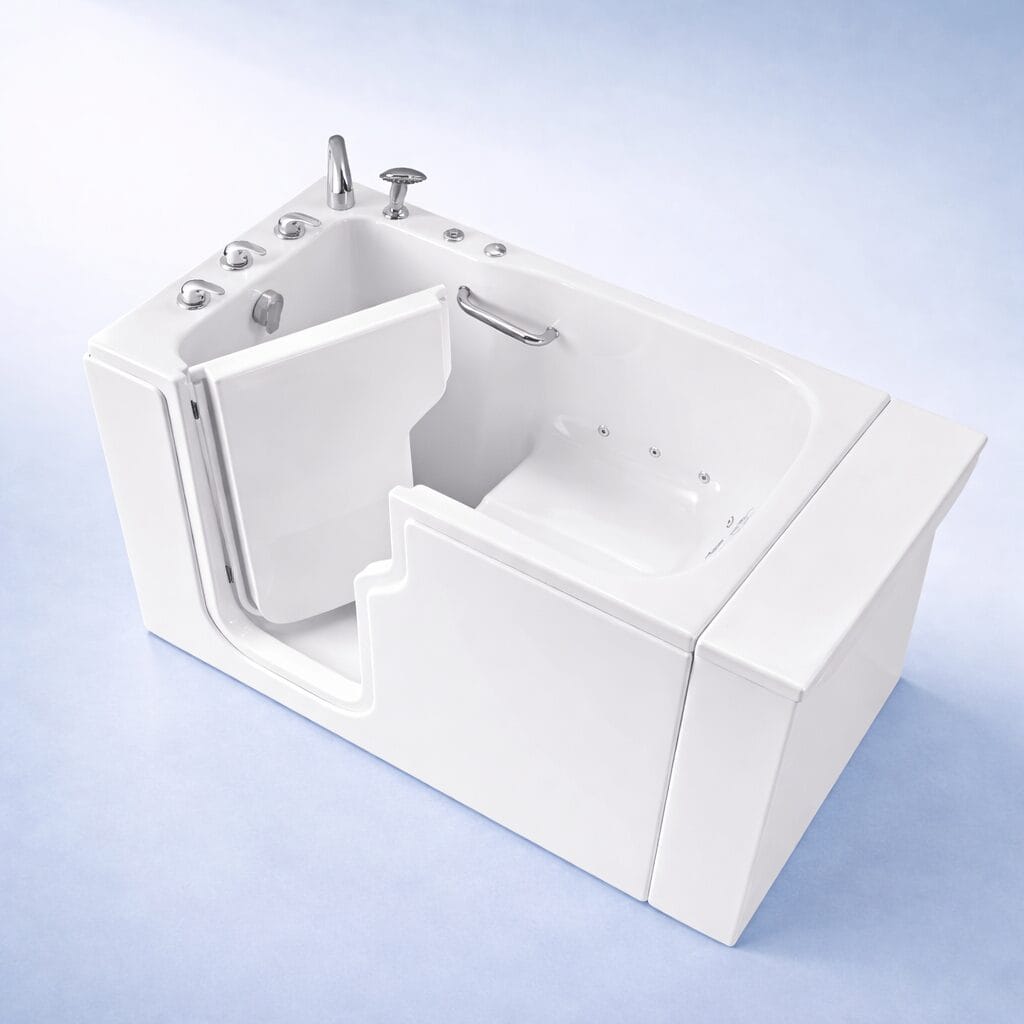
A low-threshold walk-in tub with built-in grab bars and slip-resistant flooring.
What we like:
- Huge variety of tub types and configurations (including specialty needs)
- High water capacity noted versus competitors in testing comparisons
- Extra-low threshold + quick drain + core safety hardware (the fundamentals)
- One-on-one, demo-forward sales approach reported as unusually helpful
What we don’t:
- Tubs arrive fully assembled, which can complicate delivery through narrow doorways
- No company-provided installation service (you’re coordinating contractors)
Our take (real-world use and who it’s for):
If you want one brand to cover the widest range of needs—from standard aging-in-place upgrades to specialty sizes—Ella’s Bubbles stands out. In comparative testing summaries, it’s repeatedly described as offering a broad lineup (“six completely distinct types of tubs”) and the highest water capacity among tubs tested, which matters more than it sounds: deeper fills translate to better immersion comfort, especially for taller or larger bathers, and can make hydrotherapy features feel more effective.
We also like that Ella’s puts the “core safety trio” front and center: low threshold, slip-resistant surfaces, and stable handholds, plus a quick drain to reduce that awkward post-bath waiting period. Those are the features that reduce risk and improve daily usability far more than a long list of accessories.
Where Ella’s Bubbles differs from something like American Standard is focus: American Standard leans harder into a single, dialed comfort experience; Ella’s leans into breadth and fit—finding a tub that matches your exact mobility needs and bathroom constraints.
The biggest planning caveat is logistical. Fully assembled delivery can be a genuine constraint in older homes or tight hallways, and you’ll likely need to coordinate installation separately. If you’re comfortable managing a contractor (or have a trusted installer), the upside is flexibility and a strong chance you end up with a tub that actually matches your body, space, and routine.
Overall verdict: For most buyers, Ella’s Bubbles is the strongest all-around choice—especially if you care about getting the right size and configuration, not just “a walk-in tub.”
Purchase links:
- See the Standard Version on Ella’s Bubbles (manufacturer site)
Our Team’s Pick: Best Value
#2. Safe Step (Call for quote)
Specs (high level):
- Type: Walk-in tub (value-oriented)
- Key features: Very low 2-inch threshold; 26 jets; 70-gallon water capacity noted in one comparison; financing options; lifetime warranty on tub and installation (as noted in one comparison set)
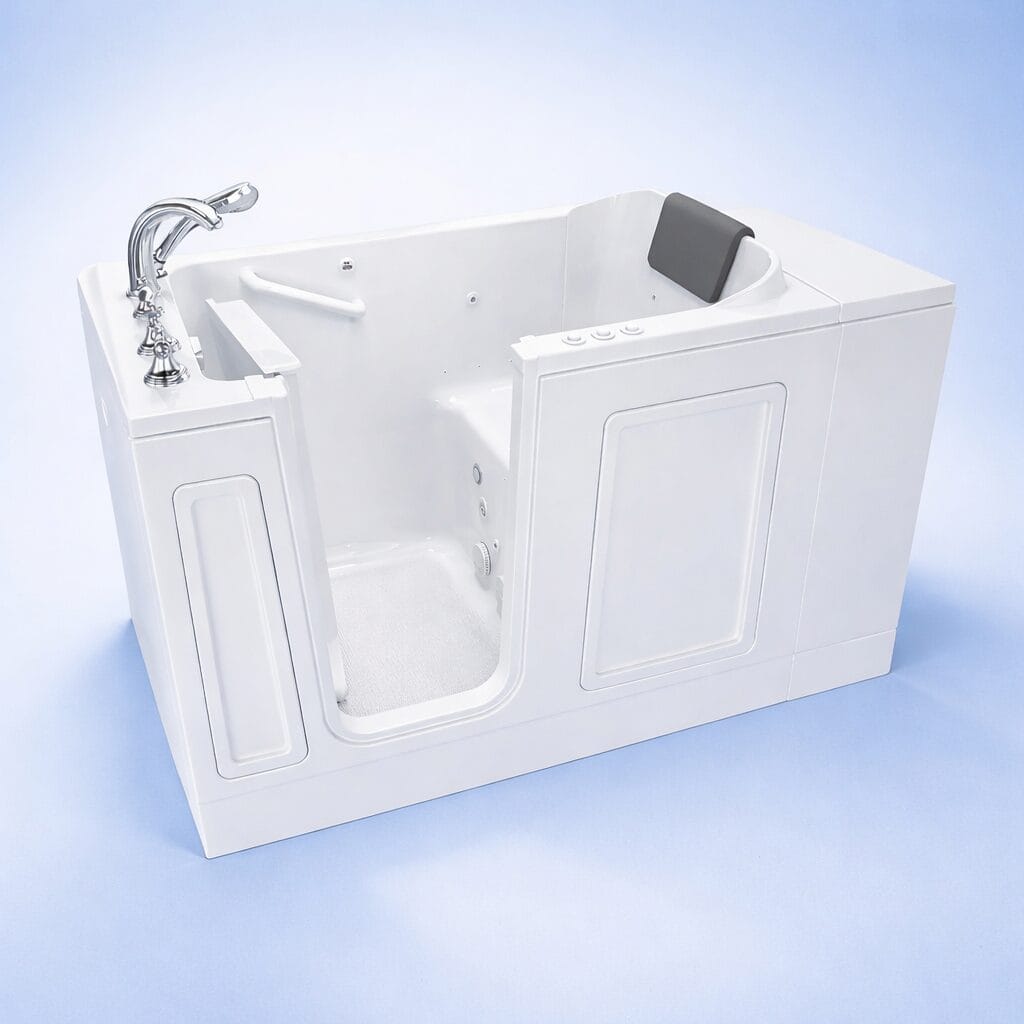
A low-threshold walk-in tub emphasizing affordability, financing, and core safety features.
What we like:
- “Most affordable” positioning in the comparison set (useful signal for budget planning)
- Lowest threshold height (2 inches) can be a game-changer for entry confidence
- Financing options called out (important when budgeting includes installation)
- Warranty terms are described as strong in the comparison context
What we don’t:
- Lowest water capacity (70 gallons) and fewest jets (26) in the comparison set
- Product recall noted as a historical consideration
Our take (real-world use and who it’s for):
Safe Step is the pick for buyers who want a safety upgrade that stays grounded in practicality—especially if stepping over a tub wall is the primary problem to solve. A 2-inch threshold is about as approachable as it gets for many seniors, and that “small step” can be the difference between daily independence and needing assistance.
It’s also one of the few brands in this dataset that explicitly foregrounds financing options. In the real world, the tub is only part of the equation; installation complexity and additional bathroom work can materially change the budget. Anything that helps you plan the full cost picture (and avoid surprises) is a meaningful advantage.
Compared to American Standard, you’re not buying a comfort-maximizing, spa-like jet system. Safe Step’s trade is value + access + core safety, with fewer therapy-first features. And compared to Ella’s, you’re choosing a more defined, mainstream offering rather than a deep catalog of niche models.
The honest caveat is that the spec “ceiling” is lower in this comparison set—lower capacity, fewer jets—and there’s a mention of a recall history. That doesn’t mean it’s a “no,” but it does mean you should ask detailed questions throughout the buying process and be clear about whether your priority is therapy or accessibility.
Overall verdict: For budget-minded households prioritizing easy entry and strong safety basics, Safe Step is the best place to start.
Purchase links:
- See the Standard Version on Safe Step (manufacturer’s site)
Our Team’s Pick: Best for Comfort
#3. American Standard (Call for quote)
Specs (high level):
- Type: Walk-in tub (comfort/therapy-forward)
- Key features: 44 jets; aromatherapy + chromotherapy; air-purge cleanliness feature; ADA compliant; lifetime warranty on tub + installation (as noted in source)

A walk-in tub with hydrotherapy jets and comfort features designed for joint relief.
What we like:
- High jet count and comfort extras aimed at pain relief and relaxation
- ADA compliance and easy entry/exit emphasis
- “Highest comfort score” language is a meaningful differentiator in this category
- Air-purge feature addresses the cleanliness concern many buyers have with jetted systems
What we don’t:
- Limited variety (only one model noted in one comparison set)
- Sales process may require a home presentation and limited showroom access
Our take (real-world use and who it’s for):
American Standard is the pick we come back to when comfort is the priority, particularly for buyers dealing with joint stiffness, chronic pain, or simply wanting bathing to feel restorative again. The specs reinforce that positioning: a 44-jet setup, plus soothing add-ons like aromatherapy and chromotherapy, is designed to deliver a “therapy session” experience rather than just a safer entry.
We also appreciate that the brand emphasises accessibility and cleanliness. ADA compliance is a baseline expectation for many buyers; the air-purge feature is a more “daily-life” win—because jetted tubs can raise real questions about keeping systems fresh over time.
Compared to Ella’s Bubbles, the trade is simple: you get less variety, but a more clearly defined comfort-first experience. If your decision hinges on finding a speciality size (wheelchair-friendly layouts, unusually tall users, or specific footprint constraints), Ella’s tends to be the more flexible playground. If your decision hinges on how the tub feels on a sore day, American Standard has the stronger comfort narrative in the source data.
The main downside is the buying workflow. If you strongly prefer transparent, self-serve retail purchasing, a home-presentation approach can feel like friction. But for many households, that consultative step is also where you surface practical constraints such as space, door swing, and installation realities—things that matter far more than a brochure spec list.
Overall verdict: If comfort and therapeutic bathing are the mission, American Standard is our top recommendation.
Purchase links:
- See the Standard Version on American Standard (manufacturer’s site)
Our Team’s Pick: Premium Design Pick
#4. Kohler (Call for quote)
Specs (high level):
- Type: Walk-in bath (design-forward; soaking/whirlpool options noted)
- Key features: Premium design customization; fast-drain tech noted; tub-and-shower function; aromatherapy mentioned in one review source
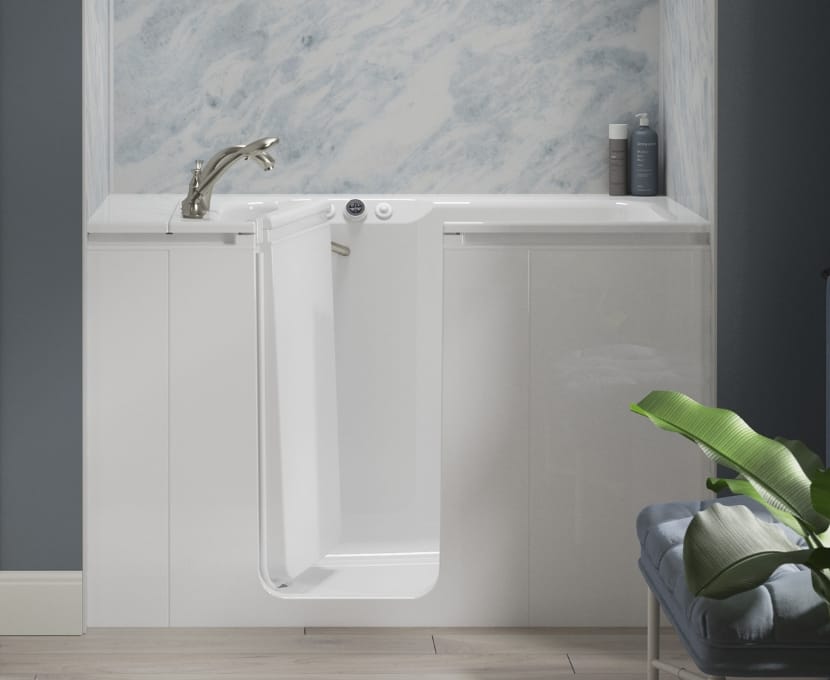
A premium walk-in tub integrated into a full bathroom design with upscale finishes.
What we like:
- High-end customization and the ability to “design the entire bathroom around the tub”
- Fast-drain tech and a quiet, spa-like bathing experience mentioned in one review set
- Strong brand reputation and long operating history referenced in the comparison set
- Warranty described as comprehensive in one review source
What we don’t:
- Higher cost positioning (“most expensive” in the comparison set)
- Accessibility specialties appear limited in the cited review (no wheelchair-accessible or bariatric-friendly models noted there)
Our take (real-world use and who it’s for):
Kohler is the choice when the walk-in tub isn’t just a safety purchase—it’s part of a broader bathroom upgrade where aesthetics, finishes, and an integrated look matter. In the comparison set, Kohler is framed as the most luxurious design option, with upgraded wall coverings, finishes, and an “entire bathroom around the tub” mentality.
We also appreciate the everyday usability elements called out in one review source: fast draining, a quiet bathing feel, and features like aromatherapy. These aren’t just “nice-to-haves.” Fast drain, in particular, directly improves the post-bath experience—less sitting and waiting, less chill, and less frustration.
Where Kohler can fall short is range. Ella’s Bubbles wins when you need unusual sizing or a very specific accessibility form factor. Kohler is less about “everybody’s tub” and more about a premium, curated experience—with the pricing and model limitations that often come with that positioning.
Also worth stating clearly: some reviewers noted high-pressure sales tactics and repair-service challenges. We treat that as a cue to ask detailed questions up front about service response, warranty coverage, and who actually performs the work in your area.
Overall verdict: If you want a walk-in tub that looks and feels like a premium bathroom upgrade—and you don’t need specialty accessibility sizes—Kohler is the design-first pick.
Purchase links:
- See the Standard Version on Kohler (manufacturer site)
Our Team’s Pick: Best Custom Build
#5. Boca (Call for quote)
Specs (high level):
- Type: Customizable walk-in tub
- Key features: 2.25-inch threshold; marine-grade materials; made in U.S.; lifetime guarantee; therapeutic features; customization emphasis
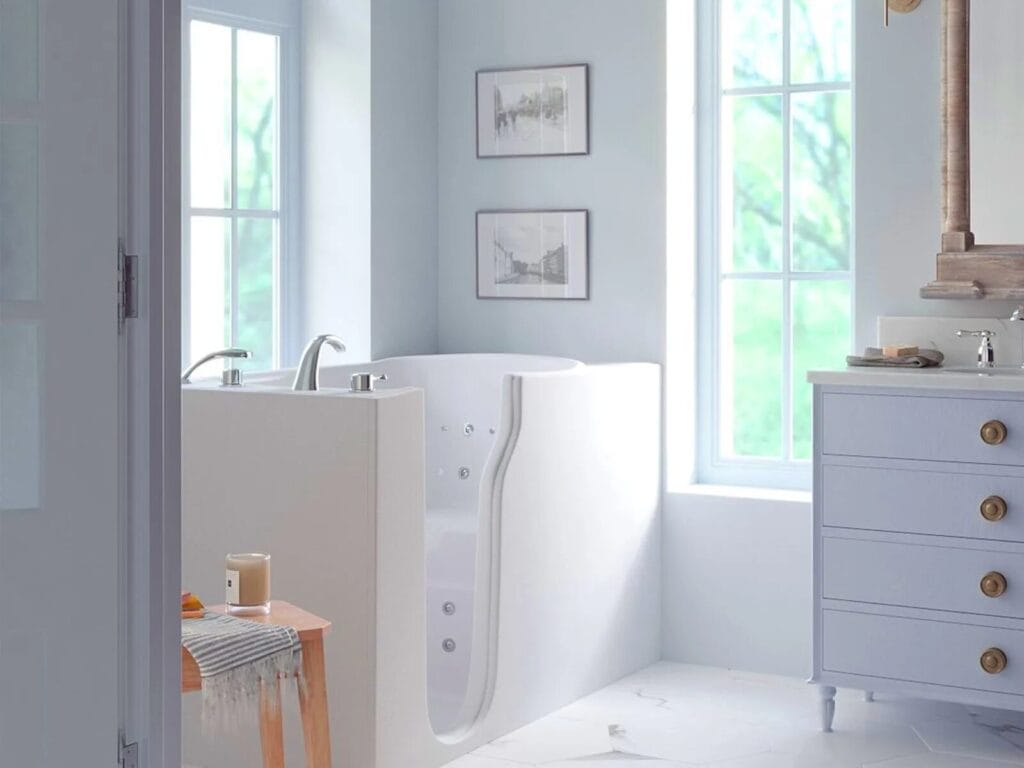
A customizable walk-in tub built to order with a low threshold and durable materials.
What we like:
- Low 2.25-inch threshold supports safer entry
- Marine-grade materials and longevity positioning
- Lifetime guarantee and customization-first approach
- Therapeutic features called out for comfort and pain relief
What we don’t:
- No transparent pricing online (expect a quote process)
- Customer may need to manage permits; custom builds can mean longer lead times
Our take (real-world use and who it’s for):
Boca is for the buyer who doesn’t want “a tub off a menu,” but a tub built around their needs—whether that’s a particular layout, therapeutic preference, or a durability-first material choice. The emphasis on marine-grade materials and a lifetime guarantee makes Boca especially compelling for long-term homeowners who want a one-and-done solution rather than a mid-cycle replacement.
The low threshold is also notable. At 2.25 inches, it’s in the same “confidence range” as Safe Step’s low entry, which can be a huge accessibility win even before you factor in any hydrotherapy features.
Where Boca requires more buyer readiness is process. If you want clear, upfront pricing and a simple checkout-style purchase, Boca’s quote-and-custom workflow can feel slower. And if permits or local approvals are part of the install plan, you’ll want to understand who handles what before you commit.
Overall verdict: Boca is the right pick when customization and long-term durability matter as much as (or more than) brand name.
Purchase links:
- See the Standard Version on Boca (manufacturer sites)
Buying Advice: How to Choose the Best Walk-In Tub
A walk-in tub is one of those purchases where the “right” model is less about brand prestige and more about fit—fit for your bathroom, fit for your mobility needs, and fit for how you actually bathe day to day. The goal is simple: safer entry, a stable seated position, and an exit that doesn’t feel like a balancing act.
Below is the step-by-step framework we use when helping families narrow down options. If you follow it in order, you’ll avoid the most common (and expensive) mistakes, and you’ll end up with a tub that works in real life—not just on paper.
1) Start with space and layout (before features)
The single most expensive mistake we see repeated is simple: buying before measuring. Walk-in tubs are not “one size fits all,” and even small differences in bathroom footprint, doorway width, and plumbing location can determine whether a tub is feasible without costly reconfiguration.
Measure the bathroom like you’re planning an installation, not browsing a catalog:
- Footprint and clearance: Measure the available floor area where the tub will sit, plus the open space you’ll need to safely step in, sit down, stand up, and turn around.
- Doorways and hallways: Measure every pinch point the tub must pass through (front door, hallway turns, bathroom door). Some tubs ship fully assembled, which can become a delivery constraint in older homes.
- Plumbing location: Identify where your existing supply lines and drain are. The closer the new tub’s plumbing can land to what you already have, the more predictable the installation tends to be.
- Electrical and safety outlets: Many walk-in tubs (especially jetted models) require electrical work. Confirm where GFCI outlets and circuits may need to run.
- Who uses the bathroom: If a spouse or caregiver will assist, ensure there’s room for two people to move safely.
Quick reality check: If your bathroom is tight or you’re not sure a walk-in tub is physically realistic, it’s worth pricing out a high-quality walk-in shower setup (grab bars + seat) as a comparison—not as a compromise, but as another safe-bathing solution.
Door swing: inward vs. outward
Door swing is not a minor detail. It affects day-to-day usability and can matter in emergency scenarios.
- Inward-swinging doors can save space in smaller bathrooms, but can reduce access if someone needs help quickly.
- Outward-swinging doors can be more accessible in some layouts but require clear space outside the tub.
Treat door swing as a safety-and-layout decision, not a style choice.
2) Choose the “right kind” of walk-in tub for your needs
Once you know it fits, the next decision is what you want the tub to do. This is where you avoid overspending.
Start by defining the primary goal:
- Safe bathing and independence: Prioritize low step-in, stable seat, grab bars, and slip-resistant surfaces.
- Therapeutic relief: Prioritize jet type/placement, water temperature management, and comfortable seating/back support.
- Future-proofing (aging in place): Consider how your mobility may change over the next 3–10 years and choose features that support that trajectory.
Common tub “use cases” to think through:
- Standard senior-friendly tubs: Best for most homes; focus on low threshold and safety fundamentals.
- Compact/tighter-bathroom tubs: If space is limited, a compact model can be more realistic than forcing a full-size footprint.
- Bariatric or extra-large tubs: If weight capacity and interior room are a concern, you’ll want to confirm specs up front.
- Wheelchair-accessible designs: These can be a very different form factor—worth considering if you anticipate needing that kind of access later.
3) Prioritize safety features that reduce fall risk (the real non-negotiables)
Safety is the entire point of this category. At minimum, you’re looking to reduce the two failure points of bathing: unstable footing and awkward transitions (entering, sitting, standing, exiting).
Practical safety checklist (what matters most):
- Low threshold entry: Lower is generally easier and more confidence-inspiring for limited mobility.
- Slip-resistant flooring: Not just “textured,” but meaningfully grippy when wet.
- Grab bars/handholds: Positioned where you actually transition—entering, lowering into the seat, pushing up to stand.
- Stable, comfortable seat height: If the seat is too low or too slick, standing up becomes the hardest part of the process.
- Easy-to-reach controls: Controls should be usable from a seated position without twisting or reaching.
- Anti-scald protection: Water temperature control matters more when you’re seated and potentially bathing longer.
Safety isn’t just features—it’s layout. Even the best tub can feel unsafe if the bathroom forces awkward turns, tight clearances, or a cramped approach to the door.
4) Decide whether you want “a safer bath” or “a therapy tool”
This is where many buyers overspend. If your priority is simply safe bathing and independence, you may not need high jet counts or spa add-ons. If your priority is pain relief, stiffness management, or a restorative routine, then therapeutic features become a legitimate value driver.
Basic soaker vs. advanced therapy
- Basic soakers handle accessibility and safety. They’re often the best match for people who want a reliable, simple routine with fewer things to maintain.
- Advanced therapy models add jets/heating and features like hydro massage or aromatherapy.
If you’re choosing a jetted tub, look beyond “jet count.”
- Jet placement matters more than the raw number.
- Cleaning and maintenance features matter a lot (especially for long-term ownership).
- If you’re buying for joint relief, comfort features (seat shape, back angle, control placement) can matter as much as the jets themselves.
5) Don’t ignore fill time, drain time, and hot water capacity
Walk-in tubs behave differently than standard tubs: you typically sit inside while it fills, and you still have to wait for it to drain before opening the door. That makes timing and hot water capacity everyday-quality factors—not “spec trivia.”
What to confirm during quotes or demos:
- How long does it take to fill? If fill time is long, the routine can feel tedious—especially in colder bathrooms.
- How fast does it drain? Fast drain is a major comfort and safety win, reducing the time you’re waiting in the tub after bathing.
- Will your water heater keep up? Walk-in tubs can require more hot water than many households expect. If your hot water runs out halfway through, the tub becomes frustrating quickly.
Practical tip: If therapeutic baths are part of your goal, ask specifically about temperature maintenance (and whether any heating features are truly meaningful in regular use).
6) Materials and durability: think in years, not months
When you’re buying a high-use accessibility fixture, durability isn’t just about cosmetics—it’s about how the tub holds up in a wet environment, how it feels underfoot, and how much maintenance it demands over time.
What to look for:
- Durable shell materials: In general, sturdier materials resist flexing and surface wear better.
- Door seal design and reliability: The door is a key difference vs. a traditional tub—understand how it seals, and what the warranty covers.
- Surface maintenance: Ask what cleaners are recommended, and how the surface holds up with normal use.
- Warranty clarity: Separate “tub warranty” from “parts warranty” from “labor/installation warranty.” Those are not the same thing.
If you plan to stay in the home long-term, a tub’s durability and service support often matter more than marginal feature upgrades.
7) Installation realities: plan for complexity and cost variance
Installation is where budgets drift. Many buyers focus on the tub price and underestimate how much the install scope can vary depending on plumbing access, electrical needs, bathroom age, and any renovation work needed to make the setup safe and clean.
Common install variables that change the total cost:
- Plumbing modifications (drain and supply alignment)
- Electrical work for jetted systems
- Flooring and subfloor work (especially in older bathrooms)
- Wall repair/tile work after removing an old tub
- Permits or local code requirements in some areas
- Water heater upgrades if capacity is insufficient
Treat this as one combined project: the tub selection and the installation plan should be considered together. A great tub with a poor install plan can be a headache; a well-planned install can make a mid-range tub feel excellent.
Quote-smart questions to ask (high ROI)
These questions improve your odds of a clean, low-drama outcome:
- What’s included in the quoted price (tub, delivery, demo, plumbing, electrical, finish work)?
- Who performs the installation (in-house vs. subcontractor), and who services it later?
- What warranties apply to the tub, parts, and labor—separately?
- How do service calls work, and what’s the typical response time?
- Is the tub delivered assembled, and are there delivery constraints for narrow doors?
- Are there deposits, and what happens if the tub doesn’t fit as expected?
Pro tip: If you’re remodeling, install grab bars during the remodel even if you’re still deciding on a full walk-in tub; it’s a future-proofing move that costs far less when walls are already open. Also, document the location of any hidden plumbing after the remodel—future you (or future contractors) will appreciate it.
FAQ: Walk-In Tubs (Most-Asked Questions)
Are walk-in tubs safer than a standard tub or shower?
They can be—primarily because they reduce the step-over height and encourage seated bathing, while also supporting safety hardware like grab bars and slip-resistant surfaces. But the safety outcome depends on selecting the right features, placing them correctly, and ensuring the bathroom layout supports safe movement.
Should I get a walk-in tub or just add grab bars and a shower chair?
Sometimes a shower upgrade (grab bars + chair or built-in bench) is sufficient and more convenient—especially if you don’t need a tub for therapeutic use. If your primary issue is stepping over the tub wall or standing to shower, a walk-in shower solution can be an effective alternative. If you want seated bathing or therapeutic features, a walk-in tub may be the better fit.
Do I need to worry about door type?
Yes. Door swing affects both layout and safety. Inward-swinging doors save space but may limit emergency access in some scenarios. Outward-swinging doors can be easier in some layouts but require clearance outside the tub.
What’s the biggest mistake buyers make?
Not measuring and underestimating installation complexity are the two most common problems. The best way to avoid both is to treat this like an installation project from the start: measure carefully, understand plumbing and electrical needs, and get clarity on delivery constraints.
Are hydrotherapy jets worth it?
They can be, particularly if your goal includes comfort, relaxation, and relief for stiff joints or sore muscles. But if your goal is purely safer access, prioritize threshold height, grab bars, and slip resistance first. Jets are a value-add only when they align with how you’ll actually use the tub.
Will I need extra hot water capacity?
Possibly. Many people overlook hot water capacity and fill-time realities when switching to a walk-in tub. If you like longer, hotter baths—or want therapy features—hot water supply can become a limiting factor.
Are walk-in tubs good for aging in place (and resale)?
They can be a strong aging-in-place upgrade, especially for households planning long-term mobility support. Resale impact varies by market and buyer demographics, but a well-installed, cleanly integrated accessibility upgrade can be appealing to the right buyer segment.
Final Thoughts
If you want the safest, most broadly suitable choice—and you care about getting the right configuration—Ella’s Bubbles is the best overall direction to explore. It’s a strong blend of safety fundamentals, breadth of models, and practical usability features like quick drain.
If comfort and therapeutic bathing are the driving reason you’re upgrading, American Standard is the comfort-first option that makes the most sense, especially if joint relief and daily relaxation are part of the plan.
If budget and step-in ease are the constraints, Safe Step is a practical starting point. If premium design integration is the goal, Kohler is the brand that leans hardest into the “full bathroom” feel. And if customization plus durability positioning are top priorities, Boca is worth a close look for a tailored, long-term solution.
Source Links
https://www.ncoa.org/product-resources/mobility/best-walk-in-tubs/#comparing-the-best-walk-in-tubs
https://www.ncoa.org/product-resources/mobility/best-walk-in-tubs/#ellas-bubbles-best-walk-in-tub-overall
https://www.retirementliving.com/reviews/safe-step
https://www.retirementliving.com/reviews/kohler-walk-in-tubs
https://www.retirementliving.com/reviews/american-standard
https://www.retirementliving.com/reviews/ellas-bubbles
https://www.retirementliving.com/reviews/boca-walk-in-tubs
https://www.retirementliving.com/best-walk-in-tubs
https://www.rebath.com/blog/walk-in-bathtub-buyers-guide/
https://www.safesteptub.com/blog/factors-to-consider-before-choosing-a-walk-in-bathtub/
Anyone Have Experience - Good or Bad - With A Walk-In Bathtub?
 by inHomeImprovement


