
Best Tub Transfer Benches of 2026
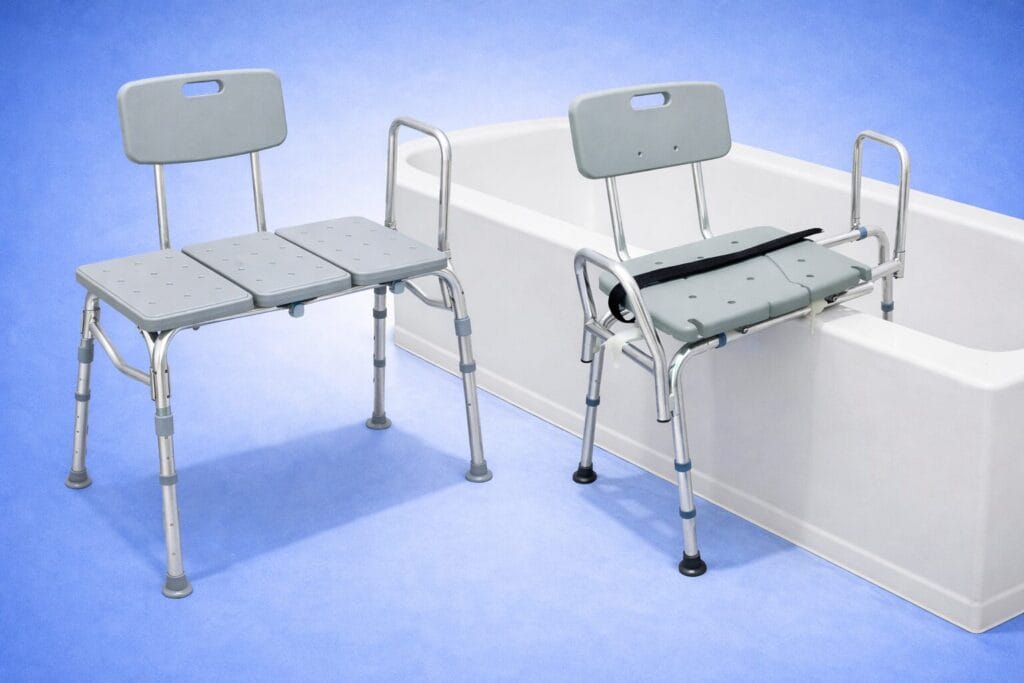
An in-depth guide to the year’s top tub transfer benches, from simple fixed benches to sliding transfer designs.
A tub transfer bench (sometimes called a bathtub transfer bench or shower transfer bench) is a stability aid that lets you sit down outside the tub and move across into the bathing area—rather than stepping over a slick, high threshold. For many older adults, post-surgical patients, and anyone with limited balance or strength, that single change can materially reduce fall risk while making bathing more independent and less exhausting.
When we evaluate transfer benches, we focus on the fundamentals that actually matter in day-to-day use: stability (does it shift on wet surfaces?), fit (does it truly match your tub and bathroom footprint?), comfort and support (backrest, seat size, arm/grab supports), adjustability (especially leg height), and long-term durability (rust resistance and build quality).
We also look closely at the tradeoffs between fixed benches (often simpler, steadier, and easier to “trust”) and sliding transfer benches (potentially easier for caregivers and users who struggle to lift or pivot, but more sensitive to tub fit and build tolerances). Price is typically reasonable in this category, but the “right” pick is more about correct sizing and safety features than paying more.
One note upfront: based on the product research provided, there are only two transfer-bench models that clearly stand out as widely used, well-reviewed options for this roundup. That’s unusual for most “best of” lists, but for safety-critical categories, we would rather recommend fewer, better-vetted choices than pad the list with questionable fits.
We reference a comparison table and a buying advice section below to help you quickly narrow in on the right bench for your tub, your mobility needs, and your budget.
Editor’s Note (January 2026): This guide reflects the latest set of user-tested pros/cons and updated buying considerations from the provided research.
Our Team’s Tub Transfer Bench Picks
Best Overall Tub Transfer Bench: Drive Medical Tub Transfer Bench for Bathtub (Amazon)
https://www.amazon.com/Drive-Medical-Transfer-Adjustable-Backrest/dp/B002VWK0T6/
Best Budget Option: Drive Medical Tub Transfer Bench for Bathtub (Amazon)
https://www.amazon.com/Drive-Medical-Transfer-Adjustable-Backrest/dp/B002VWK0T6/
Quick Comparison Table (2026)
| Model | Best for | Design | Notable highlights | Watch-outs |
|---|---|---|---|---|
| Drive Medical Tub Transfer Bench | Most people; dependable everyday use | Fixed transfer bench | 350-lb capacity, suction cup feet, drainage holes, adjustable height, backrest | Less “assistive” than a slider for users who can’t pivot well |
| DMI Tub Transfer Bench and Shower Chair | Caregiver-assisted transfers; lighter carry/handling | Sliding transfer bench | Sliding design reduces strain, adjustable seat height, ~10.7 lb | Fit and stability are more variable; mixed feedback on wobble/operation |
#1. Drive Medical Tub Transfer Bench for Bathtub ($51.61)
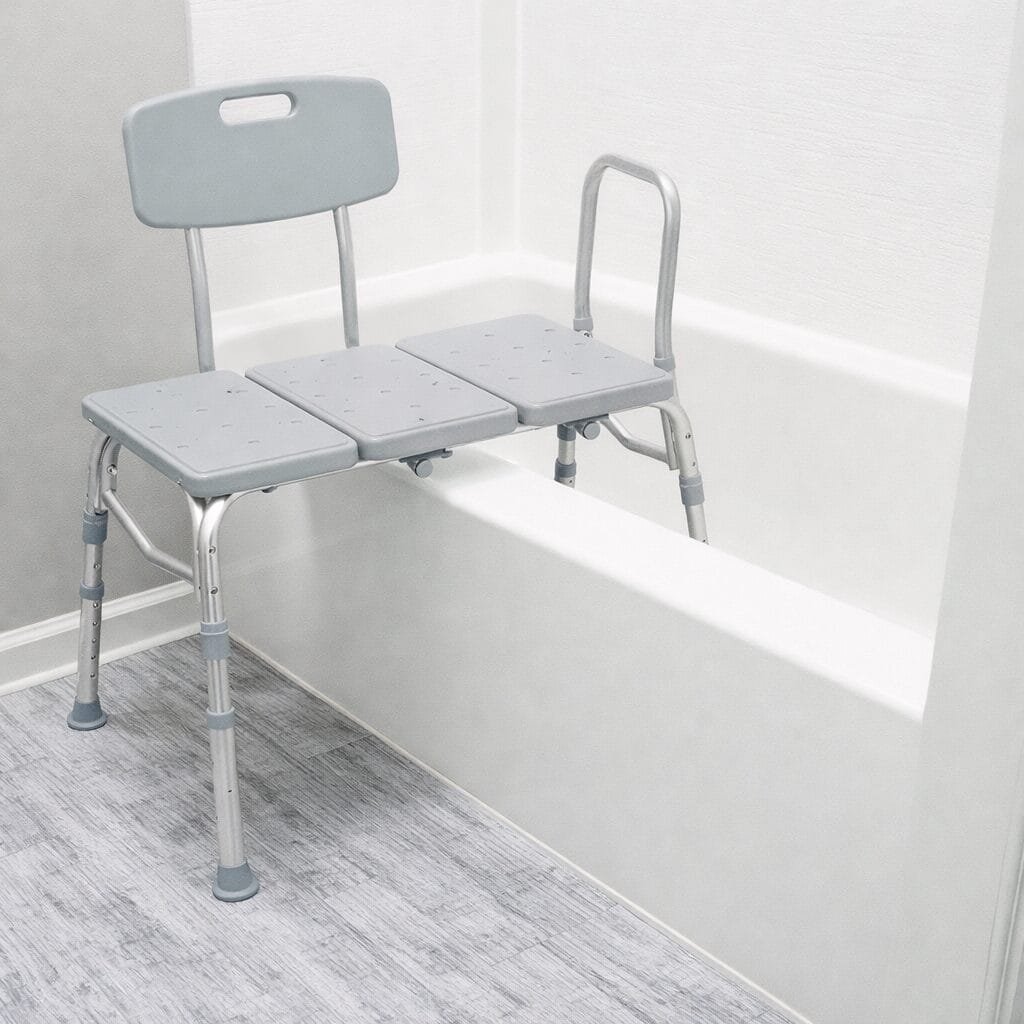
Image caption (alt text): Drive Medical tub transfer bench with adjustable legs, suction-cup feet, and backrest.
Specs (at a glance)
- Weight: Not specified (aluminum frame)
- Type: Fixed tub transfer bench (reversible backrest)
- Key features: Height-adjustable legs, backrest support, drainage openings, suction cup feet, 350-lb capacity
What we like
- Excellent stability for the price (users consistently describe it as sturdy and non-shifting)
- Tool-free assembly that’s genuinely fast and approachable
- Height adjustability makes it easier to dial in a safe sit-and-swing transfer
- Backrest + drainage holes improve comfort and reduce “pooling” that can make transfers slippery
What we don’t
- Fixed benches require a bit more user control during the transfer than a true sliding system
- Like all benches, fit can make or break safety—you still need to measure tub height and bathroom clearance
In real-world use
For most households, the Drive Medical bench hits the core requirement: it feels steady enough to trust on day one. That matters more than any accessory feature, because a bench that shifts or rattles becomes a constant source of hesitation—and hesitation in a wet tub is where accidents happen. Users repeatedly describe this model as slip-resistant and “not moving in the tub,” which aligns with what we look for in a primary recommendation.
We also like the practical design choices: the drainage openings help keep water from collecting under you (and reducing friction), and the backrest provides the kind of support that turns an “I can manage this” transfer into a calmer, more repeatable routine. The height adjustment is another key piece—small changes in seat height can determine whether you’re transferring with control or “dropping” onto the bench.
Compared to the DMI sliding bench below, the Drive is the more straightforward pick. You give up the potential ease of a slide transfer, but you gain simplicity and—based on user feedback—more consistent perceived stability. If you’re buying one bench for a parent, for post-op recovery, or for long-term mobility support, this is the model we’d start with.
Overall verdict
For stability, simple setup, and day-to-day confidence, the Drive Medical is our top choice for most seniors and caregivers.
Purchase links
See the Standard Version on Amazon:
https://www.amazon.com/Drive-Medical-Transfer-Adjustable-Backrest/dp/B002VWK0T6/
#2. DMI Tub Transfer Bench and Shower Chair ($Varies)
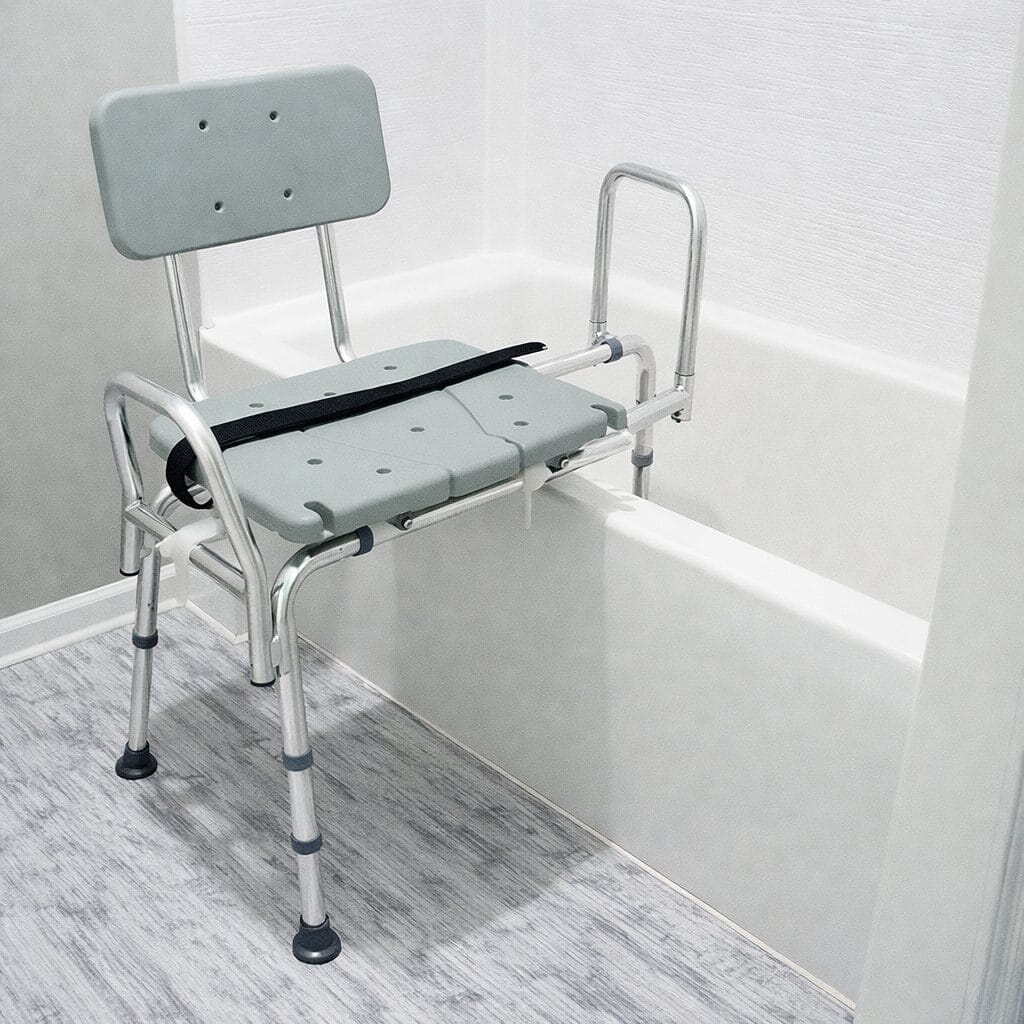
Image caption (alt text): DMI sliding tub transfer bench designed to reduce strain during bathtub transfers.
Specs (at a glance)
- Weight: 10.7 lb
- Type: Sliding tub transfer bench / shower chair
- Key features: Sliding transfer design, adjustable seat height, lightweight build, safety-oriented transfer concept
What we like
- Sliding transfer can reduce strain for users who struggle to lift/pivot into the tub
- Very manageable weight for caregivers who need to move or reconfigure the setup
- Fast assembly (often described as snapping together quickly)
- Conceptually strong for tub/shower combos where transfers are the hardest moment
What we don’t
- Mixed feedback on stability and fit (some reports of wobble or improper fit depending on tub geometry)
- Sliding mechanism usability varies—some users find it harder to operate than expected
In real-world use
A sliding bench can be a real win when the limiting factor isn’t standing endurance, but the transfer motion itself—especially for users who can sit safely but can’t confidently step, pivot, or lift one leg over a threshold. In those situations, being able to sit and slide can reduce caregiver strain and make bathing more repeatable.
That said, sliding benches are inherently more sensitive to tub dimensions and tolerances. If the bench is even slightly “off” in width, leg adjustment, or how the feet contact the surface, you can end up with a setup that feels wobbly—particularly when water is on the floor or when the user’s weight shifts mid-transfer. And because the bench is designed to move, the perceived stability often depends on how smooth and secure the sliding track feels in your specific bathroom.
Compared to the Drive Medical above, we see the DMI as the more specialized option: it can be the right answer for certain mobility limitations, but it requires more careful measuring and a more honest assessment of whether the slider actually improves control for the user (versus introducing another point of variability). If you go this route, the “buying advice” section below becomes non-negotiable—measure first, confirm height and clearance, and do a dry run transfer before adding water to the equation.
Overall verdict
If a sliding transfer meaningfully reduces the effort and risk of getting into the tub, this can be a smart caregiver-friendly choice—just be meticulous about sizing and stability checks.
Purchase links
See the Standard Version on Amazon:
https://www.amazon.com/Transfer-Sliding-Aluminum-Adjustable-Capacity/dp/B000NGUD94/
Buying Advice Overview: How to Choose the Best Tub Transfer Bench
1) Start with measurements (this is where most mistakes happen)
Before features, brands, or price: measure your tub and bathroom space. The most common failure mode in this category is buying a bench that almost fits—then “making it work” in a wet environment.
- Seat height vs. tub threshold: You want a stable sit that doesn’t force a drop-down or a climb-up.
- Seat depth and width: Too small creates insecurity; too large can interfere with tub walls or bathroom clearance.
- Bathroom layout: Ensure there’s space for assistance if a caregiver will help.
2) Choose the right design: fixed bench vs. sliding bench
- Fixed benches tend to feel simpler and more “locked in.” If the user can perform a controlled sit-and-swing transfer, fixed is often the safest, least fiddly solution.
- Sliding benches can reduce strain for users who can’t pivot well, but they demand better fit and sometimes introduce stability variability depending on tub geometry and build tolerances.
3) Prioritize safety hardware, not “nice-to-haves”
A transfer bench should earn trust through boring, effective engineering:
- Suction-cup or high-traction feet to reduce shifting
- Backrest if the user benefits from postural support and confidence while seated
- Drainage holes to reduce pooling and slippery surfaces
- A capacity buffer: don’t buy exactly at the user’s weight—leave margin
4) Comfort is practical, not luxury
- Padded vs. unpadded: Padding can improve comfort, but can also retain water and slow drying. Unpadded seats often dry faster and maintain friction better.
- Back support: For many users, a backrest doesn’t just add comfort—it reduces fatigue and improves transfer control.
5) Price range: what to expect
In most cases, you’ll find strong, functional transfer benches in the budget-to-midrange tier, with higher cost primarily tied to specialized designs (certain sliders, heavier-duty frames, or extra support components). We recommend spending based on fit and safety features, not on premium add-ons that don’t reduce fall risk.
Final Thoughts
If you want one recommendation that will work for the broadest range of households, the Drive Medical Tub Transfer Bench is the practical pick: stable, straightforward, adjustable, and widely trusted in everyday use. For users who specifically struggle with pivoting and benefit from a sit-and-slide transfer, the DMI sliding bench can be the right tool—provided you measure carefully and confirm stability in your exact tub setup.


