
Best Raised Toilet Seats (Toilet Seat Risers) of 2026
An in-depth guide to the year’s top raised toilet seat options, from discreet everyday upgrades to safety-first designs with handles
Introduction
A raised toilet seat is one of the simplest home modifications that can dramatically improve safety, comfort, and independence for older adults, people recovering from surgery, or anyone with limited mobility. By increasing seat height—typically by 3 to 6 inches—these products reduce the strain placed on knees, hips, and the lower back during sitting and standing.
What makes choosing the right raised toilet seat tricky is that “simple” doesn’t always mean “universal.” Height, stability, bowl compatibility (round vs. elongated), weight capacity, and ease of cleaning all matter, and the best option for a post-surgery recovery may be very different from what works in a multi-user household.
For this guide, we evaluated raised toilet seats based on real-world usability: how stable they feel during daily use, how easy they are to install and clean, how seamlessly they integrate into a normal bathroom, and whether their design prioritizes dignity as much as safety. Our picks span subtle, seat-integrated risers, models with added support handles, and budget-friendly solutions that still get the fundamentals right.
Below you’ll find our team’s top picks, followed by detailed reviews of each model. A comparison table (S1) and buying advice section (S2) help break down the key differences and guide you toward the right choice for your needs.
Our Team’s Raised Toilet Seat Picks
Best Overall: Bemis Independence Assurance 3″ Raised Toilet Seat
Best Budget Option: Vive Raised Toilet Seat (Seat-Integrated)
Best With Handles: Vive Raised Toilet Seat Riser with Handles
Best Easy Install: Drive Medical Raised Toilet Seat
Best Discreet Upgrade: Vive Hinged Raised Toilet Seat
Best Overal
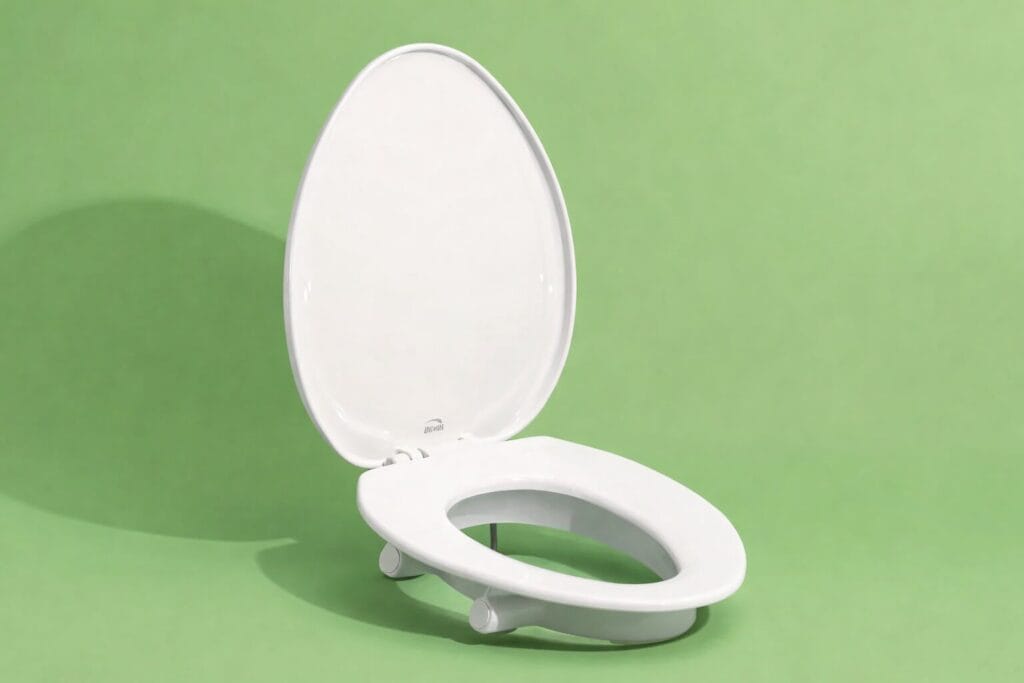
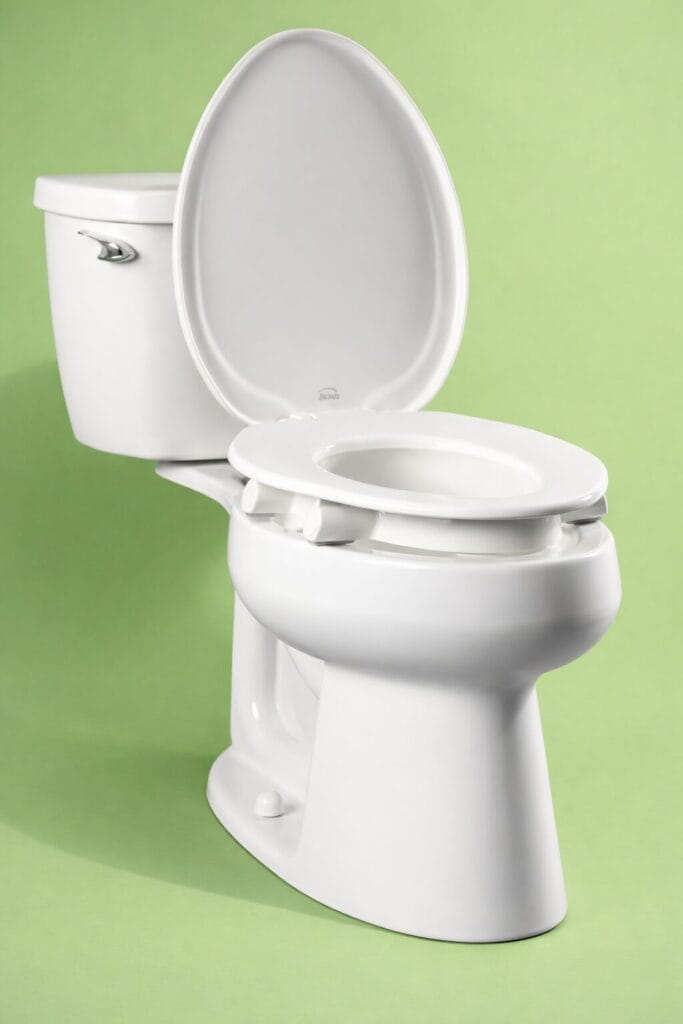
#1. Bemis Independence Assurance 3″ Raised Toilet Seat
Specs
- Type: Seat-integrated raised toilet seat
- Height Increase: 3.5 inches
- Key Features: Hinged design, integrates with existing lid and seat
What we like
- Uses the existing toilet seat for comfort
- Hinged design allows easier cleaning
- Provides more height than standard 3″ risers
- More subtle appearance than clamp-on models
What we don’t
- More difficult to install and fully remove
- No handles
- Comparatively high price
Performance & Use
This Vive raised toilet seat ranked highest among seat-integrated risers in the research provided. By installing beneath the existing toilet seat and lid, it maintains a more familiar sitting surface while adding a meaningful 3.5 inches of height.
The hinged design is repeatedly noted as a major benefit, allowing temporary removal for cleaning and hygiene—an area where many basic risers fall short. Compared to clamp-on options, this model prioritizes comfort and design over maximum height or additional support features.
Installation is more involved than tool-free clamp-on models, but once installed, users describe it as a versatile and effective solution for daily use.
Overall verdict: A strong all-around option for users who want added height, better cleaning access, and a less medical look.
Purchase: See the Vive Raised Toilet Seat
Best Budget Option
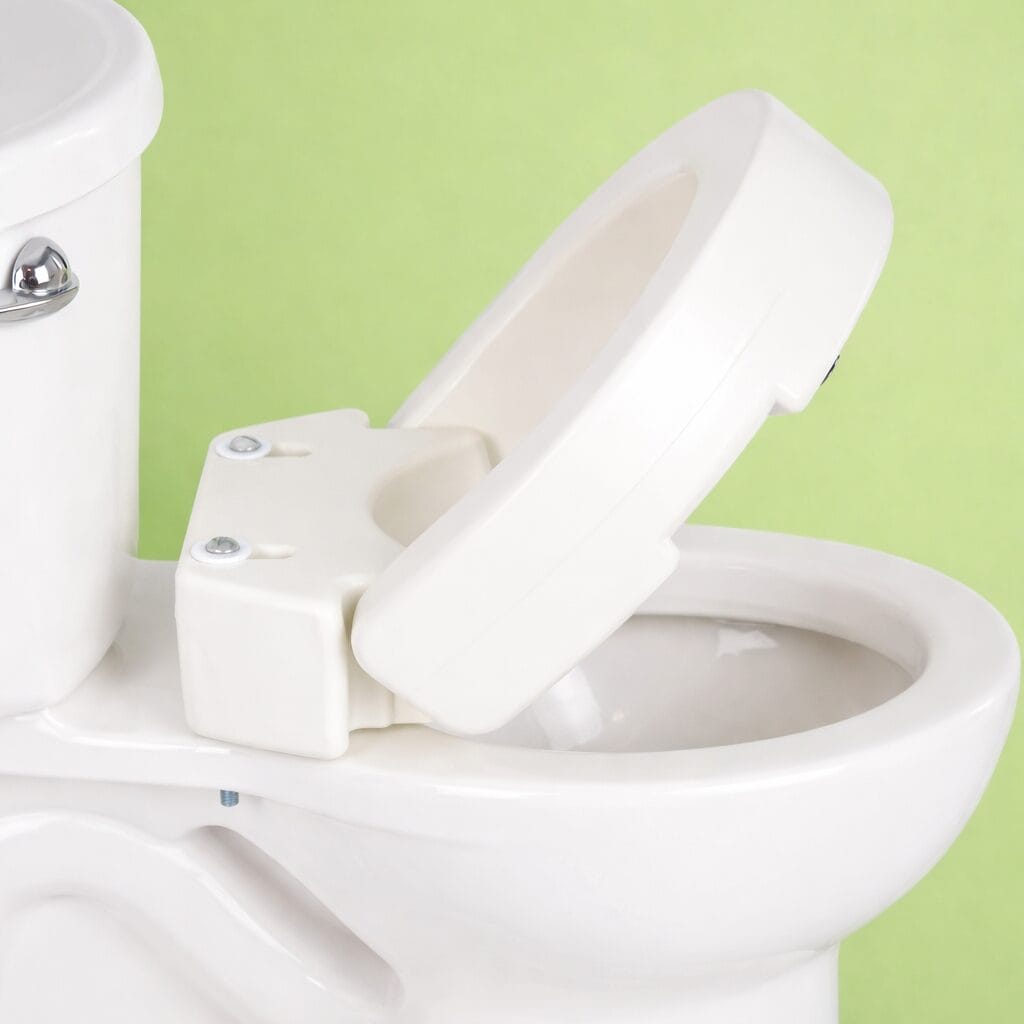
#2. Vive Raised Toilet Seat (Seat-Integrated, Hinged)
Specs
- Type: Seat-integrated raised toilet seat
- Height Increase: 3.5 inches
- Key Features: Hinged design, integrates with existing lid and seat
What we like
- Uses existing seat for comfort
- Hinged design improves cleaning
- Adds more height than standard 3″ risers
- Described as affordable compared to alternatives
What we don’t
- More difficult to install and remove
- No handles
- Not as subtle as seat-replacement designs
Performance & Use
This Vive model is repeatedly highlighted in the dataset for its balance of comfort, height, and price. By working with the existing toilet seat and lid, it preserves a familiar sitting surface while adding a meaningful 3.5 inches of elevation.
The hinged design is consistently cited as a key benefit for hygiene, making it easier to clean than fixed risers. Compared to the Bemis, this option trades some stability and subtlety for affordability and extra height.
Overall verdict: The best budget-friendly option for users who want more height without switching to a bulky clamp-on riser.
Purchase: See the Vive Raised Toilet Seat
Best with Handles
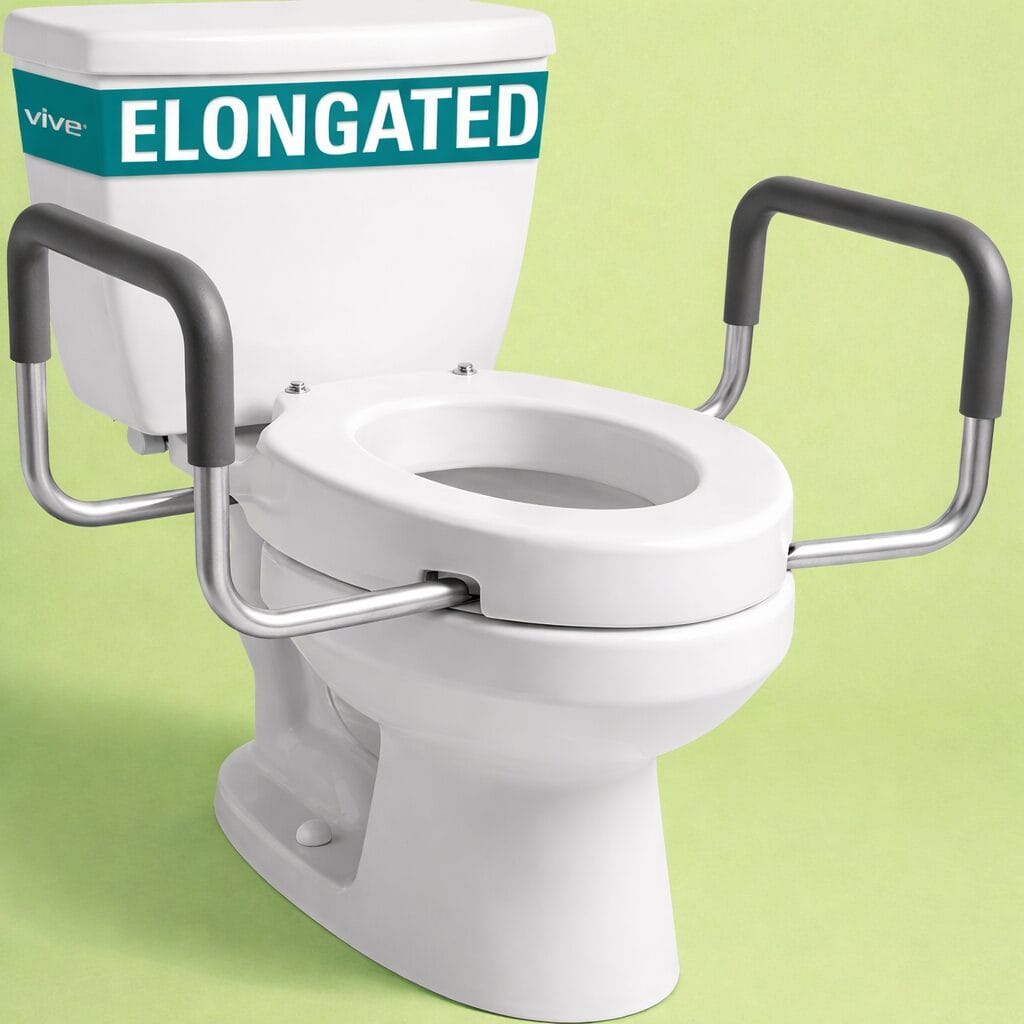
#3. Vive Raised Toilet Seat Riser for Seniors (with Handles)
Specs
- Type: Clamp-on raised toilet seat with handles
- Height Increase: 3–4 inches
- Key Features: Foam-padded handles, tool-free installation
What we like
- Handles provide leverage and safety
- Easy one-person installation
- Makes standing noticeably easier
- Well suited for post-surgery recovery
What we don’t
- Some reports of minor slipping
- Fit feedback varies for larger users
Performance & Use
This model is clearly positioned in the dataset as a safety-first option. The padded handles provide additional support for users with limited strength, balance issues, or those recovering from knee or hip surgery.
Installation is described as quick and tool-free, making it practical for temporary use. Compared to seat-integrated risers, this model sacrifices subtle design in favor of physical assistance.
Overall verdict: The best choice when safety and leverage matter more than aesthetics.
Purchase: See the Vive Raised Toilet Seat Riser with Handles
Best Easy Install / Max Height:
#4. Drive Medical Raised Toilet Seat
Specs
- Type: Clamp-on raised toilet seat
- Height Increase: 5–6 inches
- Key Features: Removable grab bars, no-tool installation
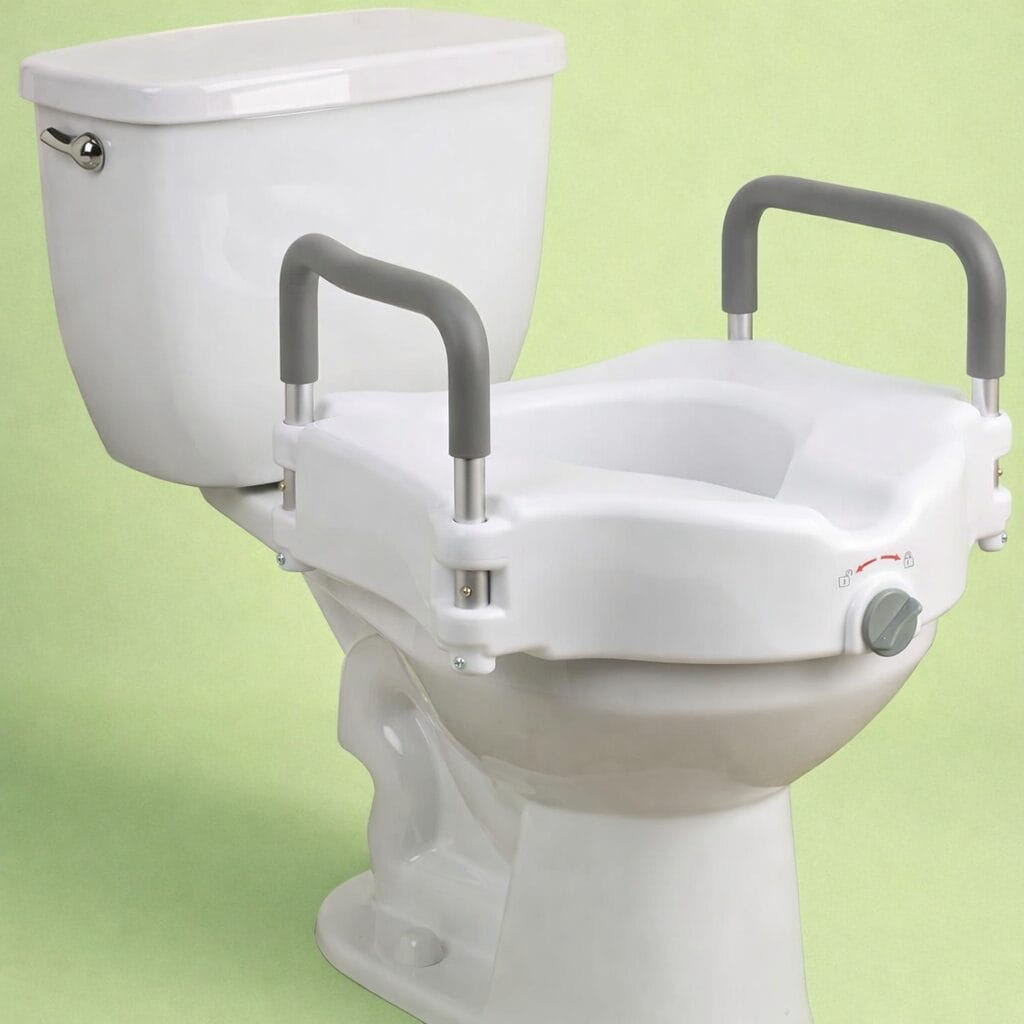
What we like
- Very fast installation
- Provides the largest height increase
- Arms can be removed
What we don’t
- No lid
- Less comfortable than seat-integrated models
- Bulky appearance
- Mixed stability feedback
Performance & Use
Drive Medical’s riser is consistently described as functional and fast to deploy. The large height increase makes it useful for users who need maximum elevation, including those recovering from hip replacement surgery.
However, the dataset also notes tradeoffs in comfort and stability, particularly compared to models that use the existing seat. This makes it better suited for short-term recovery rather than permanent installation.
Overall verdict: Best for users who need maximum height quickly and don’t mind a more utilitarian design.
Purchase: See the Drive Medical Raised Toilet Seat
Buying Advice: How to Choose a Raised Toilet Seat
Choosing the right raised toilet seat is less about finding a “best product” and more about matching the seat type to the user’s physical needs, bathroom setup, and intended duration of use. Based on the research, most purchasing mistakes happen when height, stability, or installation method are overlooked.
1. Stability Comes First
Across multiple sources in the dataset, stability is consistently identified as the most important factor. A riser that shifts, flexes, or feels insecure can increase fall risk rather than reduce it.
- Seat-replacement models (like the Bemis) are generally the most stable because they bolt on like a standard toilet seat.
- Clamp-on risers are quicker to install but may feel less secure, especially on elongated bowls or when improperly tightened.
- Bolt-on or locking mechanisms provide more security but reduce portability.
If the user has balance issues or limited strength, stability should outweigh convenience.
2. Height: Measure Before You Buy
Several sources emphasize that incorrect height selection is one of the most common mistakes.
Recommended process (from the dataset):
- Measure the height from the floor to the back of the knee.
- Measure the height of the existing toilet seat.
- The difference between the two measurements determines how much lift is needed.
Key takeaways:
- 3–3.5 inches works well for many users and is common among seat-integrated risers.
- 5–6 inches may be necessary for hip replacement recovery or severe mobility limitations, but can reduce stability if the base is narrow.
More height is not always better—excessive lift can feel unstable or awkward for some users.
3. Seat-Integrated vs. Clamp-On Risers
The dataset clearly separates raised toilet seats into functional categories:
Seat-Integrated / Replacement Risers
- Use the existing seat or replace it entirely
- Feel more natural and comfortable
- Easier to clean if hinged or lift-off
- Better for long-term or everyday use
Clamp-On Risers
- Faster to install and remove
- Often used for temporary recovery
- May feel bulkier or less discreet
- Stability varies depending on design and toilet shape
If discretion, comfort, and daily use matter, seat-integrated designs are favored. Clamp-on designs make more sense for short-term needs.
4. Handles: Helpful but Not Always Necessary
Handles are frequently recommended for:
- Post-surgery recovery
- Users with balance issues
- Individuals with limited upper-body strength
However, they are not universally needed:
- Some users prefer a cleaner, less medical look
- Handles add bulk and can interfere in smaller bathrooms
- Not all users require assistance once seated
The dataset suggests choosing handles only when leverage or balance support is clearly needed, rather than by default.
5. Ease of Cleaning Matters More Than It Seems
Ease of cleaning is repeatedly emphasized across buying guides and reviews.
Features that improve hygiene:
- Hinged designs that lift for access
- Lift-off seats that fully detach
- Minimal seams and crevices
Designs that trap waste or are difficult to remove often lead to dissatisfaction over time, even if the seat initially feels comfortable.
6. Compatibility and Fit Are Not Universal
A recurring warning across sources: do not assume universal fit.
Before buying, always confirm:
- Round vs. elongated toilet bowl
- Seat width (especially for models with arms)
- Weight capacity
- Clearance around the toilet for arm supports
Many negative reviews stem from fit issues rather than product quality.
7. Common Buying Mistakes to Avoid
Based on the dataset, the most frequent mistakes include:
- Not measuring height requirements
- Ignoring weight capacity
- Prioritizing price over stability
- Choosing designs that are difficult to clean
- Assuming all risers fit all toilets
- Overlooking long-term comfort for short-term convenience
Avoiding these errors usually leads to much higher satisfaction.
Final Thoughts
Raised toilet seats are among the most effective and low-effort bathroom modifications available, but only when chosen correctly. The research makes it clear that no single model is best for every user, which is why separating picks by use case is essential.
Seat-replacement and seat-integrated risers excel for users who want a stable, discreet, and comfortable long-term solution. Clamp-on risers with handles serve a different purpose: short-term recovery, maximum height needs, or situations where physical assistance is required.
The most successful purchases align three factors:
- The user’s physical limitations
- The bathroom’s layout and toilet type
- Whether the solution is temporary or permanent
When those factors are matched correctly, a raised toilet seat can significantly improve independence, safety, and daily comfort with minimal disruption.
Works Cited / Sources
The following sources were used in compiling this guide. All insights, comparisons, and product evaluations are derived exclusively from the dataset provided:
- New York Times Wirecutter — Best Toilet Seat Risers
https://www.nytimes.com/wirecutter/reviews/best-toilet-seat-risers/ - ReviewED — Best Toilet Seat Risers
https://www.reviewed.com/accessibility/best-right-now/best-toilet-seat-risers - EquipMeOT — Guide to Selecting the Best Toilet Seat Riser
https://www.equipmeot.com/guide-to-selecting-the-best-toilet-seat-riser/ - Carex — Buyer’s Guide: Selecting the Best Raised Toilet Seat
https://carex.com/blogs/resources/buyers-guide-selecting-the-best-raised-toilet-seat - Garvee — How to Choose a Raised Toilet Seat
https://www.garvee.com/blogs/buying-guides/how-to-choose-a-raised-toilet-seat-a-comprehensive-buying-guide - Evekare — A Complete Buying Guide for Raised Toilet Seats
https://evekare.com/AU/toilet-aids/a-complete-buying-guide-for-raised-toilet-seats/ - Reddit — r/TotalHipReplacement Discussion on Raised Toilet Seats
https://www.reddit.com/r/TotalHipReplacement/comments/1hqhd3w/raised_toilet_seat/ - Product reviews and listings from Amazon and Wirecutter as referenced within the dataset extraction_20251223_0935


