
Best Over-the-Counter Hearing Aids of 2026
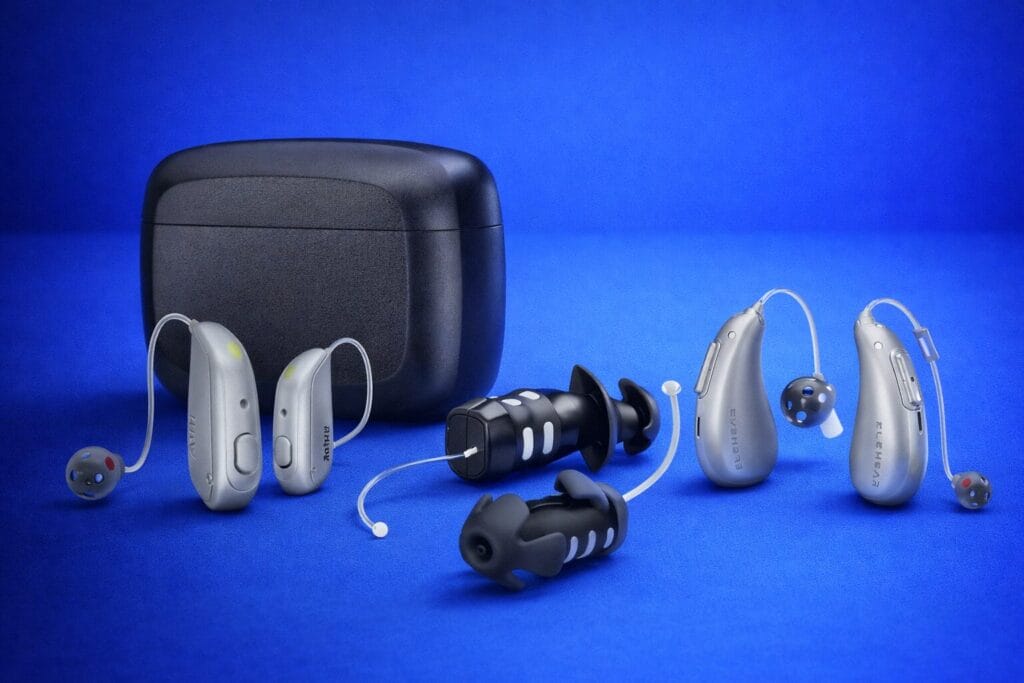
An in-depth guide to the year’s top OTC hearing aids, from budget-friendly presets to premium in-ear designs—and hearing glasses for maximum ease
Hearing loss often shows up in small ways first: asking people to repeat themselves, struggling in restaurants, or feeling tired after conversations. In 2026, you no longer need to start with an expensive clinic visit—over-the-counter (OTC) hearing aids now include genuinely strong performers across multiple styles and budgets.
This guide focuses on OTC hearing aids intended for adults (18+) with perceived mild to moderate hearing loss. If you suspect severe hearing loss or red-flag symptoms, FDA guidance recommends working with a professional rather than guessing with OTC.
When narrowing this to eight, we prioritized what actually drives long-term use: speech clarity, background-noise handling, comfort and fit, ease of setup, battery practicality, and trial/support policies.
Our Team’s Over-the-Counter Hearing Aid Picks
Best Overall OTC Hearing Aid: Sennheiser All Day Clear
Best Budget Option: Lucid Enlite
Best Lightweight / Compact: Sony CRE-C20
Best Premium “Remote Care” Option: Jabra Enhance Select 700
Best for Customisation / EQ Control: Lexie B2 Powered by Bose
Best for Safety (water/dust resistance): Eargo 7 (IP68 noted in some coverage)
Best for Occasional Use: Tweak Enhance
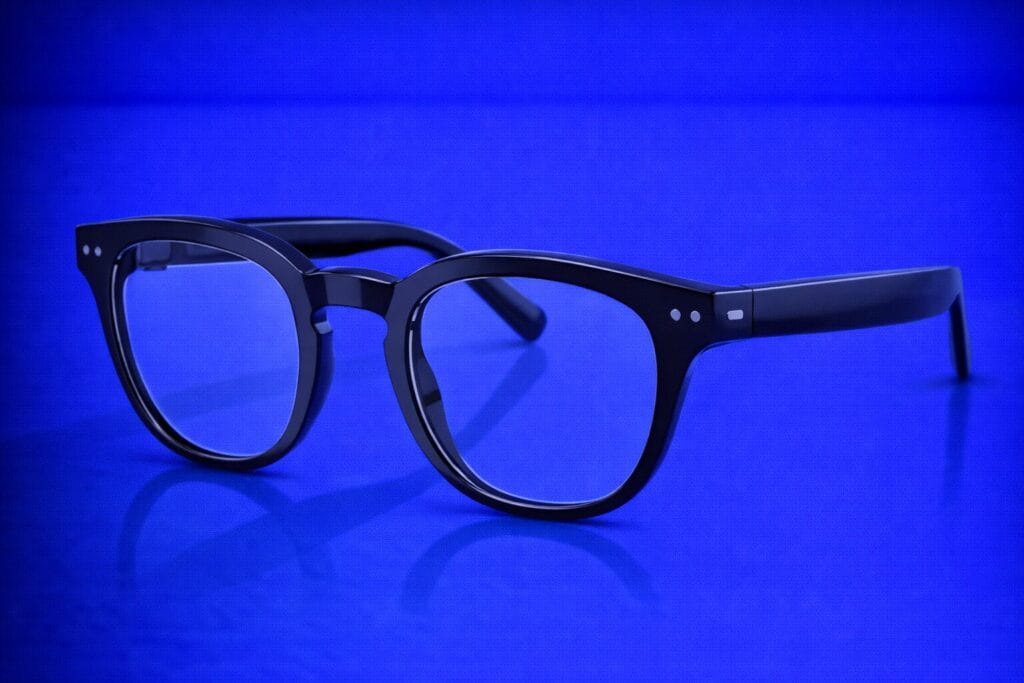
Best for Comfort (no in-ear components): Nuance Audio Panthos (hearing glasses)
#1. Sennheiser All Day Clear ($949)
Specs
- Weight: Not specified
- Type: Behind-the-ear (BTE / receiver-in-canal style)
- Key features: Strong background-noise management, rechargeable (16 hrs), app-based setup/EQ, 100-day returns
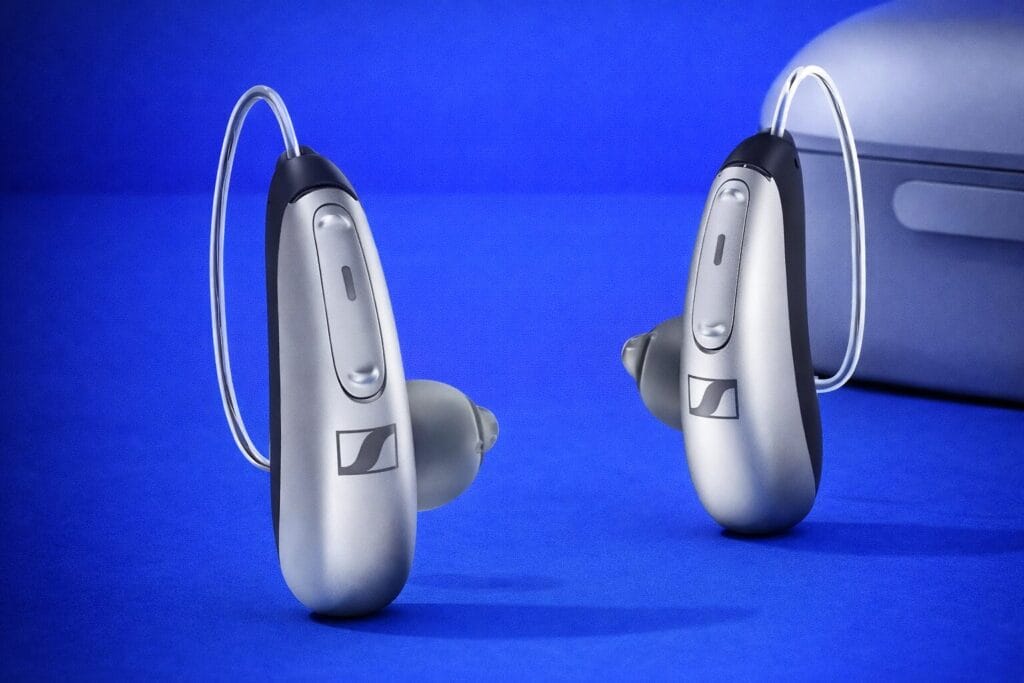
Behind-the-ear OTC hearing aid designed for strong speech clarity and all-day wear.
What we like
- Excellent sound fundamentals and speech clarity for the price
- Background-noise performance that holds up in real-world use
- Comfortable, lightweight feel for long days
- 100-day risk-free trial is best-in-class confidence
What we don’t
- Charger must be plugged in while in use
- Requires a smartphone for setup/programming
For most people shopping OTC, what matters isn’t a flashy feature—it’s whether conversation becomes easier without constant fiddling. The All Day Clear keeps winning on that core brief: clear speech, competent noise handling, and an ergonomic design you can wear all day.
We also like the “ownership experience.” The app-based setup gives meaningful EQ control (including a dedicated music program), but you don’t need to treat it like a project. Once you’re dialed, it’s a stable routine—exactly what many older adults and families want.
Unlike compact in-ear options like Sony’s CRE-C20, the Sennheiser is more visible—but many users will gladly trade a little discretion for easier handling and a behind-the-ear fit that’s less finicky day-to-day.
Overall verdict: For comfort, clarity, and confidence-inspiring trial terms, this is our top OTC pick for most buyers.
Purchase links: See the Standard Version on Soundly
#2. Jabra Enhance Select 700 ($1,995)
Specs
- Weight: Not specified
- Type: Behind-the-ear
- Key features: Rechargeable, Bluetooth streaming, 100-day returns, multi-year remote support
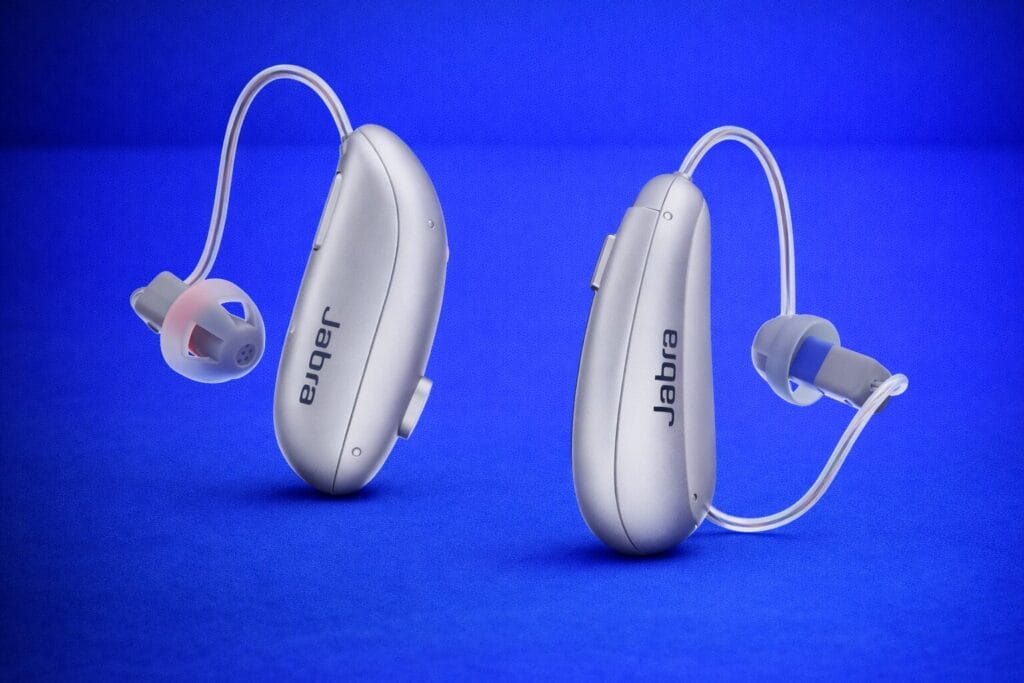
Premium online hearing aid with professional remote support and Bluetooth streaming.
What we like
- “Clinic-like” support model without clinic visits
- Strong sound quality across environments
- 100-day trial period reduces risk materially
- Bluetooth streaming (calls/media) is a real daily-life upgrade
What we don’t
- Remote-care workflow can be tough for low-tech users
- More expensive than most OTC options
If Sennheiser is the best “straight OTC” answer, Jabra is the best “I want help” answer. Most new users need adjustments over time—different environments expose different problems—and guided remote support makes that process far less frustrating.
We also like that Jabra leans into Bluetooth integration. For many users, hearing aids become more valuable when they blend into daily habits: phone calls, audio cues, and streaming that keeps the devices in consistent rotation.
Compared to discreet in-ear models (Sony CRE-C20, Eargo 7), the Select 700 is more visible—but typically easier to handle, and the remote support helps when you’re buying for a parent who needs practical troubleshooting rather than experimentation.
Overall verdict: If you want premium support and modern connectivity in an online package, this is the best “guided” pick.
Purchase links: See the Standard Version on Soundly
#3. Sony CRE-C20 ($999)
Specs
- Weight: Not specified
- Type: In-ear (discreet)
- Key features: Rechargeable (up to 28 hrs), app-based self-programming, portable case with additional charges
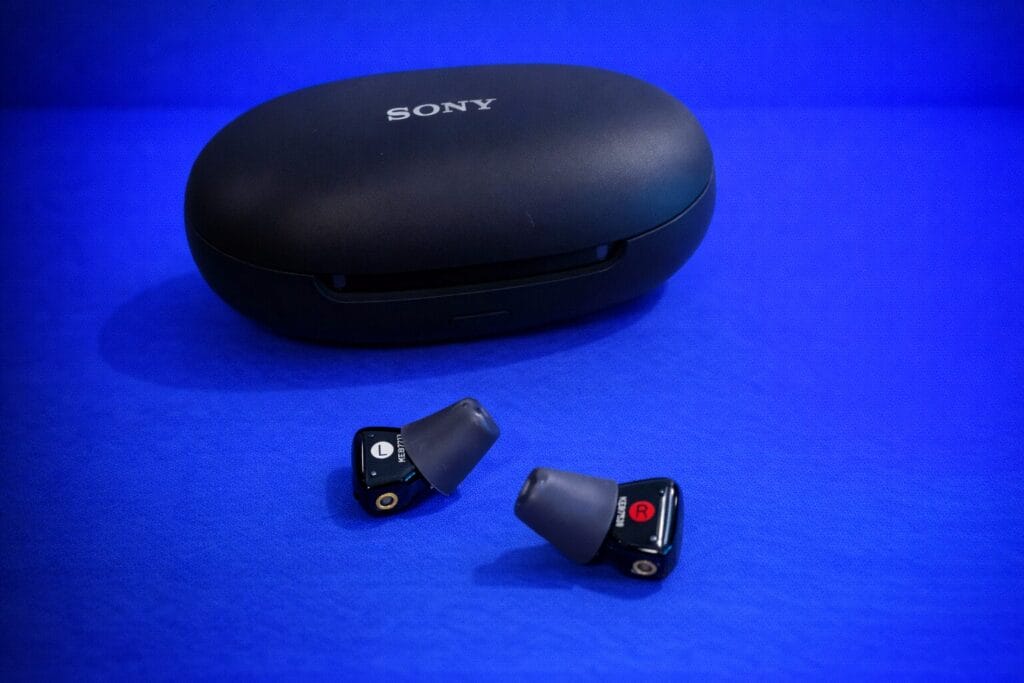
Nearly invisible in-ear OTC hearing aid with long battery life and app self-programming.
What we like
- Extremely discreet—virtually disappears in most ears
- 28-hour battery life is a standout for travel and long days
- Strong value for “audiology-grade” sound under $1,000 (per coverage)
- Great match for self-directed, smartphone-comfortable users
What we don’t
- No streaming for calls or music
- Requires smartphone for setup
Sony’s CRE-C20 is for buyers who value discretion above all else but still want a real hearing aid—not a basic amplifier. The “nearly invisible” fit matters because discretion often determines whether first-time users actually stick with hearing aids.
Battery life is the second reason this model stands out. A true 28-hour runtime reduces midday anxiety and makes travel more convenient in a way many rechargeables don’t.
The dealbreaker is streaming. If you need call/audio streaming, look to a Bluetooth-forward model like Jabra. But if you want discreet support and long battery life, the CRE-C20 is our favourite compact pick.
Overall verdict: The best in-ear choice under $1,000 for users who want discretion and long battery life—and don’t need streaming.
Purchase links: See the Standard Version on Soundly
#4. Lexie B2 Powered by Bose ($899–$999)
Specs
- Weight: Not specified
- Type: Behind-the-ear / receiver-in-canal style
- Key features: Self-fitting, EQ control (treble/bass), saved environment settings, (some) call streaming
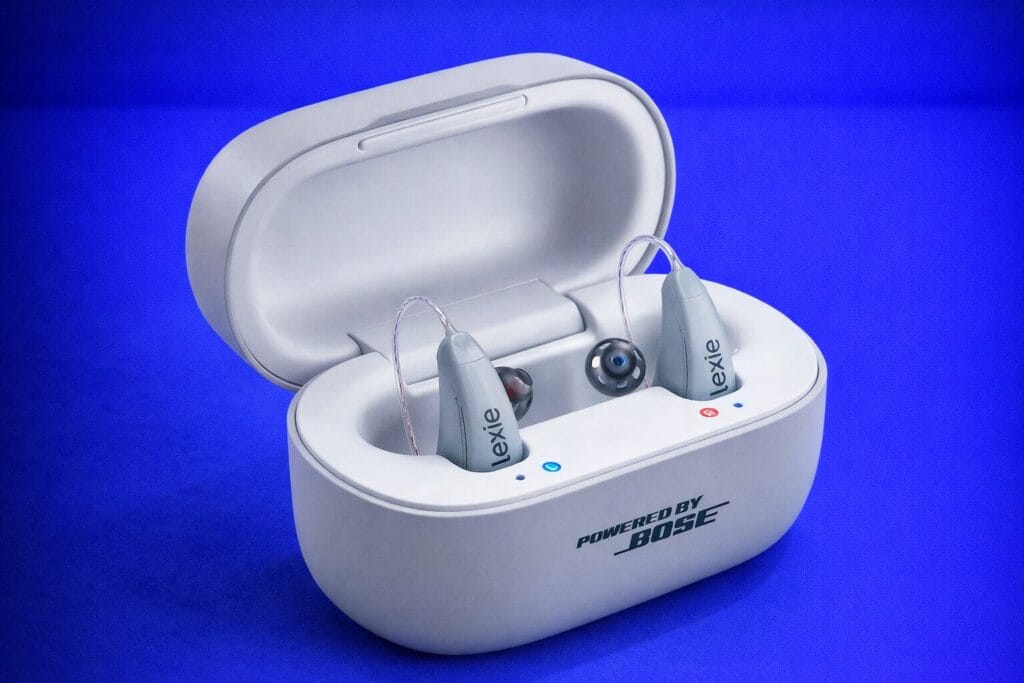
Self-fitting OTC hearing aid with adjustable treble/bass and saved settings for different environments.
What we like
- Self-fitting approach with real EQ control
- Multiple saved settings for different environments
- Strong “step-up” from preset budget devices
- Widely recognised heritage via the Bose partnership
What we don’t
- Charging case limitations noted in some coverage
- Platform caveats (some features depend on phone ecosystem)
Lexie’s B2 is compelling because it offers real tuning control without pushing you into the full premium tier. Treble/bass adjustment and saved profiles matter because a quiet living room and a busy café are fundamentally different listening problems.
Compared to the Sennheiser All Day Clear, Lexie often appeals to users who want more explicit control rather than leaning on automatic processing alone. Compared to compact in-ear models, it’s generally easier to handle and position consistently.
Treat ecosystem compatibility seriously—call/streaming behaviour can vary by phone. But as a step-up self-fitting OTC option with a mature tuning experience, Lexie belongs on the short list.
Overall verdict: One of the best “step-up” OTC options when you want real tuning control and day-to-day flexibility.
Purchase links: See the Standard Version on Consumer Reports
#5. Eargo 7 ($2,950)
Specs
- Weight: Not specified
- Type: In-ear (very discreet)
- Key features: Multiple programs, easy switching, portable charging case, noise reduction/directional amplification
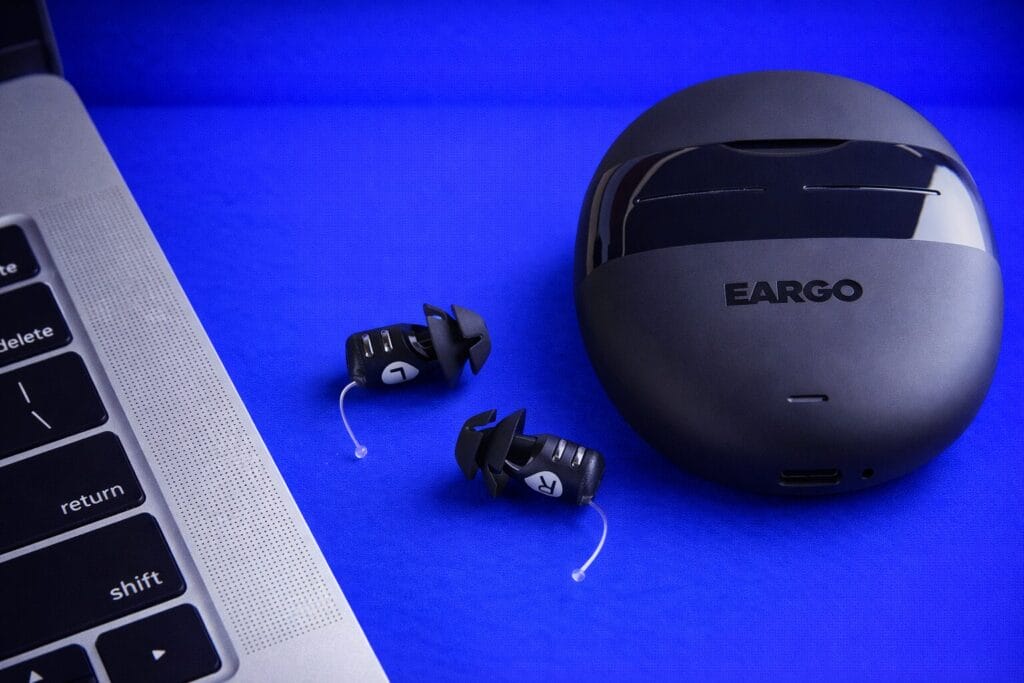
Premium in-ear hearing aid emphasizing comfort, low visibility, and multiple sound programs.
What we like
- Extremely discreet, comfortable fit (multiple dome options)
- Low distortion reported in both quiet and louder environments
- Durability emphasis in some coverage (IP68 noted)
- Great for users who refuse behind-the-ear designs
What we don’t
- Very expensive relative to most OTC options
- No streaming for calls/music
Eargo is a “form factor first” choice. Some users will not wear behind-the-ear hearing aids, full stop, and for them an ultra-discreet in-ear design can be the difference between daily wear and abandonment.
We like the emphasis on comfort and quick switching without living inside an app. Some coverage also highlights durability protection that’s stronger than many competitors, which matters for active users or moisture-prone routines.
The drawback is value. At roughly $3,000, buyers should also consider prescription routes and professional fitting—especially if the user spends lots of time in challenging, noisy conversation environments.
Overall verdict: A niche but legitimate option if discretion is non-negotiable—just go in eyes-open on price and no streaming.
Purchase links: See the Standard Version on Consumer Reports
#6. Lucid Enlite ($300)
Specs
- Weight: Not specified
- Type: Preset OTC hearing aid
- Key features: Two audio programs (High/Low), noise reduction, interchangeable ear use
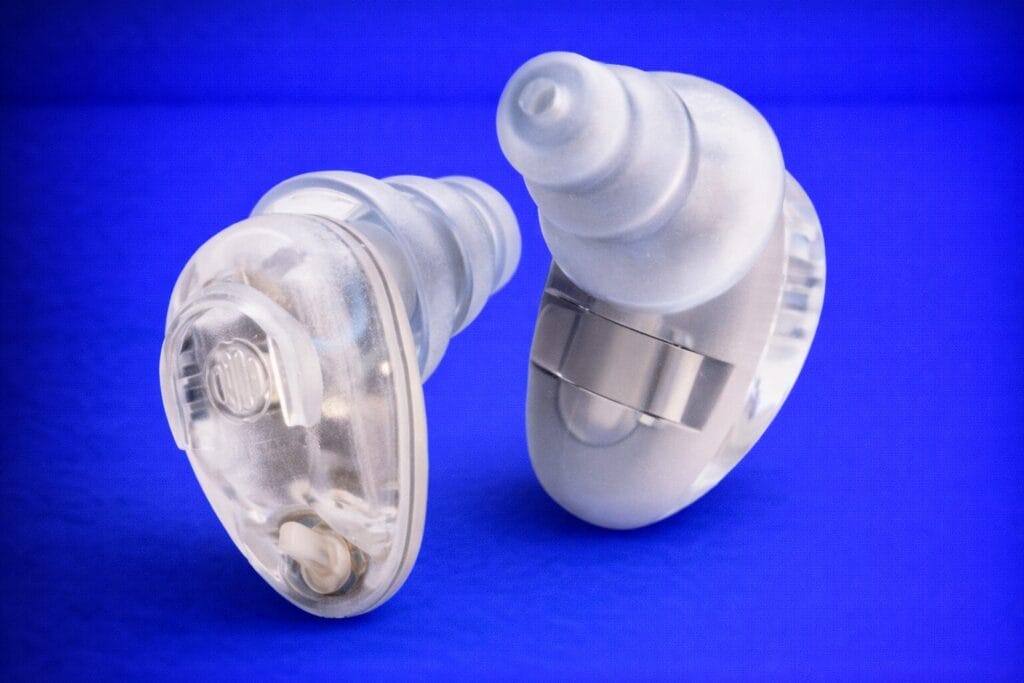
Affordable preset OTC hearing aid with a simple two-program approach.
What we like
- One of the most approachable true-budget entries
- Simple programs reduce decision fatigue
- Noise reduction is included (not a given at this price)
- Includes accessories (case + cleaning tools)
What we don’t
- Tiny switches can be challenging
- Battery removal required to turn off
The first win for many families is simply getting consistent use started. The Enlite helps by keeping the experience simple: two programs, basic noise reduction, and minimal setup expectations.
Compared to self-fitting models like Sennheiser or Lexie, you give up fine-tuning and advanced features—but you also avoid complexity. For older adults who don’t want apps, pairing, or configuration screens, that’s a rational trade.
If dexterity is a concern, the tiny controls and battery-removal routine may push you toward a more ergonomic design.
Overall verdict: The best budget entry point for mild support needs when simplicity is the priority.
Purchase links: See the Standard Version on Consumer Reports
#7. Tweak Enhance ($350)
Specs
- Weight: Not specified
- Type: Occasional-use hearing assistance / OTC-style device
- Key features: On-device sound profile changes, rechargeable (20 hrs), clear instructions
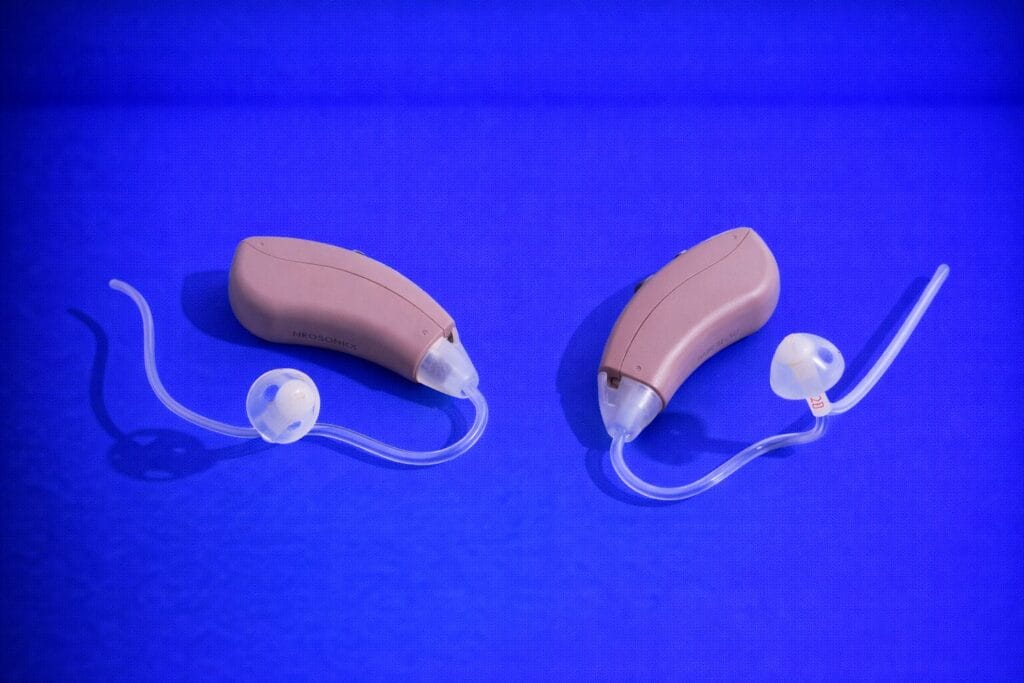
Occasional-use hearing help option with straightforward controls and strong battery life.
What we like
- Great for “select moments” rather than all-day commitment
- Adjustments on the device reduce constant phone dependence
- 20-hour battery is excellent for the price
- Strong documentation and sturdy carrying case
What we don’t
- Not water-resistant; shorter return policy and minimal warranty
- Limited Bluetooth features
Not everyone is ready for full-time hearing aids. For users who mainly struggle in specific environments—restaurants, group gatherings, soft-spoken conversation—an occasional-use device can be a smart, lower-pressure on-ramp.
We like the focus on practical usage: long battery, easy adjustments, and instruction quality that doesn’t assume high tech comfort.
The tradeoff is policy and protection. If the buyer is unsure, prioritize longer return windows elsewhere in the list.
Overall verdict: A strong “situational help” pick when you want easy controls and long battery life without paying for premium features you won’t use.
Purchase links: See the Standard Version on Wirecutter
#8. Nuance Audio Panthos (Price varies)
Image caption: Glasses-style hearing support with built-in microphones/speakers—no in-ear components required.
Specs
- Weight: Not specified
- Type: Hearing glasses
- Key features: Glasses form factor, prescription lens compatibility, background-noise performance emphasis, Bluetooth for customization (not streaming)
What we like
- No in-ear placement—by far the easiest daily routine
- Comfortable for all-day wear, especially for glasses users
- Discreet, socially “normal-looking” solution
- Strong background-noise performance for its form factor
What we don’t
- 8–10 hour battery life may require midday charging
- Not as powerful as traditional hearing aids
Nuance isn’t a default recommendation—it’s a specialty solution that can be perfect for the right person. If someone struggles inserting devices, dislikes ear domes, or has dexterity limitations, hearing glasses can be the first option they’ll actually wear consistently.
The limitation is power and battery life. If the user needs stronger amplification or long days away from charging, traditional in-ear or behind-the-ear devices will usually perform better.
Overall verdict: The best comfort-first option for glasses wearers and anyone who can’t tolerate in-ear components—expect shorter battery life and less amplification headroom.
Purchase links: See the Standard Version on Soundly
Buying Advice: How to Choose the Best OTC Hearing Aid for You
Over-the-counter hearing aids can be an excellent solution, but they’re also easy to buy “wrong” if you don’t match the device to your hearing needs, lifestyle, and tolerance for tech. In our experience, the best outcomes come from treating OTC hearing aids like you would hiking boots: you do a little upfront homework, you plan for an adjustment period, and you only keep the pair that actually works for your day-to-day life (not the one that sounded best in your living room on day one). That approach is also why we strongly emphasise trial periods and return policies when shopping.
Below is the “backend” buying guide we wish every first-time buyer had—organised around the decisions that actually matter.
Step 1: Confirm OTC is the right lane (and when it isn’t)
OTC hearing aids are designed for adults aged 18+ with perceived mild-to-moderate hearing loss. If you suspect severe or profound hearing loss, you’ll generally get better results (and safer care) with a professional evaluation and prescription devices.
Practical takeaway: if you’re turning up the TV dramatically, missing most speech even in quiet rooms, or struggling in nearly all environments, don’t force OTC to do a job it’s not built for. OTC is best when you can still follow conversations, but clarity has slipped—especially with soft voices, distance, and background noise.
Step 2: Self-assess your hearing and your “tolerance for setup”
Before you compare brands, assess your hearing loss level using online tools or questionnaires (even a simple screening can help you make a smarter choice). Then decide whether you prefer professional guidance or you’re comfortable with a self-fitting process.
This single choice—guided vs. self-directed—often determines satisfaction more than the brand name.
- If you want the closest thing to a “clinic-like” experience at home, look for models that pair hardware with meaningful setup and ongoing support (remote care, strong customer service, clear onboarding). Customer support is repeatedly highlighted as a key decision factor.
- If you’re comfortable using an app, making adjustments, and iterating for a week or two, self-fitting options can deliver very strong value.
Step 3: Map your lifestyle to the environments you struggle in
A hearing aid can sound “fine” in quiet spaces but fall apart in real-world conditions. That’s why we recommend explicitly evaluating your needs based on lifestyle and environment.
Ask yourself (or the person you’re buying for):
- Is the problem mostly one-on-one conversations or group settings?
- Is it mostly restaurants, gatherings, and busy streets (background noise), or mainly TV and family conversations at home?
- Do you need something for all-day wear, or just occasional use (events, meetings, dinners)?
People who frequently engage in noisy environments often need specific features and should prioritize models known for noise handling, stable sound processing, and situational modes.
Step 4: Decide between “preset” and “self-fitting” devices
This is the biggest technology split in OTC:
Preset OTC hearing aids
Preset devices typically offer a few programs (or fixed configurations) and simple adjustments. They can be a great fit for buyers who want minimal setup, limited decision-making, and lower cost—especially when the hearing need is mild and the user dislikes smartphone-based configuration. (Preset options can also reduce friction for older adults who are not tech-comfortable.)
Self-fitting OTC hearing aids
Self-fitting models use apps and guided flows to match amplification to your hearing profile and preferences. If you’re comfortable with technology and want more precision, self-fitting usually provides a better long-term experience.
A key comparison in the research is that self-fitting OTC aids require user setup, while prescription aids are professionally adjusted. That’s not good or bad—it just tells you where the effort lands.
Step 5: Check whether you need smartphone control (before you buy)
Many top performers require a phone for setup and ongoing control—sometimes even for basic volume adjustment. It’s explicitly recommended to check if the device requires a mobile phone for control.
If you’re buying for a parent (or for yourself) and smartphone use is inconsistent, prioritise one of these paths:
- A model with strong on-device controls (volume/program changes on the hearing aid itself).
- A model with a simple setup that doesn’t require frequent app interaction.
- Or a solution where a caregiver can manage setup and then “set and forget.”
Step 6: Battery strategy—rechargeable vs. replaceable (and what really matters)
Battery preference seems minor until it becomes your daily friction point.
When evaluating battery design, the research recommends checking battery type and whether batteries are included. In practice:
- Rechargeable devices are convenient—especially for all-day users—because there’s no recurring battery shopping and you’re less likely to be caught off guard. Many buyers find that a charging routine is easier than handling tiny batteries.
- Replaceable batteries can still make sense for travel, remote living, or people who dislike charging—but they require fine motor control and consistent resupply.
Also consider charging case convenience and real battery life. For example, some models are praised for long battery life and charging-case practicality, while others may require midday charging depending on usage and form factor.
Step 7: Look for customisation that matches your needs—not the marketing
Customisation is only useful if it solves your problem. The research specifically calls for a comparison of customisation features and mobile app support.
Useful, practical customisation typically includes:
- Easy switching between situational modes (home, restaurant, outdoors).
- Fine control over speech vs. background noise emphasis.
- Comfortable, stable sound at the volumes you actually use (not just maximum amplification).
The research also notes that buyers may want to consider maximum output levels when comparing devices. Translation: if you’re pushing the device to “max” to function, you might be outside OTC territory—or you may need a different style.
Step 8: Treat customer service and the trial period as core features
Many buyers focus on specs and forget the reality: most first-time users need iteration. That’s why the research repeatedly stresses customer support and return policies:
- Check customer service options for setup and troubleshooting.
- Look for a return policy that allows a thorough trial period.
- Don’t skip return-policy review before purchasing.
This matters because “first impressions” can be misleading. It is also explicitly listed as a common mistake to assume the device doesn’t work without first practising with it.
If you want the least-risk approach: prioritize generous trials and strong support, then actually test the hearing aids in your hardest environments (restaurants, family gatherings, group meetings) before committing.
Step 9: Packaging and labelling checklist (don’t skip this)
If you’re shopping online or in-store, review the outside packaging for key details. In particular:
- Make sure it is labeled as “OTC” and “hearing aid.”
- Confirm whether it requires a phone for control.
- Check battery type and included accessories.
- Verify the return policy terms before opening/using (where applicable).
Step 10: Know the “classic” mistakes so you can avoid them
Here are the most common OTC purchase mistakes drawn directly from the research (and we see these constantly in real-world outcomes):
- Not recognizing early signs of hearing loss.
- Choosing a device without understanding your specific hearing needs or environment.
- Overlooking customer support and service.
- Failing to check return policies before purchasing.
- Assuming all hearing aids are suitable for all types/levels of hearing loss.
- Rushing the decision without trying the device first.
If you do nothing else: match the device to your hearing level, pick a strong trial policy, and test in your hardest environments before the return window closes.
OTC vs. Prescription Hearing Aids
For many shoppers, the real decision is whether OTC is “good enough” or whether a prescription is worth it.
The key comparisons in the research are clear:
- OTC hearing aids are generally more budget-friendly than prescription hearing aids.
- Prescription hearing aids offer professional fitting and ongoing support, unlike many OTC options.
- OTC hearing aids are typically for mild to moderate hearing loss, while prescription hearing aids can address all levels.
- Return policies can vary significantly, and prescription devices often come with a more comprehensive service package.
A simple heuristic:
- Choose OTC if you want a faster, lower-cost path and you’re comfortable with some self-direction (or you have family support).
- Choose prescription/professional care if you suspect severe loss, have a complicated listening profile, or want clinician-led tuning and follow-ups.
Price Ranges and What You Get at Each Tier
Prices vary widely, but the underlying value ladder is fairly consistent.
Budget tier: “Simple and functional”
In the lower-cost range, you’ll often see preset-style products focused on basic amplification, limited programs, and straightforward use. These can be ideal for mild needs and low-tech preferences, but you generally trade away fine-tuned personalisation and more advanced noise handling.
Mid-tier: “Better sound control and everyday usability”
This range typically includes better app controls, more refined sound profiles, and improved performance across various environments—often the sweet spot for many mild-to-moderate users who want noticeable day-to-day improvement without paying for premium care packages.
Premium tier: “Discretion, durability, and/or support”
Premium devices often charge for one (or more) of these:
- Discreet form factors (in-ear, near-invisible)
- Durability and protection (water/dust resistance ratings)
- Service and support (remote programming, strong customer care, guided setup)
If you’re spending premium money, treat policies/support as part of the product—not a bonus.
FAQ: Over-the-Counter Hearing Aids
Who should buy OTC hearing aids?
Adults aged 18+ with perceived mild-to-moderate hearing loss are the intended OTC users. If you suspect severe or profound loss, consult a professional and consider prescription devices.
How do I know if my hearing loss is “mild to moderate”?
A practical starting point is using online tools or questionnaires to assess your hearing level before purchasing. If you’re unsure or your difficulties persist across most settings, consider a professional evaluation rather than guessing.
What’s the difference between preset and self-fitting OTC hearing aids?
Self-fitting devices require user setup, while prescription aids are professionally adjusted—preset OTC devices generally involve less personalisation than self-fitting models. In practice, self-fitting usually offers greater control and better fit, but it requires more engagement (often via an app).
Do OTC hearing aids require a smartphone?
Some do, some don’t—but you should assume phone-dependence is common unless the product clearly states otherwise. It’s specifically recommended to check whether the device requires a mobile phone for control. Some devices may even rely on the phone for volume adjustment.
How long should I trial an OTC hearing aid before deciding?
The research emphasises looking for a return policy that allows a thorough trial period. Practically: test the device in environments that actually challenge you—restaurants, gatherings, outdoor walks, car rides—and avoid making decisions based on a single day.
What are the most common reasons people return OTC hearing aids?
The most common issues tend to trace back to the common mistakes list: buying without confirming hearing needs, ignoring return policies, and not giving yourself time to practice and adapt. It’s also a documented mistake to assume the device doesn’t work without first practising with it.
Are OTC hearing aids good in noisy places?
Performance varies. People who frequently work in noisy environments often need specific features and should prioritise models designed for such conditions. Some products are explicitly marketed as improving clarity through noise reduction or directional amplification and may perform better in noisy environments than basic presets.
Do OTC hearing aids stream music and phone calls?
Some do, many don’t. Several devices support Bluetooth for streaming audio, while others offer limited Bluetooth or none. If streaming matters, check this before purchase—do not assume it’s standard.
Can I wear OTC hearing aids in the shower or while swimming?
Only if the device is specifically rated for that level of water exposure. Some devices in the research are described as IP68 water/dust-resistant, while others are not water-resistant or have lower ratings. If water exposure is part of your daily life, treat this as a primary filter.
Do insurance plans cover OTC hearing aids?
Coverage varies. The research recommends verifying insurance coverage options before purchase rather than assuming. If coverage is a budget constraint, confirm it upfront.
Final Thoughts
The OTC category is broad, and that’s a good thing—it means there’s finally a real spectrum, from simple presets for mild support to premium devices that prioritise discretion, durability, and guided care. But breadth also increases the risk of buying the wrong tool.
If you remember only three rules: (1) assess your hearing needs before buying, (2) choose the level of support you actually want, and (3) prioritise a real trial period with good customer service so you can iterate in the real world—not just at home.
Works Cited / Source List
- Consumer Reports — Complete Guide to Over-the-Counter Hearing Aids https://www.consumerreports.org/health/hearing-aids/complete-guide-to-over-the-counter-hearing-aids-a3898239010/
- FDA — OTC Hearing Aids: What You Should Know https://www.fda.gov/medical-devices/hearing-aids/otc-hearing-aids-what-you-should-know
- Johns Hopkins Medicine — Choosing Over-the-Counter Hearing Aids: Tips From an Expert https://www.hopkinsmedicine.org/health/conditions-and-diseases/hearing-loss/choosing-over-the-counter-hearing-aids-tips-from-an-expert
- Consumer Reports — Hearing Aids Buying Guide https://www.consumerreports.org/health/hearing-aids/buying-guide/
- Consumer Reports — Best Over-the-Counter Hearing Aids Review https://www.consumerreports.org/health/hearing-aids/best-over-the-counter-hearing-aids-review-a7906529120/?itm_source=parsely-api
- Soundly — Sennheiser All Day Clear https://www.soundly.com/product/sennheiser-all-day-clear
- Soundly — Sony CRE-C20 https://www.soundly.com/product/sony-cre-c20
- Soundly — Jabra Enhance Select https://www.soundly.com/product/jabra-enhance-select
- Soundly — Nuance Audio Glasses Panthos https://www.soundly.com/product/nuance-audio-glasses-panthos
- The New York Times Wirecutter — Best Over-the-Counter Hearing Aids https://www.nytimes.com/wirecutter/reviews/best-over-the-counter-hearing-aids/
- HearingTracker — Sennheiser All Day Clear https://www.hearingtracker.com/hearing-aids/sennheiser-all-day-clear
- HearingTracker — Sony CRE-C20 https://www.hearingtracker.com/hearing-aids/sony-cre-c20
- HearingTracker — Lucid Engage https://www.hearingtracker.com/hearing-aids/lucid-engage
- HearingTracker — Lexie Powered by Bose https://www.hearingtracker.com/hearing-aids/lexie-powered-by-bose
- WIRED — Eargo 8 Hearing Aids Review (used for Eargo 7 commentary within your pack) https://www.wired.com/review/eargo-8-hearing-aids/
- HearingTracker — Phonak Audéo Infinio (appears in pack; not in the 8-product list, but included as a source present in the JSON) https://www.hearingtracker.com/hearing-aids/phonak-audeo-infinio


