
Best Over-the-Counter Hearing Aids
Over-the-counter (OTC) hearing aids are a relatively new category of hearing devices in the United States, designed to make hearing support more accessible and affordable. Unlike traditional prescription hearing aids, which require an audiologist’s medical exam and fitting, OTC devices can be purchased directly online, in pharmacies, or at retail stores without a prescription. They are intended for adults with perceived mild to moderate hearing loss and often come with self-fitting features, adjustable sound settings, and smartphone connectivity, allowing users to customize their listening experience without professional assistance.
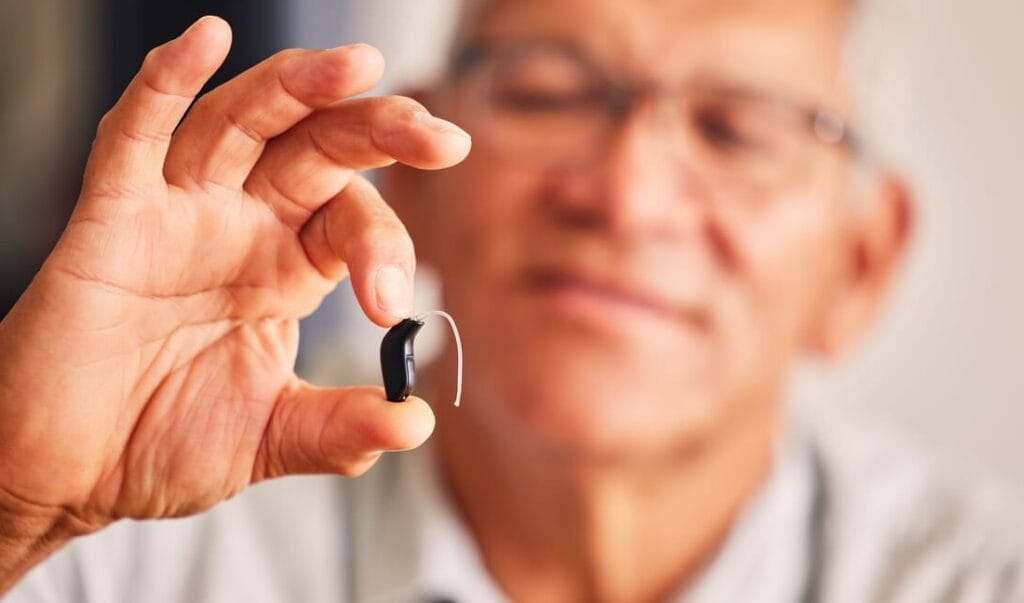
The introduction of OTC hearing aids has been a significant step forward in hearing healthcare, especially following the FDA’s 2022 ruling that created this category. These devices have opened the door for greater consumer choice, lower prices, and broader availability. While OTC hearing aids may not replace prescription-level solutions for individuals with severe or complex hearing loss, they provide a convenient and cost-effective option for those seeking to improve speech clarity, reduce background noise, and enhance communication in everyday environments.
Difference Between OTC and Prescription Hearing Aids
Over-the-Counter Hearing Aids
When people evaluate over-the-counter (OTC) hearing aids, several key criteria consistently emerge. Sound quality and real-world performance are often at the top of the list, particularly in challenging listening environments. Users pay close attention to how well a device enhances speech, reduces feedback, and minimizes background noise, as these factors greatly affect daily usability.
Another important consideration is the trial period, return policy, and warranty. Many higher-end OTC hearing aid sellers provide trial periods ranging from 60 to 100 days and warranties, which are especially valuable if the fit or tuning isn’t perfect right out of the box. For example, some Jabra models come with a 100-day money-back guarantee, providing users with peace of mind when trying a new device.
Comfort and fit are also crucial, encompassing aspects such as size, weight, discretion, and whether the device causes irritation to the ears. Equally important is battery life and charging options. Users often compare rechargeable versus disposable batteries, the number of hours the device can run, and how easy it is to charge.
Features also play a role, with many users looking for Bluetooth or streaming capabilities, app-based control, and modes designed for different listening environments. Finally, service and support can make or break the experience. This includes access to warranties, trial or return options, remote tuning, and support from audiologists, all of which contribute to long-term satisfaction with the device.
Prescription Hearing Aids
Prescription hearing aids are the most precise and comprehensive option, particularly for individuals with complex or severe hearing loss. In contrast, OTC hearing aids offer a more accessible and lower-cost solution for adults with mild to moderate hearing difficulties.
Prescription hearing aids must be obtained through a hearing evaluation and fitting conducted by an audiologist or other licensed hearing care professional. Unlike over-the-counter devices, these aids are custom-programmed to the user’s specific audiogram, ensuring amplification is precisely tailored to their hearing test results.
They can treat the full spectrum of hearing loss, from mild to profound, making them suitable for individuals with more complex or advanced needs. Many prescription models come equipped with advanced features such as multi-microphone directionality for improved speech clarity, rechargeable batteries for convenience, tinnitus masking programs, and the ability for real-time professional adjustments.
The cost of prescription hearing aids is generally higher, typically ranging from $2,000 to $6,000 per pair. However, this price typically includes the devices themselves, as well as professional services, follow-up care, and ongoing support, ensuring users receive the best possible fit and performance. As you age, the likelihood of needing hearing assistance increases, so it’s a good idea to plan for this expense.
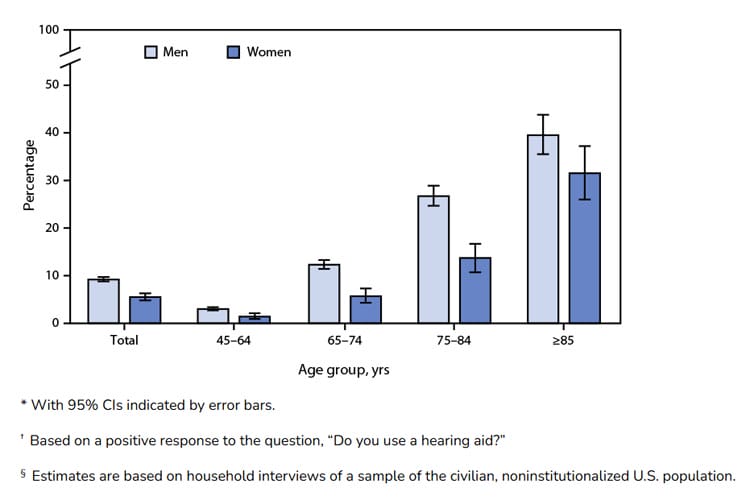
Sources: National Center for Health Statistics, National Health Interview Survey, 2021 (https://www.cdc.gov/nchs/nhis.htm); NCHS data brief, no. 414, 2021. https://www.cdc.gov/nchs/products/databriefs/db414.htm
What experts look for
When people evaluate over-the-counter (OTC) hearing aids, several key criteria consistently emerge. Sound quality and real-world performance are often at the top of the list, particularly in challenging listening environments. Users pay close attention to how well a device enhances speech, reduces feedback, and minimizes background noise, as these factors greatly affect daily usability.
Another important consideration is the trial period, return policy, and warranty. Many higher-end OTC hearing aid sellers provide trial periods ranging from 60 to 100 days and warranties, which are especially valuable if the fit or tuning isn’t perfect right out of the box. For example, some Jabra models have a 100-day money-back guarantee, giving users peace of mind when trying a new device.
Comfort and fit are also critical, including size, weight, discretion, and whether the device irritates the ears. Equally important is battery life and charging options. Users often compare rechargeable versus disposable batteries, the number of hours the device can run, and how easy it is to charge.
Features also play a role, with many users looking for Bluetooth or streaming capabilities, app-based control, and modes designed for different listening environments. Finally, service and support can make or break the experience. This includes access to warranties, trial or return options, remote tuning, and support from audiologists, all of which contribute to long-term satisfaction with the device.
Every person’s situation and hearing are different, so a good hearing aid for one person won’t be good for another. Each of the top hearing aids below has positive and negative features and issues. The best one for you will depend heavily on your situation and the problem you are trying to solve.
Find the Best Hearing Aids for You:
The Best OTC Hearing Aids
Sony CRE-E10 — Best single-device match for performance + streaming under $1,500
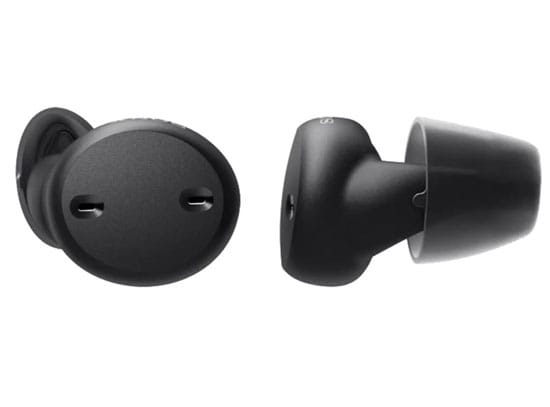
The Sony CRE-E10 is an earbud-style, rechargeable OTC hearing aid that delivers Bluetooth audio streaming, hands-free calling, and an impressive battery life of roughly 24–26 hours. Its user-friendly self-fit app makes adjustments easy, and reviews highlight it as a strong performer for mild to moderate hearing loss. Priced around $1,299.99 per pair, it’s a solid pick for those who value reliable streaming and a refined app experience.
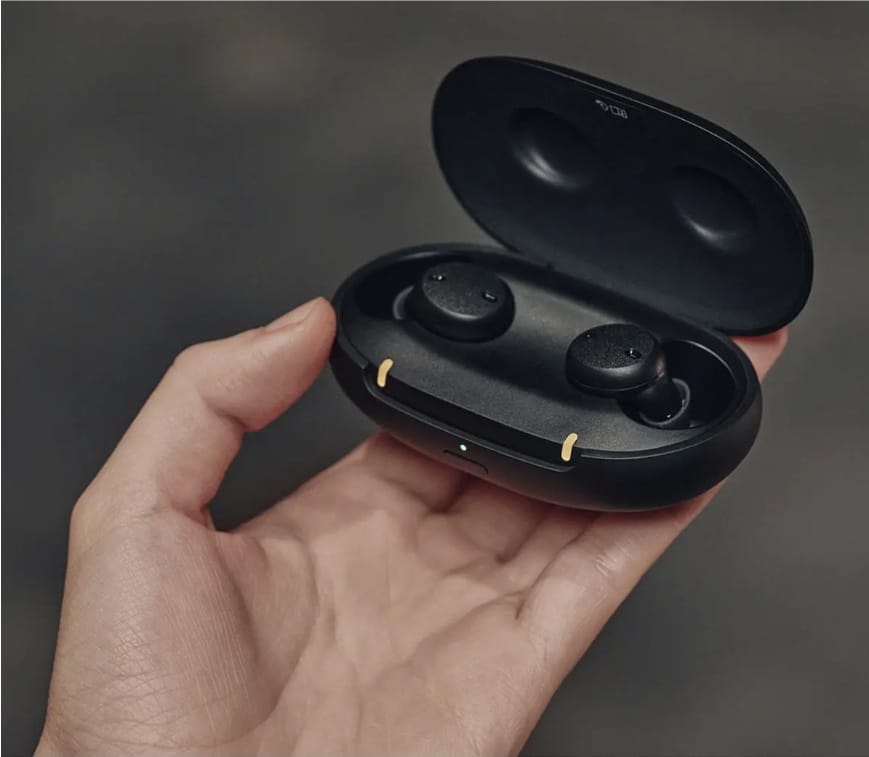
Best for: strong speech clarity in quiet or moderately noisy settings
The Sony CRE-E10 is best suited for adults with mild to moderate hearing loss who want a modern, self-managed option with strong speech clarity in quiet or moderately noisy settings. It’s an especially good fit for iPhone users, since Bluetooth streaming for calls and media is limited to iOS, and those who don’t mind using the Sony Hearing Control app for setup and fine-tuning. Many people also appreciate its earbud-style design, which resembles wearable tech more than a traditional hearing aid. The included multiple eartip sizes help ensure comfort and a good fit.
Lexie B2 Plus (Bose-powered) — Best if you value an easy app + Bose tuning
The Lexie B2, powered by Bose SoundControl technology, delivers strong sound processing and a polished app experience. These rechargeable aids earn positive feedback for speech clarity and customization, making them a solid choice for users who want straightforward, well-balanced sound with Bluetooth streaming. Pricing typically stays comfortably under $1,500. One consideration: some users report receiver fit or comfort issues, so fit may vary by individual.
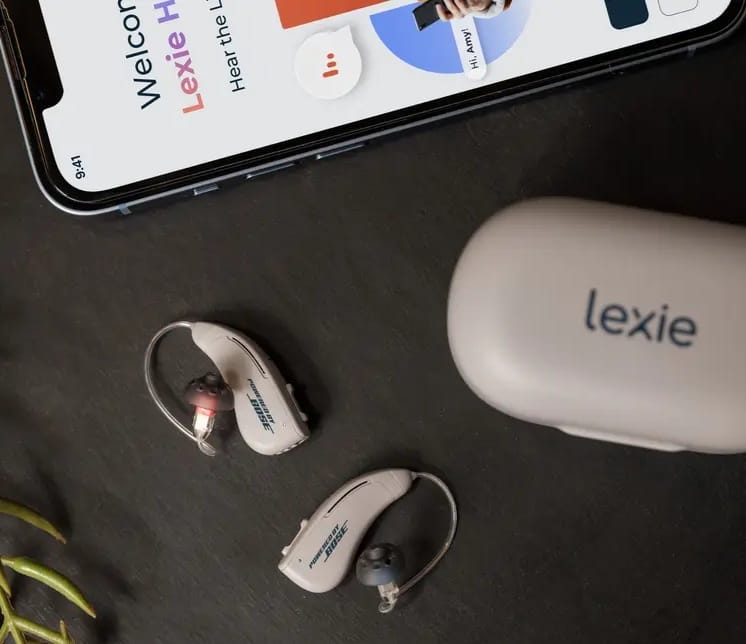
Best for: affordable, accessible alternative to prescription devices
The Lexie B2 Plus hearing aids are best suited for adults with mild to moderate hearing loss who want an affordable, accessible alternative to prescription devices. They are especially helpful for people who struggle with everyday clarity—such as understanding conversations, hearing TV dialogue, or picking up softer or distant speech—and who want a noticeable improvement without the high cost of traditional hearing aids. Because they are relatively small, lightweight, and discreet, they also appeal to those who value comfort and appearance in addition to sound improvement.
Elehear Beyond — Best value if you want Bluetooth features at a much lower price
The Elehear Beyond offers dependable streaming and app functionality at a moderate price (typically a few hundred dollars). It includes added perks like tinnitus relief modes and remote consultations. While some users mention variable comfort and noise management, it is a solid value choice for those seeking Bluetooth connectivity without needing the most advanced noise control.
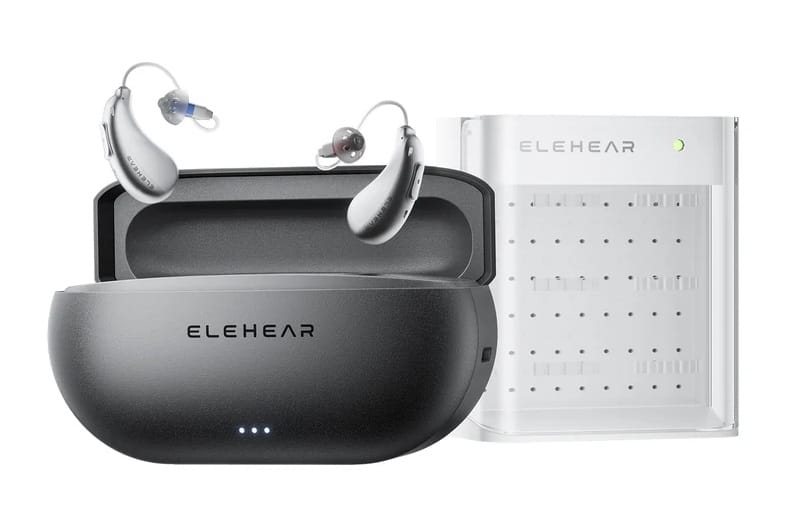
Best for: affordable, accessible solution
The Elehear Beyond hearing aids are best suited for adults with mild to moderate hearing loss who want an affordable, accessible solution without the need for a prescription. They work particularly well for people who struggle most with speech clarity in quieter or moderately noisy environments, such as conversations at home, small group gatherings, or watching television. Users who value modern conveniences like Bluetooth streaming for calls, music, and podcasts, along with app-based controls for adjusting sound profiles, will likely find them appealing. The long battery life and portable charging case also make them a good option for people who are active during the day or often on the go.
Jabra Enhance Select (Select 500 / Select 300 family) — Best for speech-in-noise & Android streaming
The Jabra Enhance Select line (including the 300 and 500) consistently ranks among the best in lab tests and consumer reviews, especially for speech clarity in noisy environments and reliable connectivity. Pricing for these higher-end models usually starts around $1,695 per pair. Still, Jabra also offers more affordable Select versions, such as the Enhance Select 50R, which come in under $1,200 and perform well in quieter settings. For those who prioritize top-tier performance in background noise and access to remote support, the Select 300 is worth strong consideration—or you might weigh it against Sony’s mid-range option.
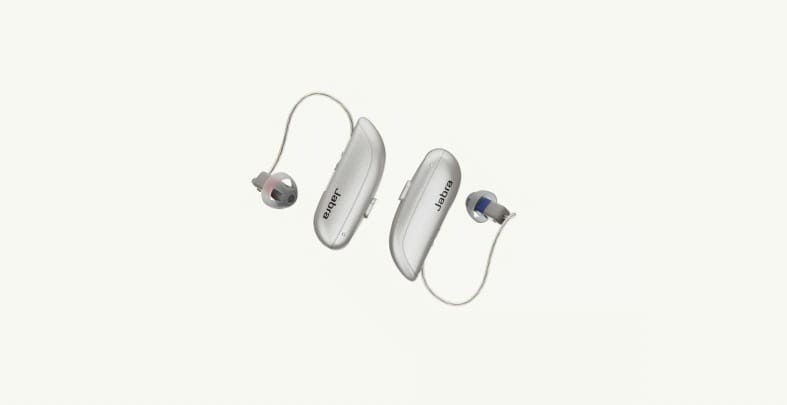
Best for: strong speech clarity in everyday situations
The Jabra Enhance Select 300 is best suited for adults with mild to moderate hearing loss who want strong speech clarity in everyday situations. It performs especially well in quiet or moderately noisy environments, such as conversations at home, social gatherings, or dining in restaurants, where its noise reduction and background suppression make speech more intelligible. People who value reliable battery life, lightweight comfort, and the ability to customize fit with different ear tips are likely to find it a good match. Its relatively discreet design also makes it appealing to those who don’t want their hearing aids to feel bulky or overly noticeable.
Product Details
Sony CRE-E10
What experts say
Overall, the expert consensus is that the Sony CRE-E10 is among the better options in the OTC hearing aid space, especially for those who want modern features (streaming, app control) and are okay paying a premium. It isn’t perfect — trade-offs around fit, noise suppression in very noisy spaces, cost, and lack of physical controls are real — but if its strengths align with what you care about, it tends to get favorable reviews.
What Experts Liked
The Sony CRE-E10 receives strong reviews for its sound performance, with experts noting especially good clarity in the mid-to-high frequencies. It performs exceptionally well in quiet and moderately noisy environments, earning high marks for speech intelligibility and ranking as one of the top performers among over-the-counter (OTC) hearing aids in this area. Reviewers also highlight its streaming and connectivity features, although these are currently limited to iOS devices. The CRE-E10 supports Bluetooth streaming for calls and media, and its companion app, Sony Hearing Control, offers setup tools, sound profile checks, and fine-tuning options such as bass and treble adjustments, which many users appreciate.
Battery performance is another positive aspect, with Sony claiming up to 26 hours of use on a full charge without streaming. However, battery life is reduced when streaming is active, as expected. In terms of design, the CRE-E10 adopts an earbud-style look that many find more appealing and discreet than traditional hearing aids, aligning more with consumer tech aesthetics. Comfort is supported by multiple eartip and sleeve sizes to help with fit. The device also performs well in lab testing, scoring strongly in speech enhancement, noise reduction, and feedback suppression. Experts tend to place the CRE-E10 at the premium end of OTC hearing aids, both in performance and design.
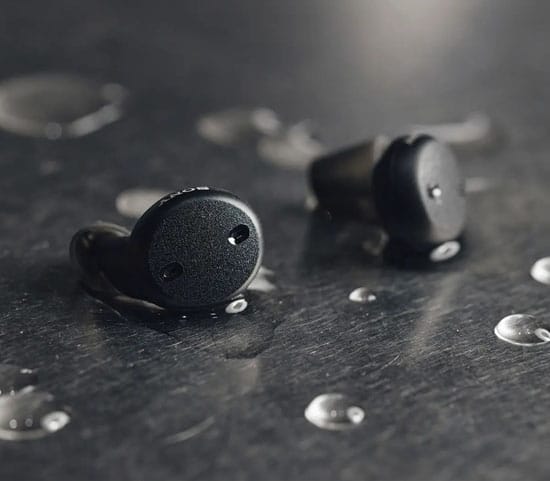
Find out more to purchase the Sony CRE-E10
What Are the Downsides
Experts point out several drawbacks to the Sony CRE-E10 hearing aids. Comfort and fit are recurring concerns, with some users finding the larger earbud-style design less suitable for all-day wear, especially if the ear shape doesn’t allow for a perfect fit. This design can also create a “plugged” or echo effect, with increased awareness of one’s own voice. In terms of appearance, the E10 is bulkier and more visible than Sony’s smaller in-canal models like the CRE-C10 or CRE-C20, which may be a downside for those who prioritize discretion.
Control options are another limitation: the CRE-E10 lacks physical buttons or touch controls, relying entirely on the app, which some reviewers describe as inconvenient. Performance also declines in very noisy environments—while speech clarity in quiet or moderate settings is strong, background noise, buzzing, or hissing can become noticeable in louder situations. Price is another factor, as the CRE-E10 sits at the premium end of the OTC market, costing nearly as much as some entry-level prescription hearing aids. Finally, streaming is restricted to iOS devices. At the same time, the app functions on Android for adjustments, Android users cannot stream audio directly, which limits functionality for a portion of the market.
What do Users Think?
Most users seem to think the CRE-E10 is among the better OTC hearing aids available — especially for people with mild to moderate hearing loss who want streaming, rechargeable batteries, and a more modern “earbud-style” aesthetic. They generally accept some compromises (comfort, background noise, cost) in exchange for those features.
Many users report that they perform well when used primarily for conversation, TV, phone calls, and occasional streaming. However, if you need top performance in very loud, complex sound environments (restaurants, outdoors in wind, etc.), or if you have a more severe hearing loss, some users feel the limitations become more noticeable.
What Do Users Like
Users highlight several positives about the Sony CRE-E10 hearing aids. Many report noticeable improvements in speech clarity and overall hearing, particularly in quieter or moderately noisy environments, with some feeling the devices provide meaningful benefit without requiring a full prescription aid. Battery life also earns praise, as users find the devices last a long time on a charge—even with streaming or phone calls—and often perform better than expected. The companion app and setup process are also well received, with users appreciating the ability to self-fit, run a built-in hearing test, and fine-tune settings such as volume, treble, and bass to personalize their experience. Design is another strong point, as the earbud-style look and feel appeal to many who prefer something that resembles consumer electronics rather than medical equipment, while still being relatively discreet compared to traditional aids. Finally, some users feel the CRE-E10 delivers good value for its price, offering a worthwhile balance of features and performance compared to more expensive prescription options.
What Do Users Dislike
Users have pointed out several drawbacks with the Sony CRE-E10 hearing aids. Comfort is a common issue, particularly over long periods of wear. Some describe a “plugged” sensation, with their own voice sounding echoey or boomy, and others mention pressure or bulk in the ear. Bluetooth streaming is another recurring complaint: it works only with iOS devices, leaving Android users without streaming for media or calls. Even on iPhones, some report limitations such as audio latency or lower-than-ideal bass and fidelity. Fit can also be inconsistent since the devices are not custom-molded; retention depends heavily on choosing the right sleeve or tip, and if the fit isn’t right, both comfort and performance suffer.
Background noise handling is another mixed point, as users mention buzzing, hissing, or difficulties in noisier environments, with wind noise remaining bothersome outdoors. The lack of physical buttons frustrates some since all adjustments must be made via the app, which isn’t always convenient. Pricing has also been questioned: while some users find the value fair, others feel the cost is too high given the limitations and would expect a more polished experience. Finally, a few have noted quirks with the charging case, including problems with one device not charging properly or the case requiring careful alignment to work correctly.
Details on the Lexie B2 Plus
What Experts Say
Overall, expert reviews view the Lexie B2 Plus (Bose-powered) as a strong OTC hearing aid market option. It offers compelling features, good value, and improved battery management. However, it isn’t perfect: feedback/noise, modest fine-tuning, some comfort/fitting issues, and limited streaming for music are recurring critiques.
What Experts Liked
Expert reviewers generally highlight several strengths of the Lexie B2 Plus hearing aids. Many point to their substantial value for the price, noting that the devices deliver solid performance at a cost much lower than traditional prescription hearing aids. The companion app also receives consistent praise for being intuitive and easy to use, allowing wearers to complete a hearing test and make adjustments independently without visiting a clinic.
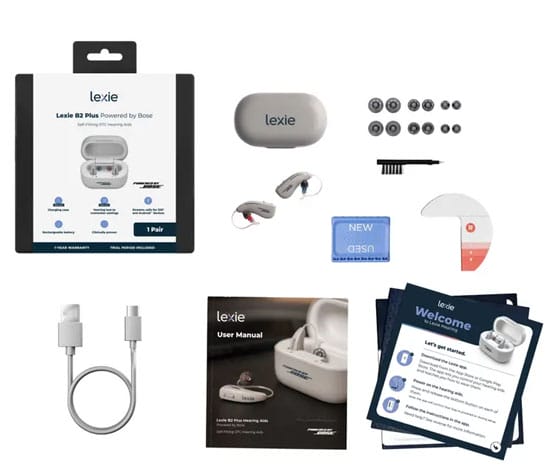
Another improvement that experts highlight is the upgraded charging system. The new charging case includes its built-in battery, providing an additional full charge and extending use time to about 36 hours between main charges—a noticeable improvement over earlier versions. Reviewers also describe the sound quality as good across many everyday situations, with clear speech intelligibility in quiet environments, acceptable performance in noisy settings, and amplification that feels natural when properly adjusted.
Finally, support options and the trial period are seen as positives. Lexie typically offers a trial period of around 45 days, and customer service and audiology support have been described as responsive and helpful. These features make the Lexie B2 Plus a well-rounded choice that balances affordability, ease of use, and dependable performance.
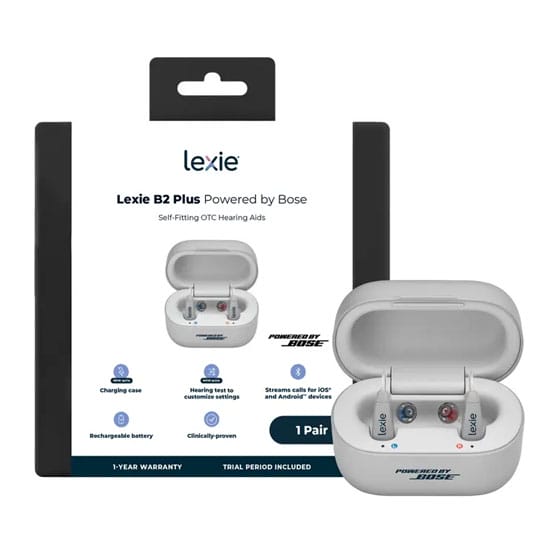
Learn out more and purchase the Lexie B2 Plus
What Experts Disliked
Expert reviewers also highlight several weaknesses and trade-offs with the Lexie B2 Plus hearing aids. One of the most consistent criticisms is their poor handling of feedback, such as whistling or squealing when sound leaks. Expert testing rates them well below average in suppression performance. Fit and comfort can also be challenging, particularly with larger or closed dome tips, which some users find uncomfortable or irritating in the ear canal over long periods of wear.
Another drawback lies in the limited fine-tuning available through the app. While basic adjustments like volume, bass/treble, and preset environments are supported, the customization falls short of what prescription hearing aids offer in a clinic, especially when matching an individual’s audiogram precisely. In addition, several reviews note a faint hiss or background noise that becomes noticeable at higher volume levels, particularly in quiet environments. Aesthetic concerns also arise, since the behind-the-ear receiver style leaves more visible hardware than smaller, in-canal devices, which some users find less discreet.
Connectivity and durability are other areas where the B2 Plus shows limitations. Bluetooth streaming works better for phone calls, particularly with iPhones, but music and media streaming are more restricted, and some users report occasional connection dropouts. The devices are not waterproof, making them vulnerable to sweat and moisture, and reviewers emphasize the need to handle them with extra care. Finally, although the charging case extends total use time, the hearing aids themselves last only about 18 hours per charge without the case, which is shorter than the battery life offered by some competing rechargeable models.
What do Users Think?
Overall, users find the Lexie B2 Plus well-suited for those with mild to moderate hearing loss who want an affordable, easy-to-use option without highly specialized features. Most report noticeable improvements once they get through a short adjustment period to fine-tune the fit and settings. However, some note streaming, feedback, and app reliability drawbacks may limit its usefulness compared to prescription aids in complex or noisy environments. Customer service is generally seen as helpful, though a few users report frustrations when dealing with warranty or support issues.
What Users Liked
Users of the Lexie B2 Plus hearing aids frequently highlight noticeable improvements in their everyday hearing. Many report clearer voices, better understanding of TV dialogue, and the ability to catch sounds they previously missed, such as distant conversations. A common sentiment is that “they work and they work well,” with several users even comparing them favorably to more expensive prescription models they had tried before.
Comfort and appearance also receive consistent praise. The behind-the-ear units are often described as small, lightweight, and discreet—sometimes “almost invisible.” Once users make the proper adjustments, many say they can wear the aids comfortably for long hours without irritation. The ease of setup further adds to satisfaction, as the companion app allows for self-fitting, hearing tests, and adjustments without the need to visit a clinic. The app is typically user-friendly and straightforward, offering enough customization for most everyday needs.
Battery life and charging features stand out as well. Users appreciate having rechargeable devices instead of dealing with tiny disposable batteries, and the included charging case earns positive reviews for being portable and practical. Finally, affordability is a recurring theme. Many feel the Lexie B2 Plus delivers better-than-expected performance for its price point, giving them confidence that they made a wise investment. Customer service and the option of a trial return period add further reassurance, rounding out the value these hearing aids provide.
What Users Disliked
User reviews of the Lexie B2 Plus hearing aids also highlight recurring frustrations and shortcomings. Bluetooth and connectivity issues are among the most common complaints. Some users experience problems with phone calls, such as hearing only the ringing but not the caller’s voice, or audio streaming to just one ear. Others mention the devices occasionally failing to pair with the app or the app not recognizing the hearing aids at all, which creates ongoing usability hurdles.
Sound-related challenges are another frequent concern. Users report squeaks, static, hiss, or distortion at higher volumes or when wearing glasses, hats, or brushing against hair. Everyday environmental noises like paper rustling or doors creaking can sometimes be over-amplified, making listening uncomfortable or overwhelming. Fit and comfort are also not universally positive: larger or closed domes can cause itchiness or a “tunnel” sensation, especially with long-term wear. The behind-the-ear design can also become irritating when in contact with hair, hats, or eyeglasses.
Battery performance, while generally appreciated for being rechargeable, does have trade-offs. Many users find that the hearing aids need nightly charging to keep up with all-day use, which is less convenient than some alternatives. The charging case, while useful, is sometimes described as bulky or awkward, and older models required it to be plugged in to recharge the aids. The app, too, receives criticism for its limited fine-tuning options. While it supports presets, bass/treble, and world volume adjustments, some users want more detailed controls, and a few report settings changing unpredictably without input.
Finally, reliability and support draw complaints from some users. Issues such as one hearing aid “dropping off” or failing after months of use, along with frustrations over customer service, have been noted. Some report long waits, difficulties with warranty claims, or a lack of follow-up when problems arise, leaving them feeling unsupported after purchase.
Elehear Beyond
What Experts Say
Experts broadly consider Elehear Beyond a strong OTC option, especially for its price point. However, it isn’t without trade-offs, especially in sound fidelity at high gain, background noise, size/comfort, and some feature limitations. But if your hearing loss is in the mild-to-moderate range and you want something that does “most things well” without the price tag of prescription aids, it’s a solid contender.
What Experts Liked
Expert reviewers generally view the Elehear Beyond hearing aids as a strong value in the over-the-counter category. They emphasize their affordability compared to traditional prescription devices, with HearAdvisor calling them a “good value in the sub-$500 category.” Beyond their price point, the aids receive consistent praise for their ability to improve speech clarity, both in lab tests and in everyday use, particularly in quiet or moderately noisy environments where users notice clearer conversations.
The device’s streaming and app capabilities also stand out. Experts highlight its good streaming quality for both media and phone calls, while the companion app provides presets for different listening environments, noise reduction controls, and other useful adjustments. Battery life is another positive, with reviewers noting that it comfortably lasts through a full day of use without streaming, and that the charging case offers a reliable number of recharges.
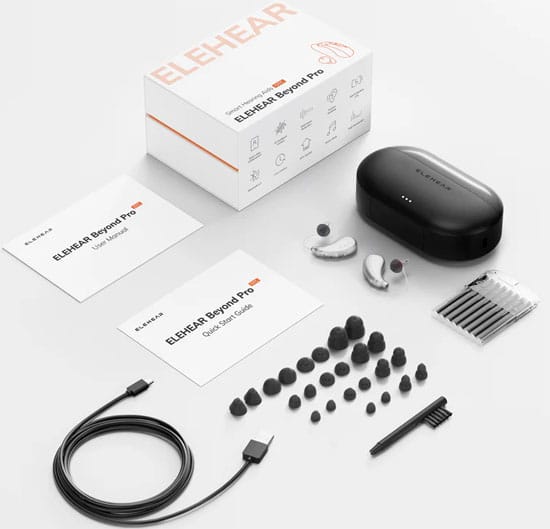
Regarding design and comfort, the Beyond is described as reasonably lightweight and shipped with multiple tip and dome options to help users find a good fit. While not universally perfect for every ear, many reviewers report that people find them comfortable for regular wear. Altogether, expert opinions frame the Elehear Beyond as an affordable, practical choice that combines solid sound performance, functional app support, and dependable battery life.
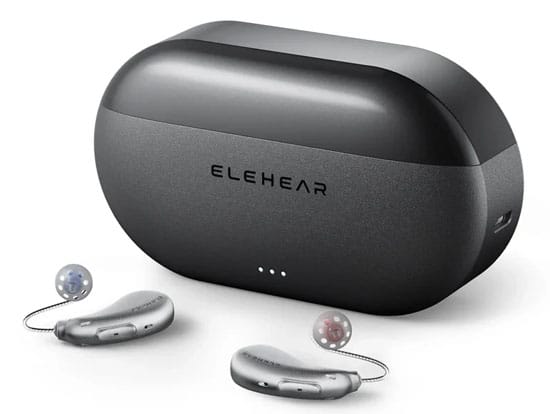
Find out more and purchase the Elehear Beyond
What Experts Disliked
Experts also point out some drawbacks with the Elehear Beyond hearing aids. One common observation is that the behind-the-ear shells are larger than certain competing models. This makes them more visible, and some wearers report that the devices can feel uncomfortable over time, especially when paired with glasses or during extended daily use.
Another recurring issue is background noise and low-level hiss. Reviewers note this is especially noticeable in quieter environments or when the gain is turned up. While adjusting settings can reduce the problem, the overall performance still falls short of being noise-free. Durability is also a concern, as the devices are only rated IPX5, meaning they resist light splashes or sweat but are not fully waterproof. This limits their suitability for heavy perspiration, rainy weather, or dusty conditions.
Customization is another area where experts find limitations. While the app includes presets and controls, several reviewers feel it lacks more advanced, frequency-specific tuning. For users with complex hearing loss, the presets may not provide enough flexibility, and some find navigating the app or understanding the modes confusing. Finally, connectivity is not flawless—occasional Bluetooth instability, weaker range, or brief interruptions are reported, making the wireless experience less reliable than some competing models.
What do Users Think?
User reviews of the Elehear Beyond suggest that satisfaction depends heavily on personal needs and expectations. Many of the most positive experiences come from people with mild hearing loss who primarily need support in everyday environments. These users often appreciate the value and features offered for the price, and those comfortable with technology find that tweaking the app settings, experimenting with domes, and learning the modes can deliver good results. For them, the product provides a practical and affordable solution without requiring perfection in sound quality.
On the other hand, reviewers with more complex needs report greater frustrations. Users with moderate to severe hearing loss, or those frequently facing noisy environments, often find the performance less reliable. People who are especially sensitive to background noise or expect prescription-level clarity and refinement tend to notice hiss or artifacts and may feel underwhelmed. Others point to the size and visibility of the devices as drawbacks, particularly if they prefer a more discreet option or want something suitable for wetter, more active lifestyles. Overall, the divide in satisfaction seems to come down to the severity of hearing loss, comfort with self-adjustment, and tolerance for trade-offs in design and performance.
What Users Liked
Users of the Elehear Beyond hearing aids often highlight several positives in their experiences. One of the most consistent points of praise is sound clarity. Many users report that the devices make conversations noticeably easier to follow in quiet or moderately noisy environments, with voices coming through more distinctly. Streaming performance also gets good feedback, with people noting that music, podcasts, and phone calls play reliably and with solid audio quality.
Battery life is another area where users express satisfaction. The 20-hour single-charge life without heavy streaming is frequently mentioned as a strong advantage. Beyond that, the charging case earns praise for its practicality, as it provides multiple extra charges, making it convenient for travel or long days away from home.
When it comes to value, users regularly comment that the Beyond offers an impressive set of features for its price. Capabilities such as Bluetooth streaming, AI-powered noise reduction, and tinnitus masking are seen as features that would normally cost much more in prescription hearing aids. Positive interactions with customer support and a return or trial policy reinforce the sense that the product delivers good value.
Finally, comfort and fit stand out for many wearers. Some even say they “almost forget” they are wearing the devices, thanks to a secure and lightweight fit with the included domes. Users who benefit from tinnitus masking also give favorable feedback, noting that the feature provides welcome relief and enhances their overall satisfaction with the aids.
What Users Disliked
Users of the Elehear Beyond hearing aids also share several concerns about their experience. A common one relates to size and visibility. Many note that the devices are bulkier than some competing models, making them more noticeable behind the ear. This can create discomfort, particularly for those who also wear glasses, and some users admit feeling self-conscious about how visible the aids appear in daily use.
Background noise and sound artifacts are another recurring issue. Even at moderate or low volumes, users often report a persistent “hiss” or “whoosh,” which becomes especially bothersome in quiet environments. A few also describe experiencing feedback or echo when the gain is turned up or in certain noisy settings, adding to the frustration. Moisture resistance and durability raise further concerns, as the IPX5 rating provides only splash and sweat protection, limiting safe use in heavy rain or during intense activity. Alongside that, some worry that the build quality feels delicate, with domes, wires, or the outer shell seeming less sturdy over the long term.
The learning curve and complexity of the app also come up in user feedback. While the app is generally appreciated for its features, some find navigating confusing and say it takes time to figure out which modes work best for different environments. A few report that certain features don’t always function consistently, such as the tinnitus masker shutting off unexpectedly. Finally, performance in very noisy environments is often described as underwhelming. In settings like restaurants, concerts, or outdoor gatherings, users note that clarity declines and background noise remains intrusive, leaving the devices less effective in the most challenging listening conditions.
Jabra Enhance Select (Select 500 / Select 300 family)
What Experts Say
Experts tend to see the Jabra Enhance Select 300 as one of the stronger and more capable OTC hearing aids currently available. It excels in several key areas, including sound clarity, ease of use (once you get past the setup process), battery performance, and support. It’s priced toward the high end of OTC, so you’re trading cost for more features and better sound, rather than just “cheapest possible.”
If you opt for the Jabra Enhance Select 300, there are a few key tips to keep in mind for the optimal experience. First, be prepared to experiment with different domes or ear tips to find a comfortable fit while also reducing feedback. A good fit is key to both sound quality and long-term comfort. After using the aids for a week or two, you may also find it helpful to schedule remote tuning with Jabra’s support team. This allows for fine-tuning the settings based on your daily environment, which often differs from the initial setup conditions. Finally, check compatibility with your phone, whether iOS or Android, especially if features like Bluetooth streaming or hands-free control are important to you. Proper pairing ensures you can fully utilize the connectivity options these hearing aids offer.
What Experts Liked
Reviewers highlight several strengths of the Jabra Enhance Select 300. Sound quality stands out as a major advantage, particularly for speech. WIRED even described it as having “the best sound on any OTC hearing aid I’ve tested to date,” praising its excellent audio quality, minimal hiss, and natural enhancement. HearAdvisor’s tests echoed this sentiment, showing above-average performance for both speech in quiet and noisy settings and strong feedback handling.
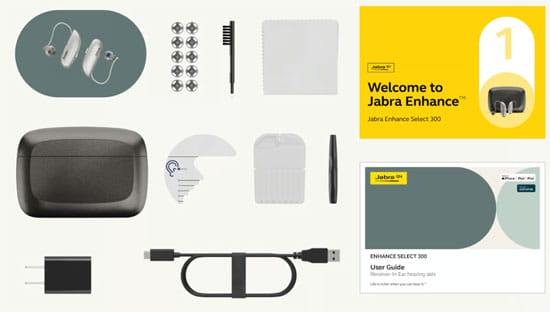
The device also earns positive marks for its build, features, and support. It is rechargeable, fairly lightweight, and has multiple ear tip options for customizing fit. Reviewers note that remote programming and telecare support with hearing specialists are included, often for up to three years, which provides added value. The companion app is well-regarded too, offering multiple preset programs such as “All Around,” “Restaurant,” “Music,” and “Outdoor,” along with user controls for volume, speech clarity, and noise filtering.
Battery life is another strong point. Reviews note that the hearing aids typically last between 24 and 30 hours on a single charge, with the included charging case offering extra power when needed. This performance is considered among the strongest in the OTC category. Finally, fit and comfort are well-rated. With the right domes—particularly more occluding styles when appropriate—users report both secure comfort and good sound delivery. The devices are relatively discreet and lightweight, which further enhances everyday usability.
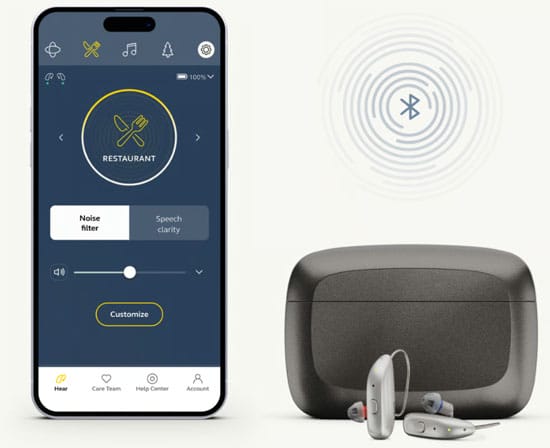
Find out more and buy Jabra Select 300
What Experts Disliked
While the Jabra Enhance Select 300 earns praise in many areas, expert reviewers also highlight several drawbacks. Price is one of the most common concerns. This model is often described as expensive for an OTC option, with WIRED and Hearing Tracker noting that its cost is close to that of some prescription devices. As a result, some question whether the savings are enough to justify choosing it over professionally fitted hearing aids.
Performance in noisy environments, though better than many OTC competitors, still has its limits. HearAdvisor’s lab testing showed that its speech-in-noise scores lag behind top prescription models, and users report that busy restaurants or outdoor settings with high background noise remain challenging, even with specialized listening modes.
Streaming and music playback are other weak spots. While Bluetooth support is generally good, the quality of streamed audio—particularly music—tends to sound thin or “tinny,” falling short of high-fidelity expectations. There are reports of Bluetooth connection issues, especially with certain Android phones, including occasional latency or instability.
Fit and configuration come with trade-offs as well. Because this is an OTC device, there’s no in-person fitting by default. Adjustments rely on the app or virtual audiologist support, which works well for many but can feel slow or insufficient for others. The included domes and open tips don’t fit everyone equally well; sometimes, feedback or lack of volume occurs unless different domes are tried or the aids are carefully tuned.
Finally, some reviewers point to user interface and comfort concerns. Domes or ear tips may become uncomfortable after several hours, causing itching or irritation. App connectivity isn’t always seamless either, with users noting occasional disconnections or needing to reset the devices by placing them back in the charging case. Hands-free calling is also somewhat limited, with certain features working inconsistently across platforms, particularly for Android users.
What do Users Think?
Overall, people tend to be favorably impressed by what the Jabra Select 300 delivers: especially for speech clarity, usability in noisy places, and the “premium-feel” of many of its features (battery life, variety of domes, support options). However, it’s not without frustrations: streaming quality is often perceived as weaker, and occasional fit/comfort issues are a recurring theme, along with tech or customer service quirks.
What Users Liked
User reviews of the Jabra Enhance Select 300 highlight several positive aspects that add to its appeal. One of the most frequently praised points is sound clarity and conversation improvement. Many users report a noticeable boost in speech understanding during daily interactions, with some saying conversations feel “effortless” and that they can even pick up sounds from the side or behind them. The device’s noise reduction features are also well regarded, making it easier to follow conversations in challenging environments like restaurants or outdoor gatherings.
Comfort and design earn equally positive feedback. Users often describe the hearing aids as lightweight to the point where they “forget” they are wearing them. The variety of domes and ear tips helps people find a secure and comfortable fit while reducing feedback or sound leakage.
Battery life and everyday usability are other strengths noted in reviews. Many users are impressed that the devices easily last through a full day, with the charging case offering convenient extra power. The setup process through the app is generally manageable, and people appreciate fine-tuning volume, switching between listening programs, and accessing remote audiologist support when needed.
Customer service and after-purchase support also receive favorable mentions. Users highlight the responsiveness of Jabra’s team, noting that remote audiologist sessions, video consultations, and quick delivery of replacement domes or wax guards help them feel supported. Finally, the 100-day satisfaction guarantee provides an extra reassurance, giving new users confidence to try the devices risk-free.
What Users Disliked
User reviews of the Jabra Enhance Select 300 also highlight several frustrations and limitations. Bluetooth and streaming performance are frequently complained about. Music playback, in particular, is often described as “tinny” or “thin,” falling far short of the richness of quality earbuds. Connectivity can also be unreliable: some users say their laptops or non-phone devices won’t connect, while others experience intermittent dropouts in one ear.
Comfort and fit issues also arise over longer wear. The domes or ear tips sometimes cause itching after several hours, leading users to remove them for breaks. For those with smaller ears, the receiver or wire can feel bulky, with at least one reviewer noting that the size prevented a secure fit and even caused the aid to fall out at times.
The reliance on technology and the app is another sticking point. Users who aren’t particularly tech-savvy may find the app confusing or difficult to manage, especially with updates and connectivity issues. Reports of the app freezing, losing connection, or requiring the aids to be placed back in the case for a reset are not uncommon.
Cost is another concern. Some buyers feel that the price of an OTC model is steep compared to other options or even entry-level prescription aids. Those with more severe hearing loss sometimes express disappointment that the devices don’t provide enough amplification or benefit in challenging listening situations.
Expert Sources:
HearAdvisor
HearingTracker
Wired
Treble Health
Best Buy
Hearing Aid Forum
Soundly
Fortune
National Council on Aging
Aging in Place
Crutchfield
Trustpilot
Better Business Bureau
Reddit
Reviewed
Consumers Advocate
Retirement Living
Audiologists.org
Hearing Health & Technology Matters
Nerd Techy
Hataftech
SeniorLiving.org


