
Best OTC Hearing Aids
Over-the-counter (OTC) hearing aids are a relatively new category of hearing devices in the United States, designed to make hearing support more accessible and affordable. Unlike traditional prescription hearing aids, which require a medical exam and fitting by an audiologist, OTC devices can be purchased directly online, in pharmacies, or at retail stores without a prescription. They are intended for adults with perceived mild to moderate hearing loss and often come with self-fitting features, adjustable sound settings, and smartphone connectivity, allowing users to customize their listening experience without professional assistance.
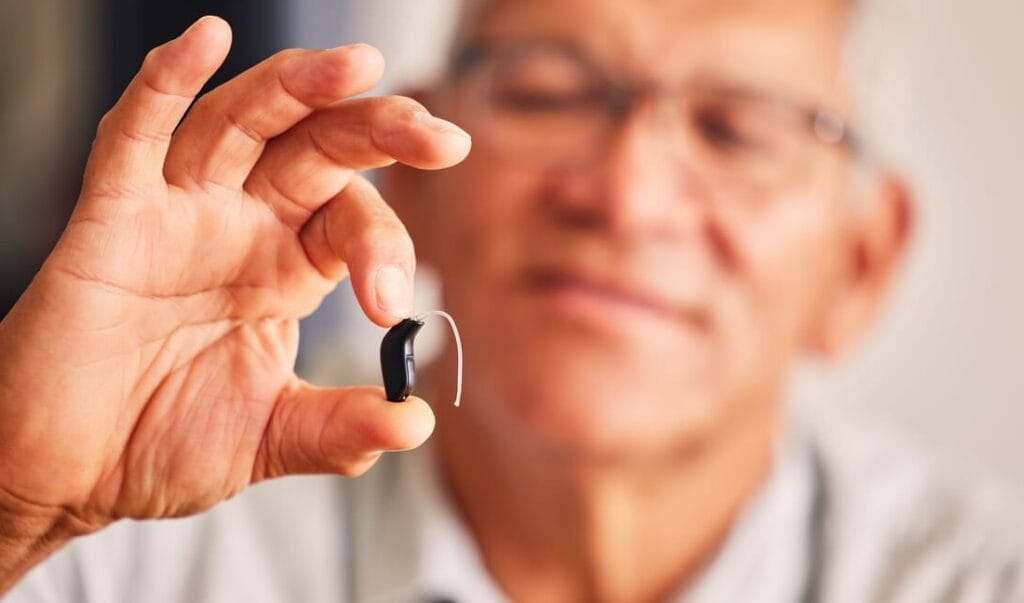
The introduction of OTC hearing aids has been a significant step forward in hearing healthcare, especially following the FDA’s 2022 ruling that created this category. These devices have opened the door for greater consumer choice, lower prices, and wider availability. While OTC hearing aids may not replace prescription-level solutions for individuals with severe or complex hearing loss, they provide a convenient and cost-effective option for those seeking to improve speech clarity, reduce background noise, and enhance communication in everyday environments.
The Best OTC Hearing Aids
Sony CRE-E10 — Best single-device match for performance + streaming under $1,500
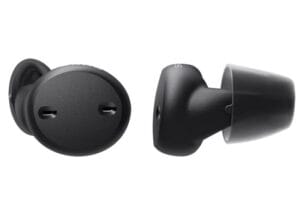
The Sony CRE-E10 is an earbud-style, rechargeable OTC hearing aid that delivers Bluetooth audio streaming, hands-free calling, and impressive battery life of roughly 24–26 hours. Its user-friendly self-fit app makes adjustments easy, and reviews highlight it as a strong performer for mild to moderate hearing loss. Priced around $1,299.99 per pair, it’s a solid pick for those who value reliable streaming and a refined app experience.
Lexie B2 Plus (Bose-powered) — Best if you value an easy app + Bose tuning
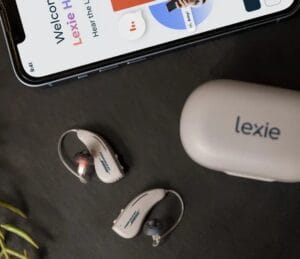
The Lexie B2, powered by Bose SoundControl technology, delivers strong sound processing and a polished app experience. These rechargeable aids earn positive feedback for speech clarity and customization, making them a solid choice for users who want straightforward, well-balanced sound with Bluetooth streaming. Pricing typically stays comfortably under $1,500. One consideration: some users report receiver fit or comfort issues, so fit may vary by individual.
Elehear Beyond — Best value if you want Bluetooth features at a much lower price
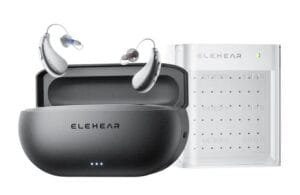
The Elehear Beyond offers dependable streaming and app functionality at a moderate price point (typically a few hundred dollars). It includes added perks like tinnitus relief modes and remote consultations. While some users mention variable comfort and noise management, it stands out as a solid value choice for those seeking Bluetooth connectivity without needing the most advanced noise control.
Jabra Enhance 300 Select — Best for speech-in-noise & Android streaming
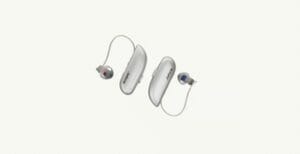
The Jabra Enhance Select line (including the 300 and 500) consistently ranks among the best in both lab tests and consumer reviews, especially for speech clarity in noisy environments and reliable connectivity. Pricing for these higher-end models usually starts around $1,695 per pair, but Jabra also offers more affordable Select versions, such as the Enhance Select 50R, which come in under $1,200 and perform well in quieter settings. For those who prioritize top-tier performance in background noise and access to remote support, the Select 300 is worth strong consideration—or you might weigh it against Sony’s mid-range option.
Difference Between OTC and Prescription Hearing Aids
Prescription hearing aids are the most precise and comprehensive option, especially for complex or severe loss, while OTC hearing aids provide a more accessible, lower-cost solution for adults with mild to moderate difficulties.
Prescription Hearing Aids
- Require a hearing evaluation and fitting by an audiologist or hearing care professional.
- Custom-programmed to the user’s audiogram (hearing test results) for precise amplification.
- Can treat mild, moderate, severe, or profound hearing loss.
- Often include advanced features like multi-microphone directionality, rechargeable batteries, tinnitus masking, and real-time professional adjustments.
- Higher cost, typically $2,000–$6,000 per pair, but include professional service and follow-up care.
OTC Hearing Aids
- Available directly in stores or online without a prescription.
- Intended for adults with mild to moderate hearing loss.
- Typically self-fitted using on-device controls or smartphone apps.
- More affordable, usually $300–$1,500 per pair.
- Limited professional involvement, though some companies offer remote support.
- Features may include Bluetooth streaming, volume control, and noise reduction, but are generally less advanced and less customizable than prescription models.
What experts look for
When people evaluate over-the-counter (OTC) hearing aids, several key criteria consistently emerge. Sound quality and real-world performance are often at the top of the list, particularly in challenging listening environments. Users pay close attention to how well a device enhances speech, reduces feedback, and minimizes background noise, as these factors greatly affect daily usability.
Another important consideration is the trial period, return policy, and warranty. Many higher-end OTC hearing aid sellers provide trial periods ranging from 60 to 100 days, along with warranties, which are especially valuable if the fit or tuning isn’t perfect right out of the box. For example, some Jabra models come with a 100-day money-back guarantee, giving users peace of mind when trying a new device.
Comfort and fit are also critical, including aspects like size, weight, discretion, and whether the device causes irritation in the ears. Equally important is battery life and charging options. Users often compare rechargeable versus disposable batteries, the number of hours the device can run, and how easy it is to charge.
Features play a role as well, with many users looking for Bluetooth or streaming capabilities, app-based control, and modes designed for different listening environments. Finally, service and support can make or break the experience. This includes access to warranties, trial or return options, remote tuning, and support from audiologists, all of which contribute to long-term satisfaction with the device.
These are some of the criteria that tend to show up when people evaluate OTC hearing aids:
- Sound quality and real world performance, especially in noisy environments (how well it enhances speech, reduces feedback and background noise)
- Trial period / return policy / warranty. Many of the higher-end OTC sellers include trial periods (e.g., 60–100 days) and warranties — valuable if fit/tuning isn’t right out of the box. Jabra in particular lists a 100-day money-back guarantee on some models.
- Comfort and fit (size, weight, how discreet, whether it irritates ears)
- Battery life / charging (rechargeable vs disposable, how many hours, ease of charging)
- Features (Bluetooth or “streaming,” app control, different modes for different environments)
- Service / support (warranty, return or trial periods, remote tuning, audiologist support)
- Value for the cost
Every person’s situation and hearing are different, so a good hearing aid for one person won’t be good for another. Each of the top hearing aids below has positive and negative features and issues. The best one for you will depend heavily on your individual situation and the problem you are trying to solve.
Find the Best Hearing Aids for You
Sony CRE-E10 Details
Best single-device match for performance + streaming under $1,500
What experts say
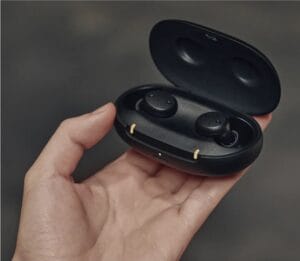
Overall, the expert consensus is that the Sony CRE-E10 is among the better options in the OTC hearing aid space, especially for those who want modern features (streaming, app control) and are okay paying a premium. It isn’t perfect — trade-offs around fit, noise suppression in very noisy spaces, cost, and lack of physical controls are real — but if its strengths align with what you care about, it tends to get very favorable reviews.
What Experts Liked
Strong sound performance
- Experts praise the CRE-E10 for good mid-to-high frequency clarity, especially in quiet or moderately noisy settings.
- It gets high marks for speech intelligibility in quiet, and is viewed as among top performers in OTC devices in that regard.
Good streaming & connectivity (for iOS)
- The hearing aids support Bluetooth streaming (calls / media) — but currently only on iOS devices.
- The app (Sony Hearing Control) allows setup, sound profile checking, fine tuning (bass/treble etc.), which many reviewers like.
Rechargeable battery & reasonable battery life
- Sony claims up to ~26 hours of use on a full charge (without streaming).
- With streaming, battery life is less, as expected.
Design & comfort
- The E10 has an “earbud-style” design, which many reviewers like aesthetically — more “wearable tech” than classic hearing aid look.
- It comes with multiple eartip / sleeve sizes, which helps with fit.
Good lab test / award performance
What the downsides / limitations are
Comfort & fit issues
- Because of the size and design, some users find them less comfortable for all-day wear, especially if the ear fit isn’t perfect. The “earbud” type filling the concha may vary in comfort depending on your ear shape.
- Some “plugged” or echo effect, or increased awareness of your own voice are noted in reviews.
Bulk / visibility vs more discreet models
- Compared to Sony’s other OTC models (e.g. CRE-C10, CRE-C20) which are more discreet (in-canal style), the E10 is more visible. If appearance / invisibility is a big factor, this matters.
No physical buttons
- All controls are via the app. There are no external buttons or touch controls on the aid itself. Some find that limiting or inconvenient.
Performance in very noisy environments
- While the device handles quiet or moderate noise well, in louder or more challenging noise conditions performance drops; background noise and slight buzz or hiss may become more noticeable.
Price
- It’s in the premium-OTC bracket. Experts note the price is high compared to some other OTC devices, and is close in cost to lower-end prescription hearing aids.
Streaming limitation / platform restriction
- Streaming is only supported on iOS; Android users currently cannot stream audio, though the app works for control.
What users say
Most users seem to think the CRE-E10 is among the better OTC hearing aids available — especially for people with mild to moderate hearing loss who want streaming, rechargeable batteries, and a more modern “earbud-style” aesthetic. They generally accept some compromises (comfort, background noise, cost) in exchange for those features.
If you mostly need them for conversation, TV, phone calls, and occasional streaming, most users say they do well. If, however, you need top performance in very loud, complex sound environments (restaurants, outdoors in wind, etc.), or if you have a more severe hearing loss, some users feel the limitations become more noticeable.
What Users Like
Speech clarity & overall hearing improvement
- Many users report that speech is much clearer, especially in quieter or moderately noisy environments. They feel the device gives them better understanding without needing a full prescription hearing aid.
Good Battery Life
- Several users say they are impressed by how long the devices last on a charge. Even with streaming/calls, many feel it’s acceptable or better than expected.
App & Setup fairly easy
- Users like that they can self-fit using the app, adjust settings (volume, treble/bass etc.), and that the app includes features like a hearing test / profile. The ability to fine-tune helps users personalize the experience.
Design / aesthetic appeal
- Many like the earbud-style design both for look and feel—it seems more like consumer electronics than medical devices, which some prefer. Some also like that the device is relatively discreet compared to older traditional aids.
Good for the price
What Users Dislike / Issues
Comfort over long periods
- Some users say the devices become uncomfortable after many hours of wear. The “plugged” feeling (occlusion) is mentioned—own voice echo or boom feeling, pressure or bulk in the ear concha.
Bluetooth / streaming limitations
- The biggest recurring complaint is that streaming works only with iOS devices, leaving Android users out for media/call streaming. Also some say the Bluetooth audio streaming (even with iPhone) is good but not perfect; there are reports of latency, or bass / fidelity being less than ideal.
Fit issues
- A few mention that the non-custom fit makes retention unreliable — it may not stay perfectly in place for some ear shapes. The fit depends a lot on using the right sleeve / tip size. If fit isn’t right, comfort and performance (esp. noise isolation) suffer.
Noise & background artifacts
- In noisier settings, users report background noise or slight buzzing/hissing. Some say it’s manageable; others find it more distracting. Also, wind noise seems to still be an annoyance in open windows / outdoors.
No Physical Buttons
- Many find the lack of on-device controls (buttons/touch) inconvenient, especially when phone/app is not immediately accessible. All adjustments have to be done via app.
Cost compared to expectation
- Several users feel the price is high for some shortcomings, especially if one must return them or if support / device issues arise. Some say they’d expect more polish for the price.
Charging case
- A few complaints around the charging case: one user said one of the two units doesn’t charge well; another said the case is “fiddly,” you have to fiddle to get correct alignment or contact.
Lexie B2 Plus (Bose-powered) Details – Best if you value an easy app + Bose tuning
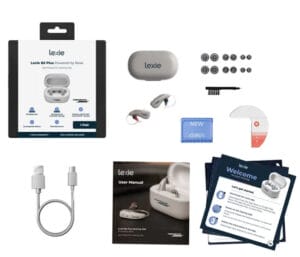
The Lexie B2, powered by Bose SoundControl technology, delivers strong sound processing and a polished app experience. These rechargeable aids earn positive feedback for speech clarity and customization, making them a solid choice for users who want straightforward, well-balanced sound with Bluetooth streaming. Pricing typically stays comfortably under $1,500. One consideration: some users report receiver fit or comfort issues, so fit may vary by individual.
What experts say –
Overall, expert reviews tend to view the Lexie B2 Plus (Bose-powered) as a strong option in the OTC hearing aid market. It offers a compelling set of features, good value, and improved battery management. However, it isn’t perfect: feedback/noise, modest fine-tuning, some comfort/fitting issues, and limited streaming for music are recurring critiques.
Strengths (What experts like)
Here are things most reviews praise or highlight as good:
Value for the Price
- Many reviewers say Lexie B2 Plus gives solid performance for the cost, especially compared to traditional prescription hearing aids.
Ease of Use
- The app is generally regarded as user-friendly. Adjustments can be made without needing to visit a clinic. The hearing test in app helps customize settings.
Battery / charging improvements
- The upgrade to a charging case with its own battery (one extra full charge) in the B2 Plus received favorable notice. The 36 hours (aids + case) between main charges is a big improvement.
Sound Quality
- Reviews often say audio is solid: good speech intelligibility in quiet, acceptable in noisy environments, and overall amplification is unobtrusive or “pleasant” when configured well.
Support & trial period
Weaknesses / Limitations
These are issues or trade-offs that expert reviews and user-reports repeatedly mention:
Feedback handling is weak
- “Feedback” meaning whistling, squealing, or unwanted noise when sound leaks etc. Lexie B2 Plus performs “well below average” in expert tests for feedback suppression.
Fit & comfort issues
- The physical fit—especially with larger or “closed” tips / domes—can become uncomfortable over extended wear. Some users report itchiness, especially in the ear canal.
Limited fine-tuning
- While the app lets you adjust world volume, bass/treble, environment presets, the ability to match a specific audiogram precisely is more limited than prescription hearing aids with in-clinic tuning. It doesn’t have some of the very detailed controls (or sometimes the hardware) that more premium aids offer.
Hiss / noise floor at higher volume
- Several reviews mention a mild hiss, especially when increasing gain / volume. Not always a deal breaker, but noticeable in quiet environments.
Aesthetics / visible hardware
- Because of the behind-ear / receiver style, there is more visible hardware (wires/tubes/domes). Some users prefer smaller, more discreet in-the-canal or completely-in-ear models.
Bluetooth & streaming limitations
- Phone-call streaming works (especially for iPhones) but streaming music or other media directly to the aids is more limited or not as capable.
- Some users report Bluetooth connection dropouts or inconsistent behavior.
Not waterproof
- The devices are not waterproof; moisture can be an issue, especially with sweat or rain. Also some comments about being extra careful with moisture.
Battery life trade-offs
What users say:
Overall, users find the Lexie B2 Plus well-suited for those with mild to moderate hearing loss who want an affordable, easy-to-use option without highly specialized features. Most report noticeable improvements once they get through a short adjustment period to fine-tune the fit and settings. However, some note drawbacks with streaming, feedback, and app reliability, which may limit its usefulness compared to prescription aids in complex or noisy environments. Customer service is generally seen as helpful, though a few users report frustrations when dealing with warranty or support issues.
What Users Like
Sound improvement, clarity, and everyday hearing boost
- Many users report that voices are much clearer, and they can hear things they couldn’t before: TV dialogue, conversations, distant speech.
- They tend to say “they work and they work well” especially compared to more expensive prescription hearing aids they had previously.
Comfort and discreetness
- A lot of users like that the behind-the-ear units are small, relatively lightweight, and discreet; often “almost invisible.”
- Several say they wear them many hours without discomfort (once adjustments are made).
Ease of setup / usability
- Users tend to like that they can self-fit: using the app, performing hearing test, and making adjustments without needing a clinic visit.
- The app is generally described as “simple” or “user-friendly,” with helpful adjustments.
Battery & charging improvements
- Positive comments about the rechargeable feature (vs tiny disposable batteries).
- The charging case especially gets praise: being useful, reasonably portable.
Value for money / affordability
- Many say this model gives “good enough” or even “better than expected” performance for the price. Users often compare it favorably vs much more expensive prescription aids.
- Some appreciate Lexie’s customer service and trial return period.
Common Complaints
Bluetooth, connectivity, and streaming issues
- Some users report problems with phone calls: hearing ringing but then not hearing voice, or one ear streaming, etc.
- Difficulties with re-pairing the devices to the app, or app not recognizing hearing aids sometimes.
Feedback, hiss, distortion, and sound artifacts
- At higher volumes or in certain conditions (glasses, hats, hair brushing, etc.), feedback, squeaks, static or hiss are mentioned.
- Also comments that certain environmental noises are too amplified (e.g. paper rustling, door hinges) making things uncomfortable or overwhelming.
Fit and comfort concerns
- The domes / ear tips: users say larger or “closed” tips become uncomfortable, itchy, or “feel in a tunnel” especially after extended wear.
- Some users complain about the behind-ear portion being brushed by hair, hats, or glasses causing noise / discomfort.
Power / battery life trade-offs
- Though many like the rechargeable battery and case, some say that real-life battery use is less than ideal if worn all day every day. Needs nightly charging.
- Also, the case is helpful, but sometimes people note that it must be plugged in to itself charge the hearing aids (in older models) or that the case is somewhat bulky.
App limitations / controls
- Some say the app lacks more fine-grained controls. For example, while there are presets, bass/treble, world volume etc., they feel things like compression, or details in certain frequencies aren’t adjustable enough.
- Others frustrated with random changes: volume jumping unexpectedly, or settings changing without clear cause.
Reliability, durability & customer service
- A few users report issues like one side “dropping off” (i.e. the aid stops working or losing connection) after some months use.
- Some complaints of difficulties with warranty / repair / support: long waits, lack of follow-up.
Elehear Beyond Details
Best value if you want Bluetooth features at a much lower price
What experts say
Elehear Beyond is broadly seen by experts as a strong OTC option, especially for its price point. It isn’t without trade-offs, especially in sound fidelity at high gain, background noise, size/comfort, and some feature limitations. But if your hearing loss is in the mild-to-moderate range and you want something that does “most things well” without the price tag of prescription aids, it’s a solid contender.
What Reviewers Liked
Value / Price
- It’s affordable compared to traditional prescription hearing aids. HearAdvisor labels it “good value in the sub-$500 category.”
Speech clarity
- In both lab tests and real-use, Beyond improves speech understanding, especially in quiet or moderate noise.
Streaming, app features, Bluetooth
- Good streaming quality for media and phone; app offers presets for different environments, noise reduction, etc.
Battery life / Rechargeability
- Battery life is solid (e.g. full‐day use without streaming, and decent number of recharges from the case) in many reviews.
Comfort / Design
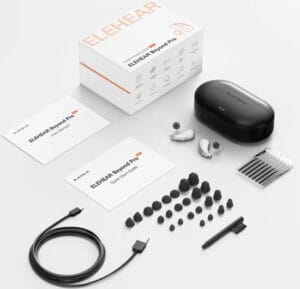
- They’re reasonably light, included multiple tips/domes for fit; reviewers say many people find them comfortable.
What Reviewers Did Not Like
Size / Bulk / Visibility / Comfort
- The behind-the-ear shells are larger than some competing models. Some users found them noticeable or uncomfortable after wear, especially behind the ear or with glasses.
Background noise / hiss / artifacts
- Several reviews mention a background hiss or low-level noise, especially at higher gain settings or in quiet environments. Tailoring settings helps, but perfection is lacking.
Water / Sweat / Dust Resistance
- Limited resistance: IPX5 (light splashes/sweat), but not waterproof. Not ideal for heavy perspiration, rain, or very dirty / dusty conditions.
Fine-tuning / customization
- Some reviewers feel the app/presets do not allow sufficient frequency-specific tuning or customization, especially for people with more complex hearing loss profiles. Also, some experience in navigation / understanding what each mode does can be confusing.
Bluetooth / connectivity limitations
- Occasional instability in the Bluetooth connection; perhaps weaker range, or interruptions.
What do users say:
User reviews of the Elehear Beyond suggest that satisfaction depends heavily on personal needs and expectations. Many of the most positive experiences come from people with mild hearing loss who primarily need support in everyday environments. These users often appreciate the value and features offered for the price, and those comfortable with technology find that tweaking the app settings, experimenting with domes, and learning the modes can deliver good results. For them, the product provides a practical and affordable solution without requiring perfection in sound quality.
On the other hand, reviewers with more complex needs report greater frustrations. Users with moderate to severe hearing loss, or those who frequently face noisy environments, often find the performance less reliable. People who are especially sensitive to background noise, or who expect prescription-level clarity and refinement, tend to notice hiss or artifacts and may feel underwhelmed. Others point to the size and visibility of the devices as drawbacks, particularly if they prefer a more discreet option or want something suitable for wetter, more active lifestyles. Overall, the divide in satisfaction seems to come down to the severity of hearing loss, comfort with self-adjustment, and tolerance for trade-offs in design and performance.
What users tend to like
Sound clarity / speech understanding
- Many report that Beyond does well improving speech in quiet or modest background noise — people say voices are more easily understood.
- Users also appreciate that streaming (music, podcasts, phone calls) works well.
Battery life
- The 20-hour single-charge life (without heavy streaming) comes up often as a plus.
- The charging case gets praise: people like that it gives multiple extra charges, helping for travel or long days out.
Value for price
- Many say that for the cost the features are strong — things like Bluetooth streaming, AI noise reduction, tinnitus masking, etc., would cost more in prescription hearing aids.
- Positive feedback about customer support and the return/trial policy also improves perception of value.
Comfort / fit
What people report as problems
Size & visibility
- Many mention that the units are noticeably large behind the ear, more so than some competing models. This leads to some discomfort, especially if wearing glasses.
- Because of their size, some are self conscious about how visible they are.
Background noise / hiss / artifacts
- A recurring complaint is that even at moderate or low volume, there’s a “hiss” or “whoosh” or audible background noise. In very quiet situations, this can be annoying.
- Some report feedback or echo when turning the gain up, or in certain noisy environments.
Moisture / water resistance
- The IP rating is quoted as IPX5 (splash/sweat resistant but not waterproof), which limits wear in rain, heavy sweat, etc. Some users warn that extra care is needed.
- Build quality: some users feel the shell or parts (like domes or wires) are delicate, and worry about long-term durability.
Complexity / learning curve
- While many like the app and features, people also say there’s a learning curve — figuring out which mode (restaurant, general, etc.) works best, adjusting settings, tweaking sound.
- Some find app navigation less than intuitive, or that some features don’t behave consistently (e.g. tinnitus masker turning off unexpectedly).
Performance in high noise environments
Who it seems best for
Putting it all together, based on expert feedback, Elehear Beyond seems most appropriate for:
- People with mild to moderate hearing loss (especially symmetric loss, without complicated needs) who want a relatively inexpensive and self-managed solution. audiologists.org+2Hearing Tracker+2
- Users who are fairly comfortable with smartphones/apps and don’t mind playing with presets to get sound “good enough.” audiologists.org+1
- Those for whom appearance/bulk is less important, or someone willing to tolerate some visual/comfort trade-offs for cost savings and feature set.
- Not ideal for people who expect premium prescription-aid levels of fine tuning, very discrete / small hardware, or need robust water resistance (e.g. for heavy sweating, outdoor work, etc.).
Jabra Enhance Select 300 Details
Best for speech-in-noise & Android streaming
What experts say
Overall, experts tend to see the Jabra Enhance Select 300 as one of the stronger and more capable OTC hearing aids currently available. It hits a lot of high marks for sound clarity, ease of use (once you get past setup), battery performance, and support. It’s priced toward the high end of OTC, so you’re trading cost for more features and better sound, rather than just “cheapest possible.”
If you decide to go with it, some tips:
- Be ready to experiment with domes/tips to get good fit and minimize feedback and maximize comfort.
- Plan for possibly needing remote tuning after you’ve used it for a week or two, to tweak settings for your real-world environments.
- Check compatibility with your phone (iOS vs Android) especially if streaming or hands-free control is important.
What reviewers praise
Very good sound quality, especially for speech
- WIRED calls it “best sound on any OTC hearing aid I’ve tested to date … excellent audio quality with minimal hiss and natural sound enhancement.”
- Tests by HearAdvisor show above average performance in speech in quiet and speech in noise, better feedback handling, etc.
Strong build, features, and support
- It’s rechargeable, fairly lightweight, comes with multiple ear tips for fit customization.
- Remote programming / telecare / online hearing specialist support is included, sometimes up to three years.
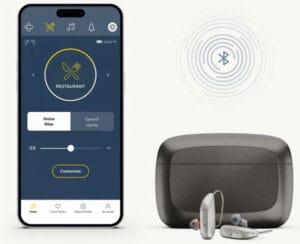
- The app is seen as good; users get multiple programs (e.g. “All Around,” “Restaurant,” “Music,” “Outdoor”) and controls like volume, speech clarity vs. noise filters, etc.
Good battery life and charging case
- Claims and/or measurements are that the aids last ~24-30 hours on a charge, and the case provides additional charging.
- Users report that this battery performance is among stronger in OTC aids.
Fit and comfort
- Many reviews note that with the right domes (ear tips)—especially using more occluding types when needed—comfort and sound delivery are good.
- The aid is relatively discreet and lightweight.
What reviewers criticize
Price is high for an OTC model
- The Jabra Select 300 is often noted as being more expensive than many OTC hearing aids.
- Because it’s close in price to some prescription hearing aids, some question whether the savings justify going OTC instead of through a clinic.
Speech-in-noise performance still has limits
- Although good, performance in noisy environments isn’t perfect. One lab test (HearAdvisor) showed speech in noise scores lag somewhat behind top prescription models.
- For some users, high background noise (restaurants, outdoors) still challenges the device despite the various listening modes.
Music and streaming audio are weaker points
- The quality of streamed music is below what many would expect for high-fidelity audio. It tends to sound “tinny” or less rich.
- Bluetooth support is good, but there are reports about connection issues, esp. with certain Android devices, and some latency or instability.
Fit/configuration trade-offs; app support
- Because it’s OTC, there’s no in-person fitting by default; many of the adjustments are done via app or virtual audiologist. That’s seen as a plus by some, but others feel that remote adjustments aren’t always fast or sufficient.
- The default domes/open tips may not fit everyone or provide enough occlusion; sometimes feedback or insufficient volume occurs unless the aid is tuned or different domes are used.
User interface, app quirks, comfort
- Some users report the domes/ear tips can become uncomfortable (itching, irritation) after several hours.
- Some app-connection issues: disconnections, having to set them down / into charging case to reset, etc.
- Also, “hands-free calling” features may be limited or behave differently on different platforms; not all Android devices are fully supported.
Who it seems to be a good fit for
Good fit if you:
- Have mild to moderate hearing loss, not severe, and want something you can order OTC without a clinic visit. Hearing Tracker+2audiologists.org+2
- Are comfortable with using a smartphone app / virtual appointments to configure and adjust the device.
- Want high-quality speech clarity, good battery life, and strong support (warranty, remote audiologist).
- Are okay with paying more than the lowest-cost OTC options, in exchange for better features, sound quality, and support.
What users say –
Overall, people tend to be favorably impressed by what the Jabra Select 300 delivers: especially for clarity of speech, usability in noisy places, and the “premium-feel” of many of its features (battery life, variety of domes, support options). But it’s not without frustrations: streaming quality is often viewed as weaker, occasional fit / comfort issues, and tech or customer service quirks are a recurring theme.
What users praise
Sound/clarity / conversation improvement
- Many users report much clearer speech, especially in everyday situations (“conversations are effortless,” “can hear lateral sounds … behind me”) where prior devices or OTC aids didn’t do as well.
- The noise reduction / background suppression is often cited as good, making it easier to understand people in restaurants, outdoors, etc.
Comfort / design
- It’s lightweight; many say they “forget” they’re wearing them after a while.
- Multiple dome/ear tip options help users find better fits. This is appreciated for comfort and for reducing feedback (whistling) or sound leakage.
Battery life and usability
- Lots of positive comments about good battery life; users say the aids last a full day plus, and that the charging case adds useful extra power.
- Setup via app is generally seen as doable, and many like the ability to adjust things (volume, “programs” / listening modes) and the remote or virtual audiologist support.
Customer service / warranty / support
What users complain about
Bluetooth / streaming issues
- Music streaming quality often gets negative feedback: described as “tinny,” “thin,” not comparable to good earbuds or high-fidelity devices.
- Connectivity with non-phones or some phones can be spotty. Some users say their computer or laptop won’t see the device; others say one side intermittently drops out.
Fit / comfort issues over time
- The domes / ear tips sometimes cause itching after several hours. Some users need to stop and remove them to take breaks.
- Some people find the receiver or wire size a little large or uncomfortable, especially if their ears are small. One Best Buy review mentioned that the receiver size prevented a secure fit and sometimes the aid fell out.
Dependence on tech / app / remotes
- Users who aren’t very tech-savvy sometimes struggle with the app settings, or updating, connecting, etc.
- Some report the app freezing, losing connection with the aids, or having to put the aids back in the case to “reset” things.
Cost vs. expectations
- Some feel the price is steep for an OTC product. They compare it with other OTC aids or entry-level prescription aids and wonder whether the extra expense is fully worth it.
- For severe hearing loss, some users say the aids don’t provide enough amplification or benefit, so they’re disappointed in certain situations.
Customer service delays / limitations
- A few users say support can be slow, especially for remote tweaks. Some appointments/scheduled adjustments can take time.
- There are complaints about lack of in-person support, which matters for people who prefer hands-on or clinics.
Software / compatibility bugs
- Some report that updates (iOS updates, app updates) introduced pairing problems or compatibility issues. For example, there are Reddit threads about iOS 18.x causing issues pairing.
Typical trade-offs / themes
- Users seem to accept that the Jabra Select 300 is pretty strong for what it is: a high-end OTC hearing aid. But they often note it’s not perfect and there are areas where “you pay extra for comfort, clarity, features, support,” yet still give up some things (e.g. fidelity for music, some streaming limitations, in-person fitting).
- Fit matters a lot. Those who get good domes / a well-seated fit report much better experience; those who have trouble with fit tend to get more discomfort, feedback, or less benefit.
- Getting used to having hearing aids takes time – many users say “my ears / brain needed a few days/weeks to adjust.”
- The app / remote tuning / ability to change things after purchase is a big plus, but many feel those systems could be more responsive and smoother.
Expert Sources:
HearAdvisor
HearingTracker
Wired
Treble Health
Best Buy
Hearing Aid Forum
Soundly
Fortune
National Council on Aging
Aging in Place
Crutchfield
Trustpilot
Better Business Bureau
Reddit
Reviewed
Consumers Advocate
Retirement Living
Audiologists.org
Hearing Health & Technology Matters
Nerd Techy
Hataftech
SeniorLiving.org


