
Best Grab Bars for Showers and Bathrooms of 2026
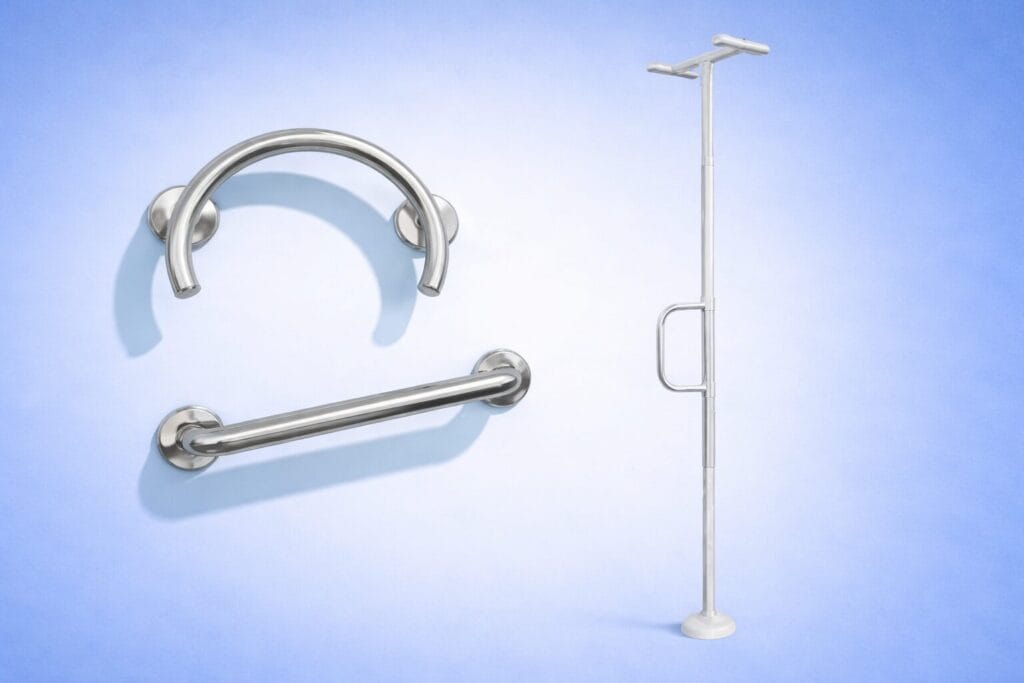
An in-depth guide to the year’s top safety grab bars, from permanent wall-mounted rails to portable suction models
Introduction
A good bathroom grab bar can be the difference between a confident, independent shower and a daily fall risk. Whether you are aging in place, recovering from surgery, or setting up a safer bathroom for a parent or partner, the right grab bar turns slick surfaces into secure handholds and reliable support.
In this guide, we focus on the most important things that matter in real homes: solid weight capacity, non-slip grip, safe installation on real-world surfaces, and designs that do not make your bathroom feel like a hospital. We looked at classic wall-mounted steel bars, tension-mounted floor-to-ceiling poles, and portable suction models that work well for renters or frequent travelers.
Our picks span budget-friendly bars you can install yourself in minutes, heavy-duty ADA-compliant options for long-term support, and discreet “designer” bars that double as towel or toilet-paper holders. We also call out where suction bars make sense (and where they absolutely do not), plus what to know about mounting into tile, fiberglass, or drywall.
Below you will find our team’s top picks, followed by detailed reviews, and a buying advice section that explains materials, mounting styles, ADA guidelines, and price ranges. We also suggest where to slot in a comparison table if you want a quick at-a-glance view for your readers.
(Editor’s note: Updated December 2026 with refined picks for suction grab bars, more budget options, and expanded installation advice based on new owner feedback.)
Our Team’s Grab Par Picks
- Best Overall Grab Bar: Moen Home Care Stainless Concealed Screw Grab Bar
- Best Budget Wall-Mounted Grab Bar: Vive Metal Grab Bar
- Best Heavy-Duty Support: Vive Grab Bar for Bathtubs and Showers
- Best Extra-Long Tub/Shower Bar: Moen Home Care Bathroom Safety 32″ Grab Bar
- Best Decorative / Brass Finish: Moen Home Care 18″ Bathroom Safety Grab Bar (Polished Brass)
- Best Dual-Purpose / Low-Profile Bar: Moen Brushed Nickel 8″ Grab Bar with Integrated Toilet Paper Holder (LR2352DBN)
- Best Suction Grab Bar (Travel & Rentals): Safe-er-Grip Changing Lifestyles Suction Cup Grab Bar
- Best Floor-to-Ceiling Support Pole: Stander Wonder Pole Lite Adjustable Grab Bar
(If you are building a comparison table, this is a good place to insert it. Include columns for: Product, Type, Length(s), Max Capacity, Mounting Style, Best For, Approx. Price.)
Best Grab Bars for Showers and Bathrooms in 2026
Best Overall
1. Moen Stainless Steel Grab Bar
Specs (At a glance)
- Type: Permanent wall-mounted grab bar
- Key features:
- Concealed-screw flanges for a clean, finished look
- ADA-compliant when installed to spec
- Rated up to 500 lbs when secured into proper backing
- Available in multiple lengths and finishes, including a polished aluminum–style smooth finish
- Size: Comes in 18, 24, 30, 32, 36, and 48 inches respectively

What we like
- Smooth, polished look that does not scream “medical equipment”
- High 500-lb rating with proper installation
- Multiple length options to fit tubs, showers, and toilet areas
- Easy to wipe down and keep clean
What we don’t
- Smooth surface is more slippery with soapy hands than the gripped version
- Still looks like a classic grab bar, not a fully “designer” fixture
In use
If you want a grab bar that disappears as much as possible into a modern bathroom, the smooth, polished version of Moen’s concealed-screw bar is a great starting point. It uses the same sturdy hardware and concealed flanges as the gripped model below, but the surface is a clean, non-textured polished metal that blends nicely with chrome or brushed fixtures. Mounted into studs or solid blocking, it is rated up to 500 pounds, so it is far more than just a “balance aid” and can comfortably support full body weight when stepping in and out of the tub.
In our view, this smooth version is best suited to users with fairly confident balance who mainly want an extra point of contact and a bit of insurance if something goes wrong. The polished aluminum–style surface is easy to wipe down, does not collect grime in tiny grooves, and tends to look more “fixture-like” and less medical—especially in smaller bathrooms where the bar is always in view.
Compared with the gripped variant, the trade-off is traction. The smooth finish feels great in the hand and looks sleek, but it will not match the bite of a peened or knurled surface when your hands are wet, soapy, or lotioned. If you are outfitting a guest bath, or if aesthetics are a major priority and the bar will not be your only support, this is the version we would start with.
Verdict: A strong, ADA-compliant grab bar that prioritises a clean look and easy cleaning, while still offering serious weight-bearing support for everyday bathroom use.
Purchase links: See the Smooth / Polished Version on Amazon and major home-improvement retailers.
Best Overall, but With Grip
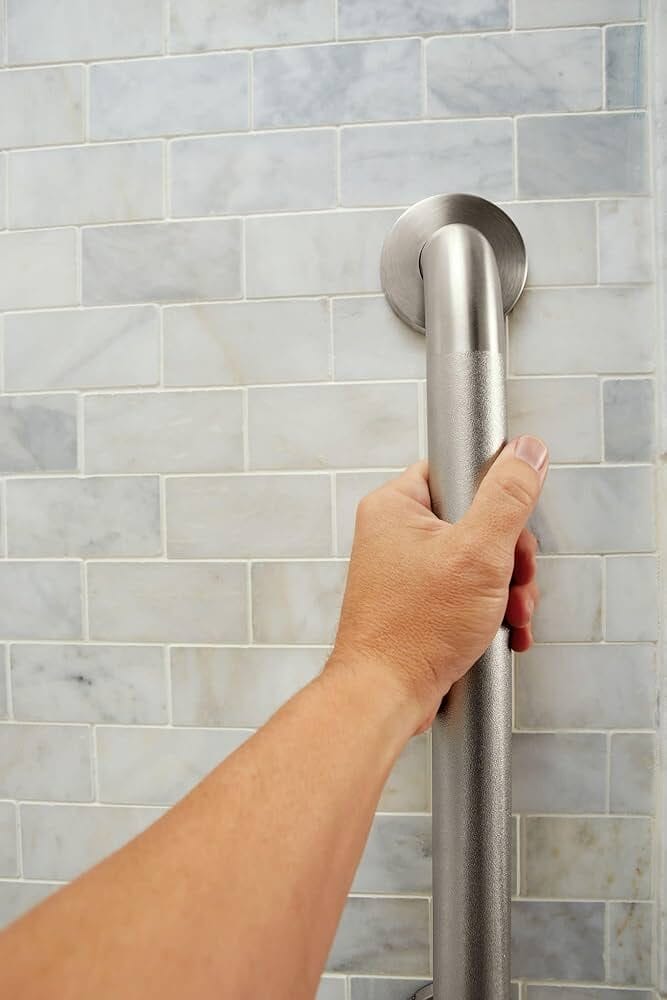
2. Moen Stainless Steel Grab Bar – Textured Grip Version
Specs:
- Weight: Not listed; solid metal construction
- Type: Permanent wall-mounted grab bar
- Key features:
- Same concealed-screw design and mounting pattern as the smooth version
- Textured/peened grip section for better traction
- ADA-compliant; rated up to 500 lbs when installed correctly
- Available in multiple lengths to match different layouts
What we like
- Noticeably more secure grip with wet or soapy hands
- Shares the same robust 500-lb weight rating as the smooth bar
- Easy 1:1 swap or mix-and-match with the polished version
- Ideal for primary “workhorse” bars in showers and over tubs
What we don’t
- Textured surface is slightly harder to clean than the smooth bar
- Looks more obviously like a safety product than the polished version
In use
Functionally, this is the same bar as the smooth Moen concealed-screw model above: same mounting footprint, same heavy-duty construction, and the same 500-pound weight rating when anchored correctly. The key difference is the grip. The center section is finished with a peened, lightly roughened texture that provides far better traction when hands are wet, soapy, or lotioned—exactly the conditions where most bathroom falls happen.
In everyday use, the gripped version feels more “locked in” under the hand. Users who are unsteady on their feet, recovering from surgery, or dealing with arthritis will appreciate how little effort it takes to maintain a solid hold. The bar is particularly effective when placed where sudden slips are most likely: along the back wall of a shower, at the tub entry point, or near a shower bench where users transition from sitting to standing.
Compared with the polished, non-grip version, you sacrifice a bit of minimalist styling and slightly easier cleaning. Dirt and soap scum can collect more readily in the micro-texture, so a quick scrub now and then is worthwhile. But in our opinion, for a primary safety bar in a high-risk location, the added traction is absolutely worth it. Many households will use the gripped version inside the shower and the smooth version in lower-risk places like hallways or by the toilet.
Verdict: For users who prioritize maximum security under wet, slippery conditions, the gripped version is the better choice and our preferred option for main shower and tub installations.
Purchase links: See the Textured Grip Version on Amazon and other major retailers.
Best Budget Wall-Mounted Grab Bar
3. Vive Metal Grab Bar
Specs
- Weight: Not listed; steel construction
- Type: Permanent wall-mounted grab bar
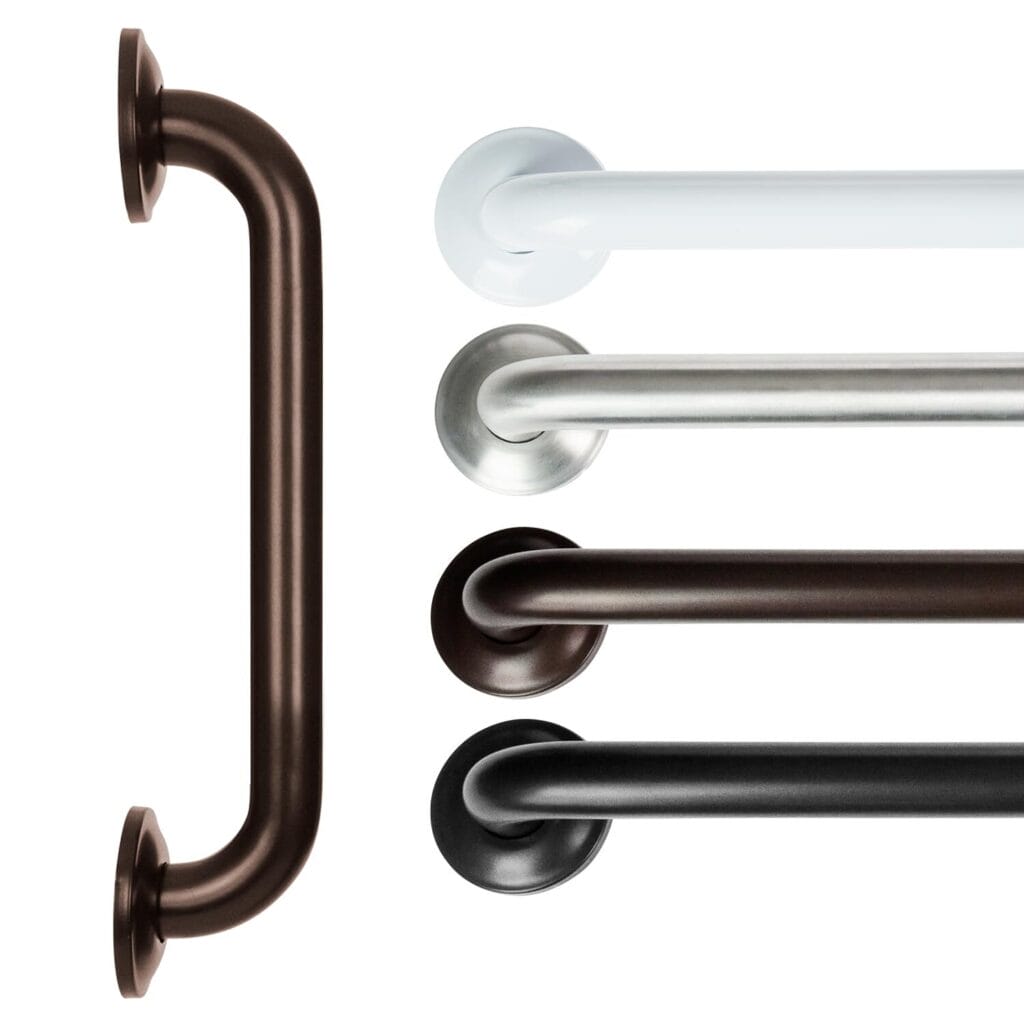
- Key features: Steel bar supporting up to 440 lbs; three length options; multiple finish choices; includes mounting hardware
What we like
- High 440-lb weight capacity for the price
- Available in several lengths to match your layout
- Finish options help it blend with existing fixtures
- Affordable enough to install in multiple locations
What we don’t
- Fewer finish options than some premium brands
- You may still want professional installation
In use
The Vive Metal Grab Bar hits a sweet spot for families who want solid support but need to watch budget. Owners highlight its sturdy steel construction and the feeling of security it provides when stepping over tub walls or turning in a narrow shower. With a weight rating up to 440 pounds, it outperforms many low-cost competitors while still coming in under many Moen models in price.
We appreciate that Vive offers several lengths and finish options (such as classic stainless-look and darker tones), which makes it easier to match existing faucets and hardware. The included screws and anchors are adequate for many installations, but we still recommend mounting into studs wherever possible and following local building or accessibility guidelines.
Compared to the Moen Concealed Screw bar above, the Vive feels slightly more utilitarian, and the hardware is not quite as refined. But if you are outfitting an entire home – adding bars by the toilet, inside the shower, and along a hallway – the savings add up quickly.
Verdict: A great value choice if you want real weight-bearing support without spending premium money on every bar in your home.
Purchase links: See the Standard Version on Amazon and on Vive’s website.
Best Floor-to-Ceiling Grab Bar
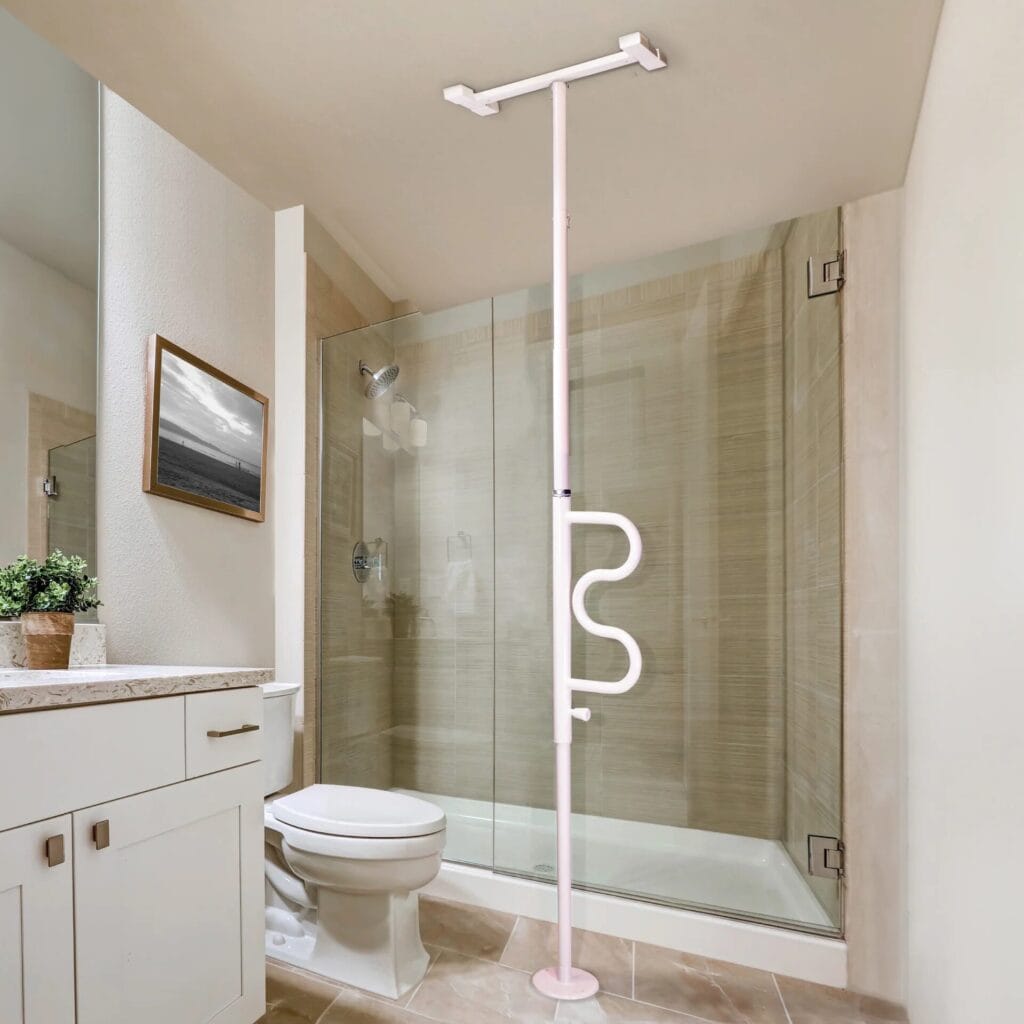
4. Stander Wonder Pole Lite Adjustable Floor-to-Ceiling Grab Bar
Specs
- Weight: Not listed; steel tension pole
- Type: Adjustable floor-to-ceiling grab pole
- Key features: Adjustable for 7’–9’6″ ceilings; up to 300-lb capacity; two-level handle; tension-mounted (no permanent holes)
What we like
- Installs without drilling into floors or ceilings
- Works in bedrooms, living rooms, and some bathrooms
- Two-level handle makes standing and sitting easier
- Ideal for aging-in-place setups
What we don’t
- Not compatible with vaulted or drop ceilings
- 300-lb capacity is good but not “industrial”
- Not for use inside tubs or showers
In use
The Stander Wonder Pole Lite is not a traditional wall bar, but it solves a different problem extremely well: standing up from beds, couches, or chairs in open spaces. It uses a floor-to-ceiling tension design (like a very strong adjustable pole), so you can position it right where you need a vertical handle without drilling into tile or hardwood.
Owners use it next to beds to prevent falls when getting up at night, by toilets where wall space is limited, and in living rooms to make it easier to stand from low sofas. The adjustable two-level handle gives you a lower and higher grip, which works well for users with limited leg strength or balance.
Compared to fixed wall bars, the Wonder Pole is more versatile in open-plan homes and can move as needs change over time. It is not suitable for vaulted or very high ceilings, nor should it be used inside a wet shower, but for dry areas it is one of the most flexible solutions we have seen.
Verdict: A highly adaptable vertical support solution for bedrooms, living areas, and some bathroom setups—especially when drilling into walls or floors is not an option.
Purchase links: See the Standard Version on Amazon.
Best Suction Grab Bar for Travel & Rentals
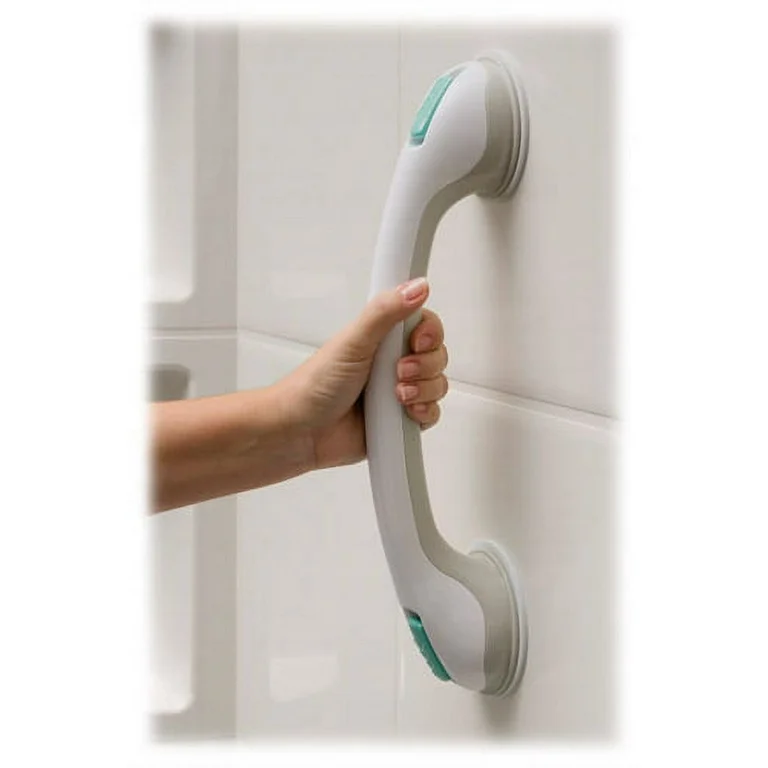
5. Safe-er-Grip Suction Cup Grab Bar
Specs
- Weight: Lightweight plastic
- Type: Suction-cup grab bar (temporary)
- Key features: Tool-free installation; works on smooth, non-porous surfaces; portable design; non-slip grip; multiple lengths available
What we like
- Installs in seconds without drilling or tools
- Great for renters or frequent travelers
- Comfortable, non-slip grip
- Very affordable
What we don’t
- Not designed to support full body weight
- Will not adhere to textured tile, drywall, or over grout lines
- Requires regular suction checks for safety
In use
Suction grab bars are among the most misunderstood products in bathroom safety. When used correctly, they can add helpful balance support; when used incorrectly, they can fail without warning. The Safe-er-Grip suction bar is one of the better-reviewed options we have seen, with many users praising how easy it is to install and remove, and how handy it is for travel or temporary setups.
The key caveats: it must be mounted on a smooth, flat, non-porous surface (like large, glossy tiles or glass), and the suction cups cannot cross grout lines or textured areas. It is meant for balance and light support when stepping into or out of the tub—not for fully pulling yourself up. Both buying guides and medical experts stress that suction bars should not be relied upon as primary weight-bearing devices.
Compared with a permanent wall-mounted bar, you gain incredible flexibility and avoid drilling holes—ideal for rentals, hotels, or guest bathrooms. You also take on more responsibility for checking the suction before each use and reattaching it if you see any movement.
Verdict: A useful secondary balance aid for renters and travelers, but not a substitute for a properly installed permanent grab bar.
Purchase links: See the Standard Version on Amazon.
Best Dual-Purpose / Low-Profile Bar
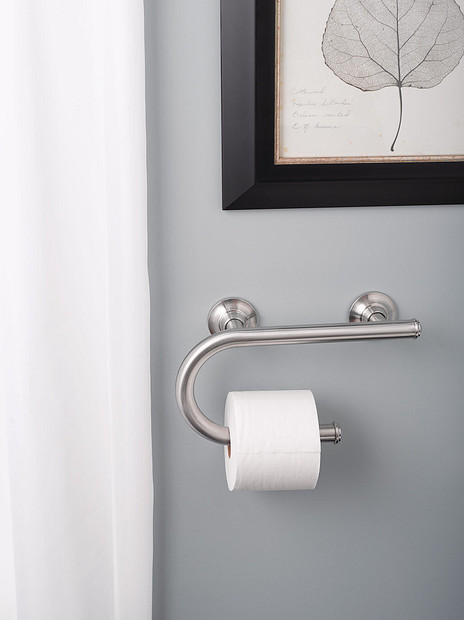
6. Moen Brushed Nickel 8″ Grab Bar with Integrated Toilet Paper Holder
Specs
- Weight: Not listed; supports up to 250 lbs
- Type: Wall-mounted dual-purpose grab bar
- Key features: 8″ grab bar combined with toilet paper holder; brushed nickel finish; ADA-compliant design; compact footprint
What we like
- Blends in as a normal toilet-paper holder
- Great for small bathrooms where every inch counts
- Adds real support for sitting and standing
- Attractive brushed nickel finish
What we don’t
- 250-lb weight rating is lower than heavy-duty bars
- More expensive than a standard paper holder
In use
If you want safety without broadcasting it, this is a clever solution. The LR2352DBN looks like a stylish brushed-nickel toilet paper holder, but it is engineered as a real grab bar that supports up to 250 pounds. Owners call out how “subtle” it appears and mention that guests often do not even realize it is designed to be leaned on.
For small bathrooms, the dual-purpose design is especially appealing: instead of adding a separate bar, you simply upgrade an existing fixture with something that can safely take weight as you sit down or stand up from the toilet. The installation process is similar to Moen’s other safety bars, and the finished look is clean and modern.
Compared to our heavy-duty picks, this bar is not the right choice for users who routinely put full body weight on their support – for that, we still prefer a 500-lb-rated bar mounted into studs. But as an unobtrusive extra point of contact, it is an excellent addition.
Verdict: A smart, discreet grab-bar upgrade for half baths, guest baths, or any small space where you want support without an institutional look.
Purchase links: See the Standard Version on Amazon and at major home-improvement stores.
Buying Advice: How to Choose the Best Grab Bar
1. Mounting Type: Suction vs. Wall-Mounted vs. Floor-to-Ceiling
For safety-critical support (such as stepping over a tub, pulling to stand, or catching yourself if you slip), permanent, screw-mounted grab bars are the gold standard. They are designed to be anchored into wall studs or solid blocking, can support full body weight, and maintain their strength over time.
Suction bars, by contrast, are best treated as temporary balance aids. They can work very well on smooth, non-porous surfaces, but they are not rated for full body weight and must be checked frequently for suction strength. They should never be installed over grout lines, textured tile, or drywall.
Floor-to-ceiling poles like the Stander Wonder Pole offer a third option: strong vertical support in places where there is no convenient wall, such as next to a bed or in the middle of a bathroom. These are great for transfers and standing, but most are not designed for heavy sideways pulling.
2. Weight Capacity and Safety Standards
As a general guideline:
- Heavy-duty bars: Look for ratings of 400–500 lbs and ADA compliance for long-term, full-weight support.
- Mid-range bars: 250–300-lb ratings are common and adequate for many users if installed properly into studs.
- Suction bars: Should be viewed as balance aids only, even if the packaging implies stronger support.
Whenever possible, install grab bars into studs or professionally installed backing material using the manufacturer’s recommended hardware. Consider ADA guidelines for height and spacing, particularly if the bathroom will be used by multiple people or those with significant mobility limitations.
3. Surface & Installation Considerations
Before you buy, look closely at where the bar will go:
- Tile: Check tile size and grout layout. Avoid crossing grout lines with suction cups; for screw-mounted bars, use a carbide bit and avoid breaking tiles at edges.
- Fibreglass surrounds: Many manufacturers specify special anchors or backing plates—follow their guidance exactly.
- Drywall: For true weight-bearing support, you need to hit studs or use a system designed for hollow walls; standard plastic anchors are rarely enough.
If you are not confident drilling into tile or finding studs, professional installation is usually worth the cost.
4. Length, Shape, and Grip
Common bar lengths range from 12″ to 36″+. Shorter bars work well by toilets or in tight shower stalls; longer bars are ideal along tub walls and large showers. Consider:
- Hand size & comfort: A bar that is too thick can be hard to grasp; too thin and it may feel insubstantial.
- Grip texture: Peened or knurled finishes improve traction in soapy conditions.
- Shape: Straight bars are the most versatile; angled or U-shaped bars can make specific moves (like standing from a seat) easier.
5. Materials and Aesthetics
Most quality grab bars are stainless steel, which resists rust and is easy to clean. Finishes now range from classic brushed stainless to black, brass, and designer styles that match modern faucets and hardware. Decorative bars are no longer just for looks—many meet ADA standards while still blending into upgraded bathrooms.
If you are planning a remodel, it is smart to install blocking in shower and bathroom walls even if you are not ready to add bars yet. That way, you can easily add them later without tearing open tile.
6. Price Ranges
- Budget ($15–$35): Basic steel or plastic bars, some suction models, and entry-level wall-mounted bars. Great for secondary locations or rentals.
- Mid-range ($35–$80): Higher capacity bars from major brands like Moen and Vive, more finish choices, and some dual-purpose designs.
- Premium ($80–$150+): Designer finishes, integrated accessories (like towel or toilet-paper holders), and specialized solutions like floor-to-ceiling poles.
Paying more typically gets you better hardware, nicer finishes, and sometimes easier installation, but even budget bars can be very safe when installed correctly.
Frequently Asked Questions About Bathroom Grab Bars
Are suction grab bars safe for seniors?
Suction grab bars can be safe when used as intended—primarily as balance aids on smooth, non-porous surfaces. They should not be relied on for full weight support, and they must be checked before each use to ensure the suction is still strong. For long-term, full-weight support, we recommend permanently mounted bars anchored into studs.
Where should grab bars be installed in a bathroom?
Common placements include along the back and side walls of a tub or shower, at the shower entrance, and next to the toilet (either horizontally or at a slight angle). ADA guidelines offer detailed recommendations for height and spacing, but the best layout will also depend on the user’s height, reach, and how they naturally move through the space.
Can I install a grab bar myself?
Many confident DIYers do install their own grab bars, especially when they can easily locate studs and are comfortable drilling into tile or drywall. If you are at all unsure, or if the bar will support someone with significant mobility limitations, professional installation is a smart investment.
Do grab bars have to look “medical”?
Not anymore. Today’s grab bars include decorative brass and black finishes, integrated towel and toilet-paper holders, and minimalist designs that blend with modern fixtures. You can prioritize safety first and still choose a style that fits your bathroom.
Final Thoughts
The right grab bar setup depends on who is using the bathroom, how steady they are on their feet, and whether you own or rent your home. For most readers, a combination of heavy-duty, wall-mounted bars in key locations—like the Moen Concealed Screw or Vive bars—provides the safest foundation. From there, you can add subtler helpers such as the integrated toilet-paper-holder bar or a tension pole by the bed or toilet.
Suction bars and budget options play an important role too, especially for renters and frequent travelers, as long as their limitations are respected. When in doubt, prioritize secure mounting, adequate weight capacity, and a comfortable, non-slip grip. Do that, and you will drastically reduce fall risk while helping yourself or your loved ones stay independent at home.


