
Best Adjustable Beds for Seniors of 2026
An in-depth guide to the year’s top adjustable bed frames for older adults, from budget-friendly bases to premium smart systems with sleep tracking
An adjustable bed frame can be one of the most meaningful investments you make for an aging parent’s comfort, mobility, and independence. Unlike a standard flat bed frame, an adjustable base uses quiet electric motors to raise and lower the head and foot sections independently, letting the sleeper find precisely the right angle for their body. For seniors dealing with chronic back pain, arthritis, acid reflux, sleep apnea, poor circulation, or simply the everyday stiffness that comes with aging, the ability to elevate the upper body or legs at the touch of a button can dramatically improve both sleep quality and quality of life.
These are no longer the bulky, institutional-looking hospital beds of decades past. Today’s consumer adjustable bases are sleek, quiet, and packed with features like built-in massage, under-bed nightlights, zero-gravity presets, USB charging ports, and even smart technology that tracks sleep patterns and automatically adjusts position to reduce snoring. They fit inside most standard bed frames, work with most foam and hybrid mattresses, and range in price from under $600 to over $2,500 depending on the feature set.
Our team evaluated adjustable bases from the most popular brands on the market, focusing on the criteria that matter most to seniors and the adult children shopping for them: ease of use (especially for those with limited dexterity or vision), smoothness and quietness of motor operation, safety features like under-bed lighting and backup batteries, the quality of remote controls, availability of white-glove delivery, trial periods, and overall value. We also considered mattress compatibility, weight capacity, and how well each base supports common senior health conditions.
Below you’ll find our six top picks with detailed reviews, followed by a comprehensive buyer’s guide that walks you through everything you need to know before purchasing an adjustable bed for yourself or a loved one. Editor’s Note: Prices shown are for queen size unless noted and are current as of our latest update. Many brands run frequent promotions that can reduce costs significantly.
Our Team’s Adjustable Bed Picks
Best Overall Adjustable Bed for Seniors: Saatva Adjustable Base Plus
Best Budget-Friendly Adjustable Base with Full Features: DreamCloud Adjustable Bed Frame
Best Adjustable Bed Bundle for Value and Convenience: Nectar Premier Adjustable Base
Best Mid-Range Base with Massage and Customization: Helix Adjustable Base
Best for Seniors with Mobility Challenges: Nolah LiftEase Adjustable Base
Best Premium Smart Base for Sleep Apnea and Snoring: Tempur-Pedic TEMPUR-Ergo Extend
Best Overall Adjustable Bed for Seniors
#1. Saatva Adjustable Base Plus ($1,499)
Price (Queen): $1,499
Weight Capacity: 850 lbs
Delivery: Free white-glove delivery with setup and old bed removal
Trial Period: None (non-returnable)
Warranty: 25-year limited warranty
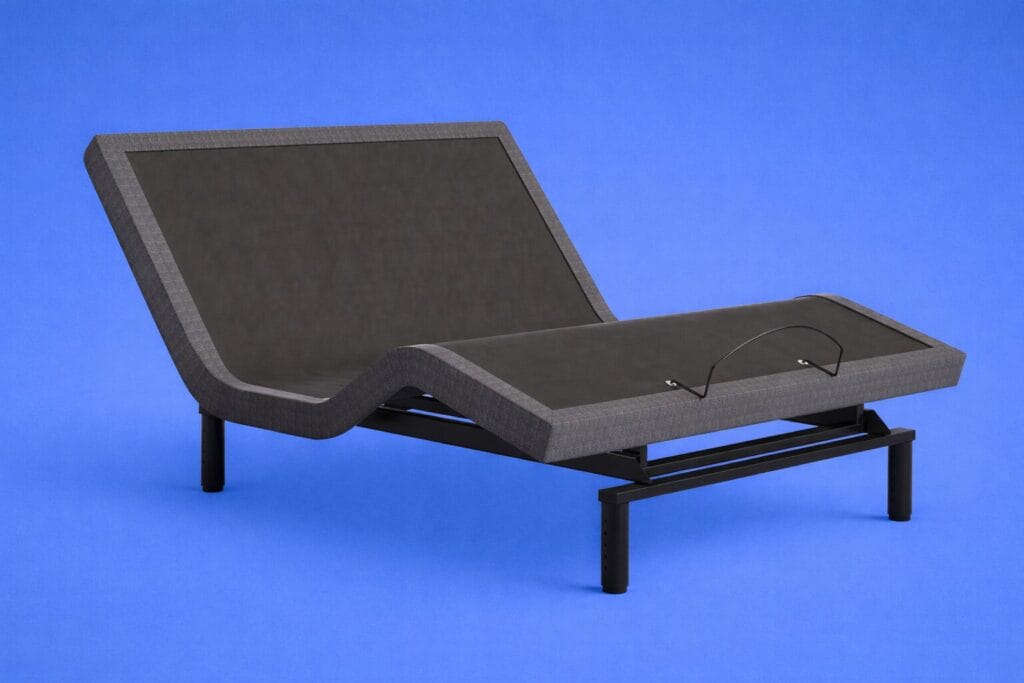
Key Features: Wall-hugging design, full-body massage, under-bed LED lighting, programmable presets, whisper-quiet motor, app and remote control
What we like:
– Free white-glove delivery includes complete in-room setup and removal of your old bed frame—invaluable for seniors
– Wall-hugging design keeps you close to your nightstand as the head elevates, so you can always reach water, medications, and your phone
– Whisper-quiet motor adjustments that won’t wake a sleeping partner
– Under-bed LED lighting and built-in remote flashlight for safe nighttime navigation
What we don’t:
– No trial period and no returns—this is a final sale purchase
– The most expensive base-only option on our list, and the remote control has a learning curve
The Saatva Adjustable Base Plus earned our top overall pick because it delivers the most complete, senior-friendly package of any adjustable base we evaluated. The free white-glove delivery alone is a significant differentiator: Saatva’s team will carry the base into your bedroom, set it up, and haul away your old bed frame—all included in the price. For an older adult who lives alone or an adult child arranging delivery from a distance, this eliminates one of the most stressful parts of buying a large piece of furniture.
The wall-hugging design is a feature that sounds minor but matters enormously in daily use. When you raise the head of most adjustable bases, the entire sleeping surface shifts forward, pushing you away from your nightstand. Saatva’s wall-hugger technology counteracts this by sliding the base back as the head rises, keeping your bedside table—and everything on it—within easy reach. For a senior who keeps medications, a glass of water, reading glasses, or a phone on the nightstand, this feature prevents the frustrating (and potentially dangerous) need to stretch or get up to grab essentials.
Testers found the motor operation remarkably smooth and quiet, with no jerking or sudden movements during position changes. The full-body massage feature offers multiple speed settings and can target the upper body, legs, or both simultaneously. The under-bed LED lighting provides a soft glow for nighttime bathroom trips—a meaningful safety feature given that falls are most common when seniors navigate dark rooms at night. The base also includes a built-in flashlight in the remote control itself, which is a thoughtful touch.
The zero-gravity preset distributes body weight evenly to minimize pressure points, and testers reported feeling virtually no pressure on the hips and lower back in this position. For seniors with chronic pain, this can be transformative. The base can be controlled via a wireless remote or through a smartphone app, giving options for those with different comfort levels with technology.
The main drawbacks are price and return policy. At $1,499 for a queen, the Saatva is notably more expensive than the DreamCloud or Helix options on our list. And unlike Nectar and DreamCloud, Saatva offers no trial period—once the base is delivered and set up, the sale is final. If you can visit a Saatva viewing room to test the base in person before buying, we strongly recommend it. For families who prioritize ease of setup, premium build quality, and thoughtful senior-safety features, the Saatva Adjustable Base Plus justifies its higher price.
See the Saatva Adjustable Base Plus at Saatva.com
Best Budget-Friendly Adjustable Base with Full Features
#2. DreamCloud Adjustable Bed Frame (from ~$999)
Price (Queen): ~$999 (frequently discounted; bundles available)
Weight Capacity: 850 lbs
Delivery: Free shipping; white-glove setup available from $199
Trial Period: 60-night trial
Warranty: Limited lifetime warranty
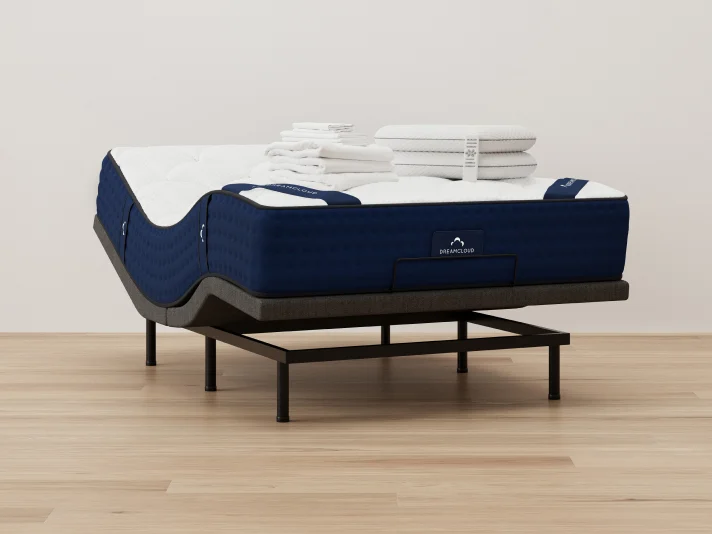
Key Features: Three presets (TV, zero gravity, anti-snore), massage with 3 modes/intensities, USB ports, under-bed lighting, backup battery, tool-free assembly
What we like:
– Genuinely affordable for a feature-rich adjustable base—often under $1,000 for a queen after promotions
– Built-in backup battery keeps the base functional during power outages, a real safety feature for seniors
– Tool-free assembly that one person can complete in under 30 minutes
– 60-night trial period lets you test the base risk-free before committing
What we don’t:
– No wall-hugging feature—the head section pushes you away from your nightstand when elevated
– Some testers noted slight shoulder pressure when sitting fully upright for extended reading
The DreamCloud Adjustable Bed Frame is our pick for seniors and families who want a full-featured adjustable base without the premium price tag. At roughly $999 for a queen (and frequently less during DreamCloud’s regular sales), it costs $500 less than the Saatva while still including massage, under-bed lighting, USB ports, and multiple presets. For families on a budget—or anyone who’s uncertain about whether an adjustable base will actually get used—DreamCloud’s 60-night trial period removes the financial risk entirely.
Assembly is one of this base’s strongest selling points for the senior market. No tools are required, and the setup process is designed to be completed by a single person in about 20 to 30 minutes. Everything you need, including batteries for the remote, comes in the box. For adult children who plan to set up the base during a weekend visit, this simplicity is a major plus. If your parent needs professional setup, DreamCloud offers white-glove delivery starting at $199—more expensive than Saatva’s free service, but the option exists.
The built-in backup battery is a feature that’s easy to overlook but genuinely important for seniors. If the power goes out—which can happen during storms, exactly when an older adult is most likely to be in bed—the backup battery allows the base to return to a flat position so the user can safely get in and out of bed. Without this feature, a power outage could leave someone stuck in an elevated position, unable to lower the bed until electricity is restored. None of the other bases on our list except the Tempur-Pedic include this safety backup.
The three factory presets (TV watching, zero gravity, and anti-snore) cover the most common use cases well. The zero-gravity position was noted by testers as feeling particularly supportive for the lower back and hips. The massage function, while not as refined as the Saatva’s, still offers three modes and three intensity levels—more than sufficient for general relaxation and muscle tension relief.
Where the DreamCloud falls short compared to the Saatva is in refinement. There’s no wall-hugging feature, so your parent will shift away from their nightstand when the head is raised. The remote is functional but basic. And some reviewers noted that the fully upright position can create slight pressure in the shoulders for extended TV watching or reading. For pure bang for the buck, though, the DreamCloud is hard to beat—especially with the 60-night trial giving you a genuine opportunity to confirm it works for your parent’s needs.
See the DreamCloud Adjustable Bed Frame at DreamCloudSleep.com
Best Adjustable Bed Bundle for Value and Convenience
#3. Nectar Premier Adjustable Base ($1,398 as bundle)
Price (Queen Bundle): $1,398 (includes adjustable base, mattress, and bedding essentials)
Base Only (Queen): ~$999
Weight Capacity: 850 lbs
Delivery: Free shipping; white-glove delivery available
Trial Period: 50 nights on frame; 365 nights on mattress
Warranty: 3 years on frame; forever warranty on mattress
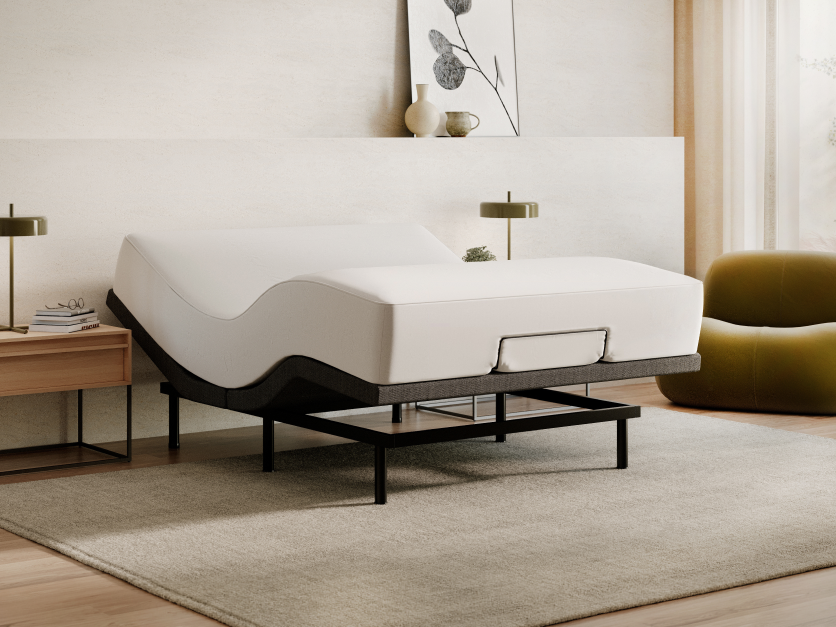
Key Features: Six programmable presets, three-zone massage, under-bed lighting, app and remote control, USB ports, adjustable leg height
What we like:
– The bundle deal includes a quality hybrid mattress and bedding for one transparent price—eliminates the guesswork of mattress compatibility
– Three-zone massage feature is smooth and notably quiet for a base in this price range
– Six programmable presets allow highly personalized positioning
– 365-night mattress trial gives a full year to evaluate comfort
What we don’t:
– Shorter 3-year warranty on the frame compared to competitors like Helix (10 years) and Saatva (25 years)
– Frame trial is only 50 nights, shorter than DreamCloud’s 60
The Nectar Premier Adjustable Base makes our list as the best bundle option because it solves one of the most common problems families face when buying an adjustable bed: mattress compatibility. Many shoppers don’t realize that not all mattresses work well with adjustable frames—innerspring mattresses with rigid coils, for instance, can creak and resist bending. By purchasing the Nectar bundle, you get an adjustable base paired with a mattress that’s specifically designed to flex with it, plus sheets and pillows, all for $1,398. That’s roughly what some competitors charge for the base alone.
The Nectar base itself is a capable performer. Testers noted that motor operation was smooth with minimal jerking during position changes, and the three-zone massage feature was described as gentle and relaxing—not the aggressive vibrating that some cheaper bases produce. The massage targets the head, lumbar, and leg areas independently, which is useful for seniors who need targeted relief in specific areas. One tester noted that the zero-gravity position provided noticeable pressure relief in the lower back, describing it as feeling “weightless.”
The six programmable presets are more than most competitors offer at this price point. Once your parent finds their ideal positions for sleeping, reading, watching TV, and easing back pain, they can save each one and recall it with a single button press—no fumbling with manual adjustment. The base can also be controlled via a smartphone app, which is a nice option for tech-comfortable seniors and allows caregivers to adjust the bed remotely if needed.
The trade-off is warranty length. At just three years on the frame, Nectar’s coverage is significantly shorter than the Helix (10 years), DreamCloud (lifetime), or Saatva (25 years). Given that an adjustable base includes electric motors, wiring, and mechanical components that can wear over time, a longer warranty provides meaningful peace of mind. The mattress warranty, however, is excellent—Nectar covers it forever.
For families who want to avoid the hassle of separately shopping for a compatible mattress and frame, and who value getting a complete sleep system at a competitive price, the Nectar bundle is the most convenient and cost-effective path. Just be aware of the shorter frame warranty.
See the Nectar Adjustable Bundle at NectarSleep.com
Best Mid-Range Base with Massage and Customization
#4. Helix Adjustable Base (~$936)
Price (Queen): ~$936 (with typical discount; MSRP $1,248)
Weight Capacity: 750 lbs
Delivery: Free shipping; in-home setup from $139
Trial Period: None (non-returnable)
Warranty: 10 years
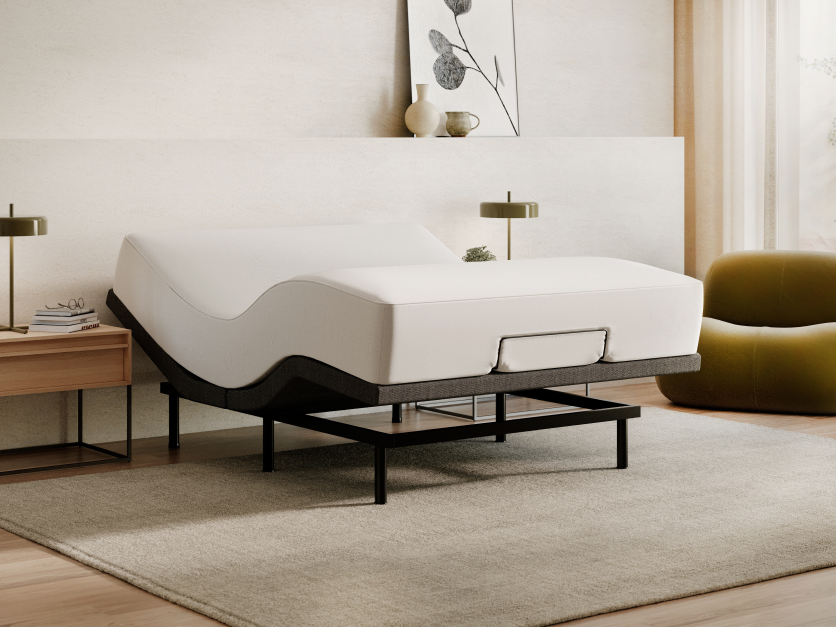
Key Features: Dual-zone 3D-Wave massage, three programmable presets, zero gravity position, USB ports, adjustable leg height (3–12 inches), carbon steel construction
What we like:
– Excellent dual-zone massage that independently targets upper body and legs—one of the best massage features at this price
– Sturdy carbon steel construction with adjustable leg height in four increments for customizable bed height
– Strong 10-year warranty covers manufacturing defects, providing long-term peace of mind
– Budget-friendly queen pricing under $1,000 with frequent promotions
What we don’t:
– No trial period—all sales are final
– Remote control is not backlit, making it harder to use in the dark
– Head section doesn’t elevate as high as some competitors, limiting upright reading or TV positions
The Helix Adjustable Base hits a sweet spot between affordability and genuine comfort features, making it our pick for the best mid-range option. Its standout feature is the dual-zone 3D-Wave massage, which lets you target the upper body, legs, or both at three different intensity levels. Unlike the basic vibration motors in some cheaper bases, the Helix’s massage produces a more nuanced wave-like sensation that testers found genuinely relaxing. For seniors with circulatory issues, restless legs, or general muscle tension, this is a meaningful step up from the DreamCloud’s massage capability.
The adjustable leg height is another feature that deserves attention for the senior market. The six carbon steel legs can be set at four different heights ranging from 3 to 12 inches. This matters because bed height directly affects how easy it is for an older adult to get in and out of bed. A bed that’s too low requires significant effort to stand up from, while one that’s too high can make getting in feel precarious. The ability to fine-tune this height to match your parent’s stature and mobility level is practically important.
The zero-gravity preset earned high marks from testers, with one saying they could sleep in that position all night without needing to change positions—a notable comment given that many seniors wake repeatedly due to discomfort. The three programmable presets allow customization, and the USB ports on either side of the base let your parent charge a phone, tablet, or e-reader without reaching for a wall outlet.
The Helix does have meaningful limitations. Like the Saatva, it offers no trial period—once you buy it, it’s yours. The remote control works well but isn’t backlit, which can be frustrating for nighttime adjustments. And the head section doesn’t rise as high as the Saatva or Tempur-Pedic, which may disappoint seniors who spend significant time reading or watching TV in bed. The weight capacity of 750 pounds is also the lowest on our list, though it’s still adequate for the vast majority of users.
For the price, the Helix offers one of the best value propositions on the market. The 10-year warranty is more than three times longer than Nectar’s, and the build quality feels solid. If your parent prioritizes massage quality and you want a durable base without paying Saatva or Tempur-Pedic prices, the Helix is an excellent choice.
See the Helix Adjustable Base at HelixSleep.com
Best for Seniors with Mobility Challenges
#5. Nolah LiftEase Adjustable Base ($1,999)
Price (Queen): $1,999
Weight Capacity: 850 lbs
Delivery: Free shipping
Trial Period: None (non-returnable)
Warranty: Limited warranty (longer on frame, shorter on motor)
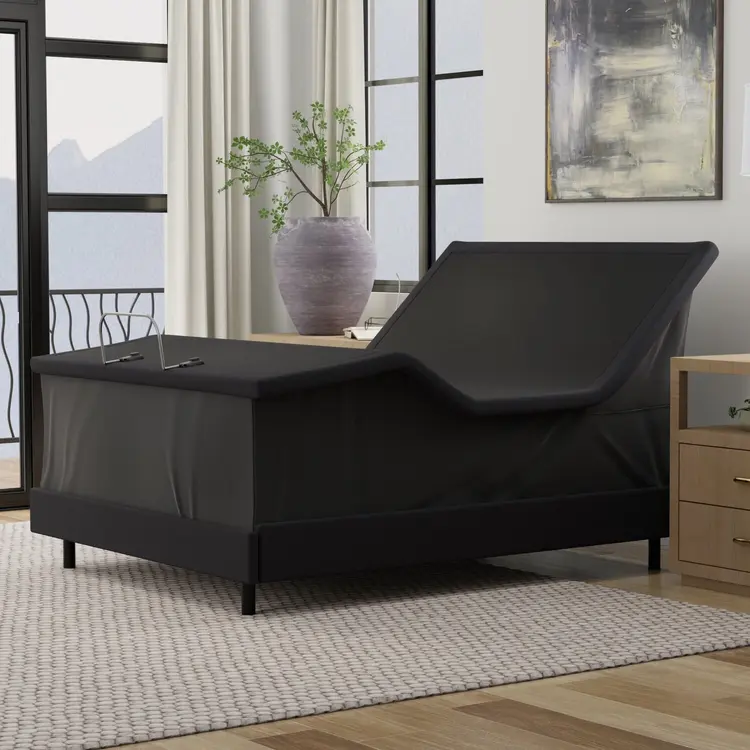
Key Features: Voice command controls, built-in massage, under-bed lighting, zero-gravity preset, exceptional range of motion for head and leg elevation, stylish design
What we like:
– Voice command controls allow hands-free adjustment—ideal for seniors with arthritis, limited grip strength, or low vision
– Exceptional range of motion for both head and leg elevation, more than most competitors
– Under-bed lighting for safe nighttime movement
– Stylish, modern design that doesn’t look like medical equipment
What we don’t:
– No return policy—the base cannot be sent back once purchased
– Motor warranty is shorter than the frame warranty, which is a concern for the most failure-prone component
The Nolah LiftEase earned our pick for seniors with mobility challenges because of one standout feature: voice command controls. For an older adult with significant arthritis in their hands, limited grip strength, Parkinson’s-related tremors, or low vision that makes reading a remote difficult, the ability to simply say “raise head” or “zero gravity” to adjust the bed is genuinely transformative. No other base on our list offers this capability, and for the right user, it alone can justify the higher price.
The LiftEase also provides an exceptionally wide range of motion for both head and leg elevation. The head section rises higher than most competitors, making it particularly useful for seniors who need to sleep in a semi-upright position due to acid reflux, GERD, congestive heart failure, or severe sleep apnea. The leg elevation range is similarly generous, which benefits those dealing with edema, varicose veins, or post-surgical swelling in the lower extremities.
Testers were impressed by the built-in massage function and the overall build quality. The base has a modern, attractive design that blends into a bedroom without looking clinical or institutional—an important consideration for seniors who value their home’s aesthetics and don’t want their bedroom to feel like a medical facility. The under-bed lighting, combined with voice controls, creates a setup where a senior can adjust their bed and navigate their room at night without ever reaching for a remote or a light switch.
The price is the primary barrier. At $1,999, the Nolah LiftEase costs $500 more than the Saatva Adjustable Base Plus, and unlike the Saatva, it doesn’t include free white-glove delivery. The no-return policy also means you’re committing without a trial. The split warranty—with a shorter coverage period on the motors than on the frame—is a concern worth noting, since the motors are the components most likely to need repair or replacement over a decade of use.
We recommend the Nolah LiftEase specifically for seniors whose physical limitations make traditional remote controls difficult to use, or who need greater-than-average elevation range for medical reasons. If your parent’s hands work fine and they don’t need extreme elevation, the Saatva or DreamCloud will serve them well for less money.
See the Nolah LiftEase at Nolah.com
Best Premium Smart Base for Sleep Apnea and Snoring
#6. Tempur-Pedic TEMPUR-Ergo Extend Smart Base ($2,549)
Price (Queen): $2,549
Weight Capacity: ~650 lbs
Delivery: Free white-glove delivery and setup included
Trial Period: None (non-returnable)
Warranty: 25-year limited warranty
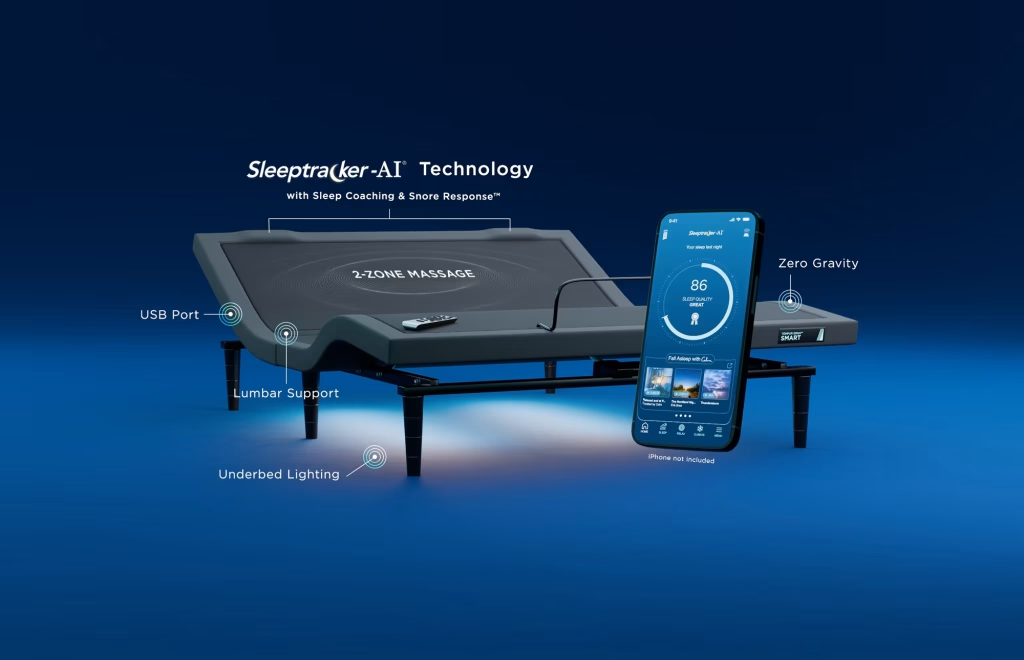
Key Features: Sleep tracking with app coaching, automatic snore response, advanced three-level massage, multiple positioning presets, USB ports, Sleeptracker-AI® technology
What we like:
– Automatic snore response detects snoring and gently elevates the head without waking the sleeper—a standout feature for sleep apnea sufferers
– Built-in sleep tracking provides detailed sleep quality data and personalized coaching through the app
– Advanced massage function with three intensity levels and full-body targeting
– Free white-glove delivery and professional setup included, same as Saatva
What we don’t:
– By far the most expensive option on our list at $2,549 for a queen
– Weight capacity of ~650 lbs is the lowest among our picks
– Non-returnable after purchase, with no trial period
The Tempur-Pedic TEMPUR-Ergo Extend Smart Base is the most technologically advanced adjustable base we evaluated, and it’s our pick for seniors whose primary concern is sleep apnea, chronic snoring, or breathing difficulties at night. Its signature feature—automatic snore response—uses built-in sensors to detect snoring in real time and gently raises the head section by a few degrees to open the airway. This happens automatically and quietly, without waking the sleeper or requiring anyone to press a button. For the estimated 40 percent of men and 24 percent of women over 65 who snore regularly, this feature can improve both their sleep and their partner’s.
The integrated Sleeptracker-AI® technology monitors sleep stages, heart rate, and breathing patterns throughout the night, delivering a detailed sleep report each morning through the companion app. The app also provides personalized sleep coaching—suggestions for improving sleep hygiene based on your actual data. While this level of technology may be more than some seniors need or want, it can be valuable for adult children who want to monitor a parent’s sleep quality remotely, or for seniors working with a physician to manage sleep disorders.
The massage feature is among the best we evaluated, with three intensity levels and the ability to target different body zones. The motors are smooth and whisper-quiet, and the overall build quality reflects Tempur-Pedic’s premium positioning. Free white-glove delivery and setup is included—the same full-service experience that Saatva offers—so your parent won’t need to wrestle with assembly.
The cost is the elephant in the room. At $2,549 for a queen base alone (no mattress included), the Tempur-Ergo costs more than twice as much as a DreamCloud base and nearly $1,000 more than the Saatva. And the base must be paired with a separately purchased mattress. The weight capacity of roughly 650 pounds is also the lowest on our list, which may be limiting for larger individuals or couples who share a non-split base. Like the Saatva and Nolah, there’s no trial period.
We recommend the Tempur-Ergo Extend specifically for seniors with diagnosed sleep apnea (especially those who struggle with CPAP compliance), chronic snoring that disrupts a partner’s sleep, or a strong interest in sleep data and tracking. If snoring and breathing aren’t primary concerns, the Saatva Adjustable Base Plus delivers a comparable physical experience—wall-hugging, massage, under-bed lighting, white-glove delivery—for $1,050 less.
See the Tempur-Pedic TEMPUR-Ergo Extend at Tempur-Pedic.com
Buyer’s Guide: How to Choose the Right Adjustable Bed for Seniors
Who Adjustable Beds Are For
Adjustable beds are no longer niche medical equipment. They’re used by a wide range of people, but they offer particular benefits for older adults. If your parent deals with any of the following, an adjustable bed is worth serious consideration: chronic back pain or spinal stenosis (elevating the head and knees reduces spinal pressure), acid reflux or GERD (sleeping at an incline helps keep stomach acid down), sleep apnea or snoring (head elevation opens airways), edema or poor circulation in the legs (foot elevation promotes blood return), arthritis (finding a pressure-free position reduces joint stress), difficulty getting in and out of bed (adjustable height and elevation assist with transfers), or post-surgical recovery (positioning support during healing).
Adult children are frequently the ones initiating this purchase, often after noticing a parent struggling to get comfortable at night, waking in pain, or having difficulty getting out of bed in the morning. If your parent is stacking pillows to prop themselves up—a common but ineffective and unsafe workaround—an adjustable base solves the root problem far more effectively and safely.
Understanding the Key Features That Matter for Seniors
Not all adjustable base features are equally important for older adults. Here’s what to prioritize and what’s merely nice to have.
Zero-gravity preset is the single most important feature for pain relief. This position, inspired by the posture astronauts assume during liftoff, distributes body weight evenly to minimize pressure points. Every base on our list includes it, and for good reason—it’s the position most likely to reduce back pain, hip pressure, and overall discomfort during sleep.
Under-bed lighting is a safety feature, not a luxury. Falls are the leading cause of injury-related death among adults over 65, and the majority of nighttime falls occur when seniors navigate dark rooms to reach the bathroom. A soft LED glow under the bed illuminates the floor without the harsh glare of an overhead light, reducing fall risk significantly. The Saatva, DreamCloud, Nolah, and Tempur-Pedic all include this; the Helix does not.
Massage ranges from basic vibration to more sophisticated wave-like patterns. For seniors, massage can improve circulation, ease muscle tension, and promote relaxation before sleep. The Helix and Tempur-Pedic offer the most refined massage experiences in our lineup, while the DreamCloud and Nectar provide capable but less nuanced versions.
Wall-hugging design is a feature only the Saatva offers among our picks, but it’s extremely practical. If your parent keeps essential items on their nightstand (medications, water, phone, medical alert device), a wall-hugger base keeps those items within arm’s reach even when the head is elevated. Without it, raising the head pushes the sleeper 6–12 inches away from the nightstand.
Backup battery is a critical safety feature that only the DreamCloud includes among our picks. During a power outage, the backup battery allows the base to return to a flat position. Without this feature, a senior could be stuck in an elevated position until power is restored, unable to safely exit the bed. This is worth considering if your parent lives in an area prone to power outages.
Remote Controls and Ease of Use
The remote control is the primary interface between the senior and their adjustable bed, so its design matters enormously. A remote that’s confusing, has tiny buttons, or isn’t backlit can turn a helpful piece of equipment into a source of frustration.
The best remotes for seniors have large, clearly labeled buttons with tactile differences between them (so they can be identified by feel in the dark), backlighting for nighttime visibility, and one-touch presets that recall saved positions. The DreamCloud’s backlit remote scored well in this regard. The Saatva’s remote, while feature-rich, was noted by some testers as confusing due to the number of functions. The Helix remote works well but lacks backlighting. Several bases, including the Nectar and Tempur-Pedic, also offer app control as an alternative to the physical remote.
For seniors with severe arthritis, tremors, or vision impairment, the Nolah LiftEase’s voice commands represent the most accessible control method available. If your parent can speak clearly, they can adjust their bed without touching anything.
Mattress Compatibility: What Works and What Doesn’t
One of the most common and costly mistakes when buying an adjustable base is pairing it with an incompatible mattress. Not all mattresses are designed to flex repeatedly on an adjustable frame, and using the wrong type can damage the mattress, void its warranty, or simply result in an uncomfortable sleeping experience.
The mattress types that work best with adjustable bases are memory foam, latex, and hybrid mattresses with individually wrapped coils. These materials are flexible enough to bend with the base without losing their shape or creating uncomfortable pressure points. Traditional innerspring mattresses with interconnected coils are generally not compatible—they resist bending, produce noise when flexed, and can be permanently damaged by repeated adjustment.
Mattress thickness also matters. Very thick mattresses (over 14 inches) can be more difficult to flex smoothly and may feel awkward when the base is elevated. A mattress in the 10–12 inch range typically provides the best balance of comfort and flexibility. Always check the mattress manufacturer’s specifications to confirm adjustable base compatibility before purchasing.
The simplest way to avoid compatibility issues is to buy a bundle that includes both the base and mattress, like the Nectar Adjustable Bundle. If you’re buying separately, stick to mattresses explicitly labeled as compatible with adjustable bases and avoid any mattress with a rigid, non-flexible construction.
Bed Height: Why It Matters More Than You Think
The height of the bed from the floor to the top of the mattress surface is one of the most overlooked factors in senior bed purchases, yet it directly affects safety and independence. A bed that’s too low makes standing up difficult—the senior has to push themselves up from a deep squat-like position, which requires significant leg and core strength. A bed that’s too high means their feet dangle when sitting on the edge, making it harder to establish stable footing before standing.
The ideal bed height allows the senior to sit on the edge with their feet flat on the floor and their knees at roughly a 90-degree angle. For most adults, this means the top of the mattress surface should be between 20 and 23 inches from the floor. Several bases on our list offer adjustable leg height—the Helix offers four increments from 3 to 12 inches, and the DreamCloud includes multiple leg options—which allows you to fine-tune the total height based on your parent’s stature and their mattress thickness.
If your parent uses a wheelchair or walker, consult with their occupational therapist about the optimal bed height for safe transfers. Getting this right can be the difference between your parent being able to get in and out of bed independently versus needing caregiver assistance.
Split King vs. Standard: Choosing the Right Configuration
If two people share the bed, a split king configuration deserves serious consideration. A split king consists of two twin XL adjustable bases placed side by side, each with its own mattress and independent controls. This means one partner can elevate their head for reading while the other sleeps flat, or one side can run the massage while the other is still.
For senior couples where one partner has acid reflux and the other doesn’t, or where one snores and needs head elevation while the other prefers sleeping flat, a split king eliminates compromise entirely. The downside is cost—you’re buying two bases and two mattresses instead of one of each—and there’s a slight gap between the two sides that some couples find annoying. A bed bridge or king-size sheet can minimize the gap.
If both partners have similar sleep needs and neither requires independent positioning, a standard queen or king base with a single mattress is simpler and cheaper.
White-Glove Delivery vs. Self-Assembly
For seniors, delivery and setup logistics can make or break the entire purchase experience. Adjustable bases are heavy—typically 100 to 150 pounds in the box—and even “tool-free assembly” requires physical effort to flip, position, and configure the base.
White-glove delivery, where the company’s team carries the base into the bedroom, assembles it, places the mattress, and removes packaging and old furniture, is the gold standard for seniors. Saatva and Tempur-Pedic include this service free. Nectar and DreamCloud offer it for an additional fee. Helix and Nolah offer basic in-home setup for additional fees but may not include old bed removal.
If your parent lives alone and doesn’t have someone who can assist with a 100+ pound box, white-glove delivery isn’t a luxury—it’s a necessity. Factor this cost into your total budget when comparing prices.
Trial Periods and Return Policies
An adjustable bed is a significant purchase, and the only way to truly know if it works for your parent is to sleep on it for several weeks. Trial periods give you that option with minimal risk.
Among our picks, DreamCloud offers the most generous frame trial at 60 nights, followed by Nectar at 50 nights. The Saatva, Helix, Nolah, and Tempur-Pedic are all non-returnable—once delivered, the sale is final. This is a meaningful consideration, especially for a senior who has never used an adjustable base and may need time to adapt. If you’re uncertain about whether your parent will actually use the base, prioritize options with trial periods.
Common Mistakes to Avoid
The most expensive mistake is buying a base without checking mattress compatibility. If your parent’s current mattress is an older innerspring model with connected coils, it almost certainly won’t work properly on an adjustable frame. You’ll likely need a new mattress as well, so factor that cost into your budget.
Another common error is ignoring bed height. A senior who struggles to stand from a low couch will struggle equally with a too-low bed. Measure the distance from the floor to the top of the current mattress surface before shopping, and aim to match or improve that height with the new setup.
Families also frequently underestimate the importance of the remote control design. If possible, have your parent handle the remote before purchasing (or during a trial period) to ensure they can see the buttons, press them comfortably, and understand the basic functions. A base with excellent features is useless if your parent can’t operate the remote.
Finally, don’t overlook the weight of the base itself for future moves. Adjustable bases are significantly heavier than standard bed frames. If your parent may move to a smaller home, assisted living, or need the base relocated within their home, consider how that will be handled.
Does Medicare Cover Adjustable Beds?
Standard Medicare (Parts A and B) generally does not cover adjustable beds for home use. However, there are exceptions. If a physician documents that an adjustable bed is medically necessary—for example, to treat a specific condition like congestive heart failure that requires elevated sleeping—Medicare Part B may cover a hospital-style adjustable bed through the Durable Medical Equipment (DME) benefit. The bed must be prescribed, and it typically must be a semi-electric or full-electric hospital bed rather than a consumer adjustable base.
Some Medicare Advantage (Part C) plans offer broader coverage for home health equipment, so it’s worth checking with your parent’s specific plan. HSA and FSA funds can generally be used for adjustable beds if a doctor provides a letter of medical necessity. Several brands on our list, including Helix, explicitly note HSA/FSA eligibility.
Price vs. Quality: What’s Worth Paying For
Adjustable bases range from under $600 to over $2,500 for a queen, and price doesn’t always correlate directly with features. Here’s where spending more actually matters: motor quality and quietness (cheaper bases tend to have louder, jerkier motors that can startle a light sleeper), warranty length (a longer warranty protects against motor failure, which is the most common issue), and white-glove delivery (free setup saves both money and physical strain).
Features where price premiums are less justified include sleep tracking (useful for some, unnecessary for most seniors who simply want a comfortable bed), extensive smart home integration (most seniors don’t need their bed connected to Alexa), and ultra-premium brand positioning. The DreamCloud and Helix bases, priced under $1,000, deliver 90 percent of the practical functionality of the $2,500 Tempur-Pedic for a fraction of the cost. The Tempur-Pedic’s premium is justified only if auto-snore response or sleep tracking are genuine priorities.
Final Thoughts
Choosing an adjustable bed for a senior is ultimately about matching the right features to your parent’s specific health needs, physical abilities, and daily routine. For most families, the Saatva Adjustable Base Plus offers the best overall combination of senior-friendly design, free white-glove delivery, wall-hugging positioning, and premium build quality. Families on a tighter budget will find the DreamCloud Adjustable Bed Frame delivers an impressive feature set—including a backup battery and 60-night trial—for hundreds less. And for seniors with sleep apnea or chronic snoring, the Tempur-Pedic TEMPUR-Ergo Extend’s automatic snore response is a genuinely life-improving technology.
Whatever you choose, the most important step is having an honest conversation with your parent about their sleep challenges and physical limitations. An adjustable bed can reduce pain, improve circulation, make breathing easier, and restore the ability to get in and out of bed independently—but only if the features match the person’s actual needs. Use the trial periods where available, involve an occupational therapist if your parent has significant mobility challenges, and don’t hesitate to call customer service with questions before purchasing. A good night’s sleep changes everything, and the right adjustable bed can be the foundation for better health, greater comfort, and more independence as your parent ages.
Sources
https://www.ncoa.org/product-resources/sleep/best-adjustable-beds
https://sleepopolis.com/bed-reviews/best-adjustable-base-for-seniors
https://www.mattressnerd.com/adjustable-mattresses
https://www.sleepfoundation.org/best-adjustable-bed
https://www.retirementliving.com/best-adjustable-beds
https://eachnight.com/mattress-accessories/best-adjustable-beds-for-seniors
https://seniorsite.org/resource/9-top-rated-adjustable-beds-for-seniors-that-help-with-back-pain
https://askchapter.org/magazine/senior-health-wellness/home/best-adjustable-beds-for-seniors
https://www.sleepadvisor.org/dreamcloud-adjustable-bed-frame-review
https://www.sleepadvisor.org/helix-adjustable-base-review
https://www.mattressclarity.com/adjustable-beds/helix-adjustable-base-review
https://helixsleep.com/products/adjustable-base
https://www.dreamcloudsleep.com/bed-frames/adjustable-bed-frame


